





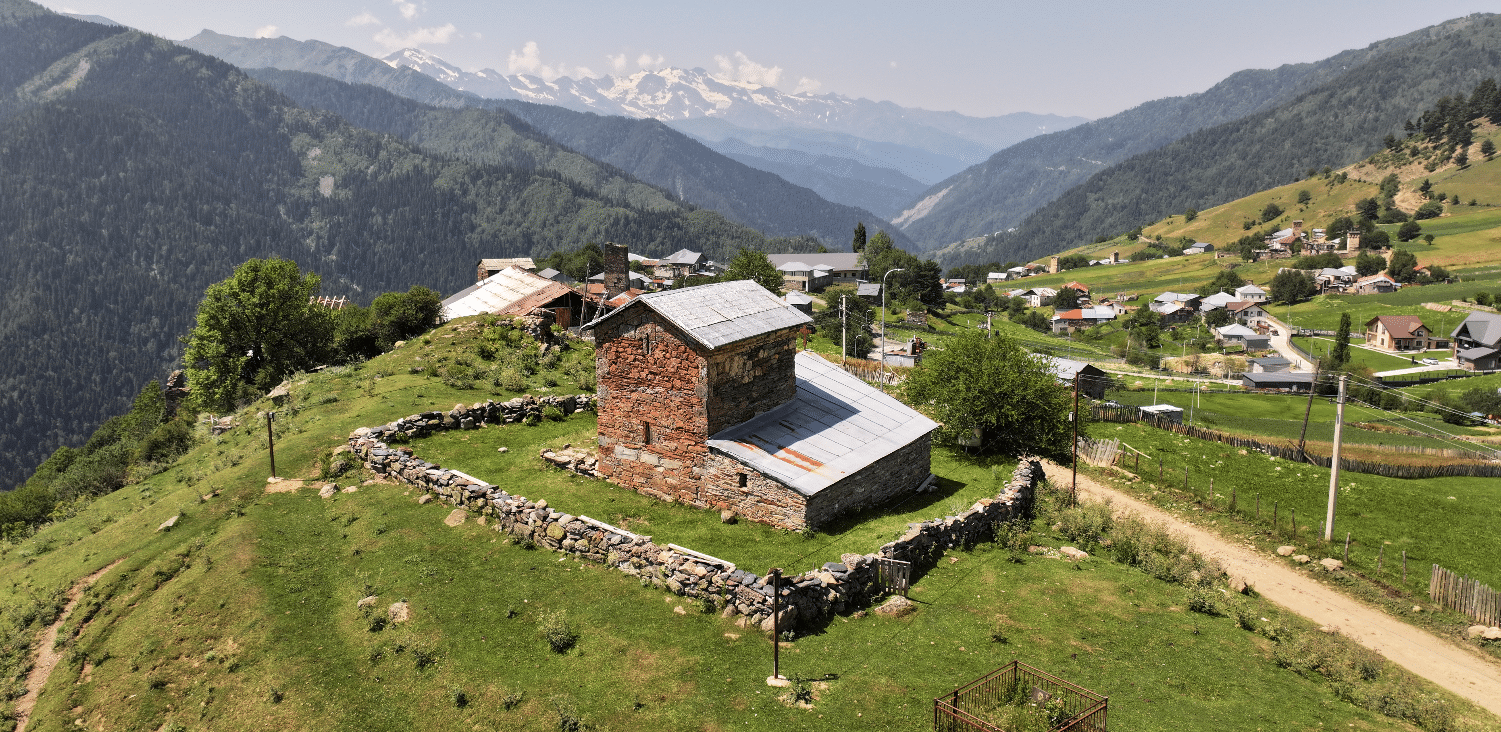
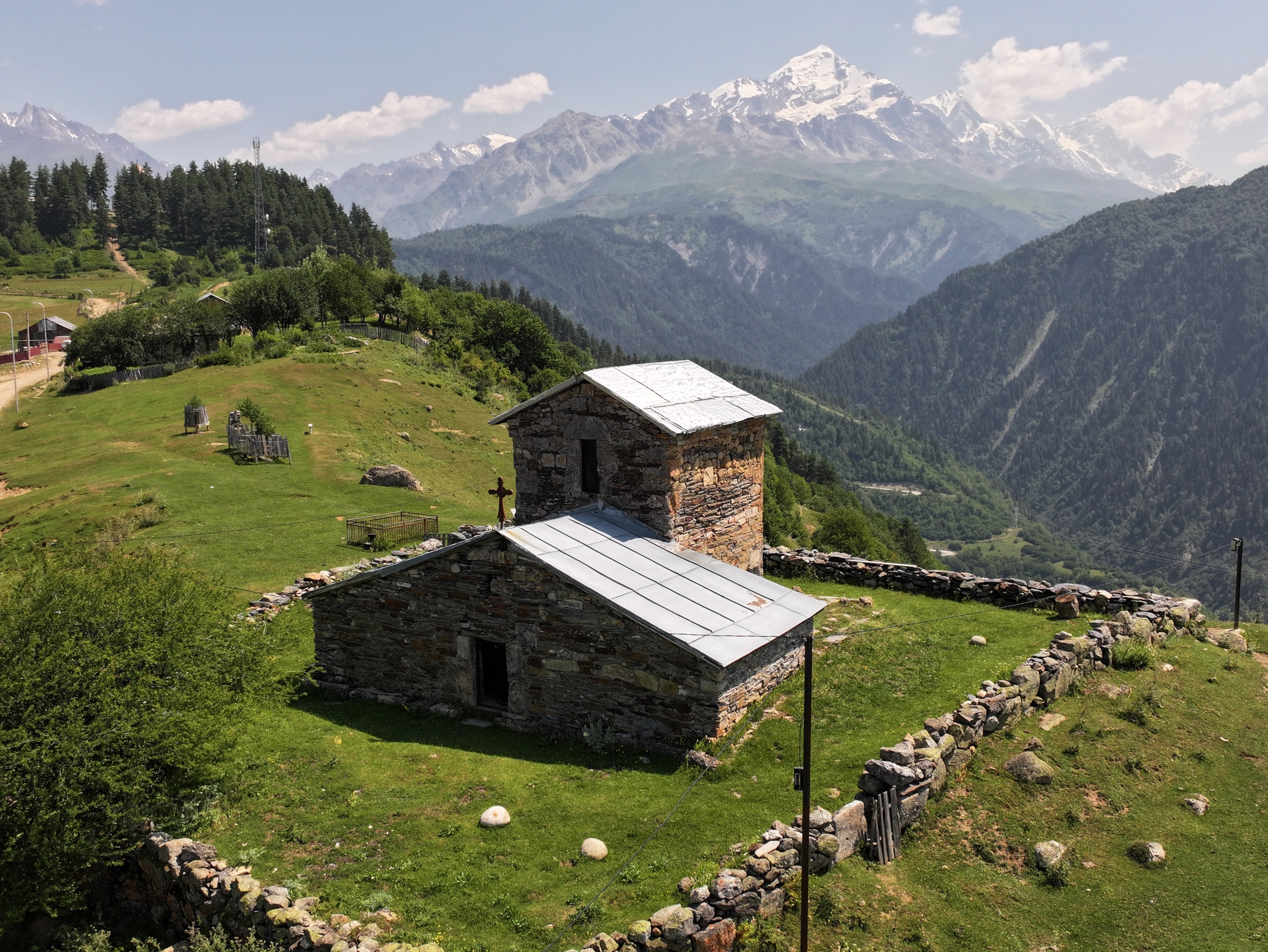
The village Tsvirmi comprises several painted churches, among them the church of the Archangels located in the Zagar district. The single nave two -storied church is dated to the 9th c. It is one of the oldest churches in Upper Svaneti. The interior of the ground floor is covered with murals and displays a rather developed program of the painting.
The east wall of the sanctuary is flat and there is a representation of the Deisis in rather peculiar form due to the small size of the building: Christ is represented en-bust over the window, while the Virgin and John the Baptist in full figures on each side. There are not any images of celestial host – neither archangels, nor the angels as it can be seen in the painting of the Atsi church, where the figure of Christ is also represented en-bust, but the Seraphim and the Cherub under the window.
.JPG)
The vault and the walls of the church are adorned with the scenes of the Christological cycle: the Annunciation, the Nativity, the Presentation, (the south part of the vault), the Transfiguration, the Entry into Jerusalem, the Crucifixion (the north part of the vault), etc. It is difficult to identify some other scenes.
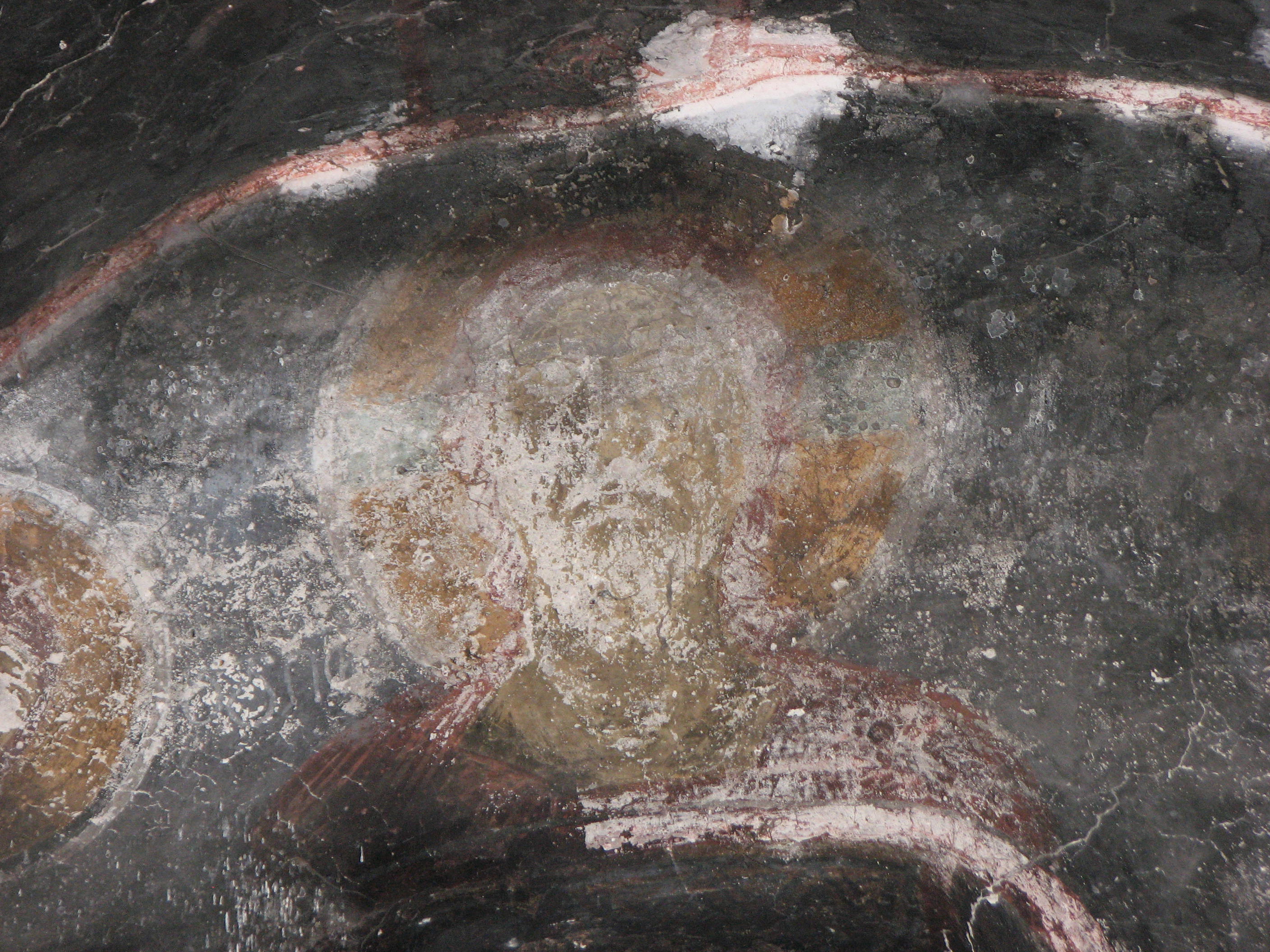
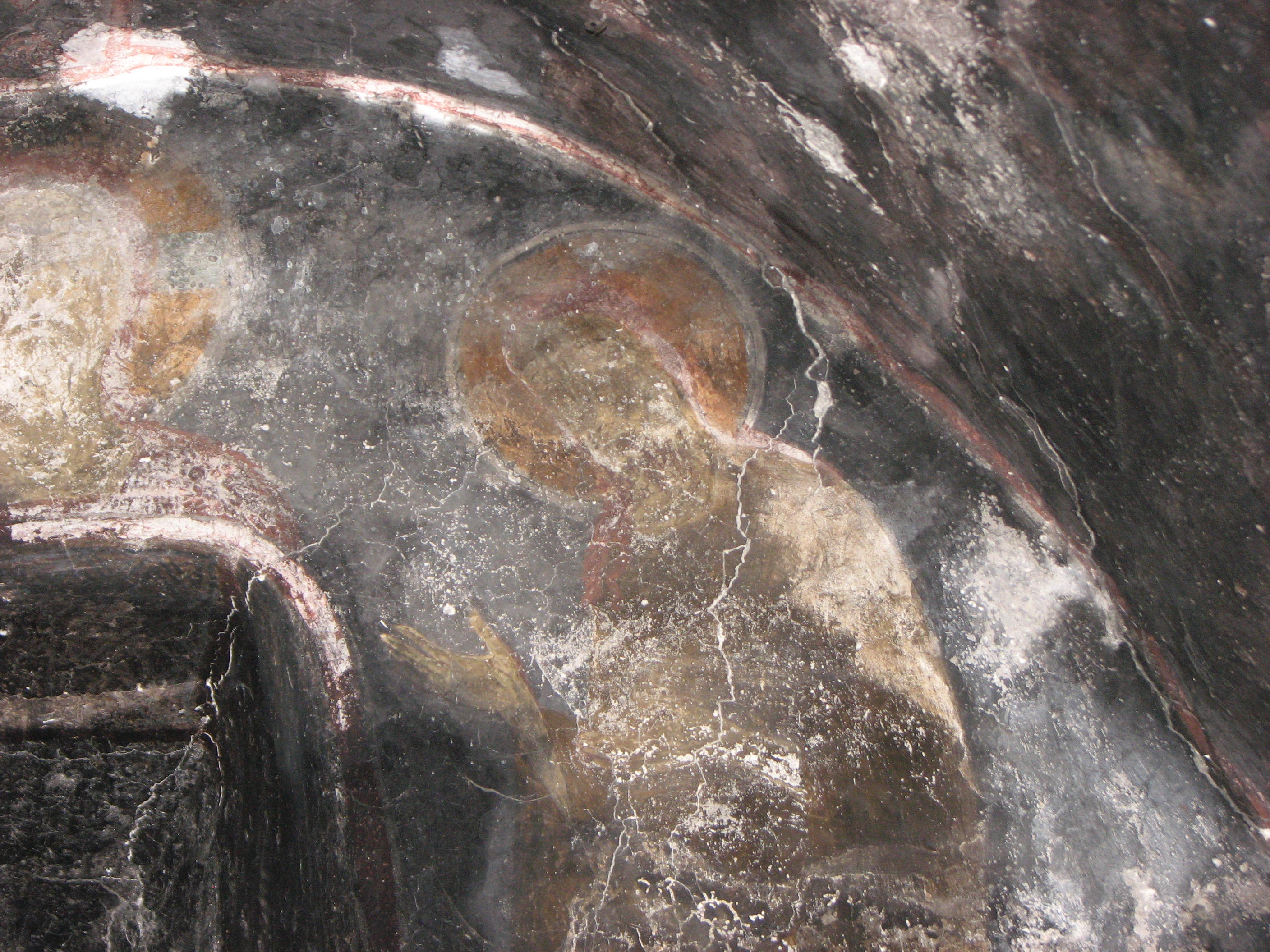
In respect to the patron Saints, i.e. the Archangels (Taringzel in Svan language) there is a scene of the Council of the Archangels on the north wall, quite popular in art of Svaneti – the Archangels were respected nearly as St. George (Djgrag). A big figure of Archangel, executed in repoussé technique is represented on one of the pre-altar crosses preserved in the church.
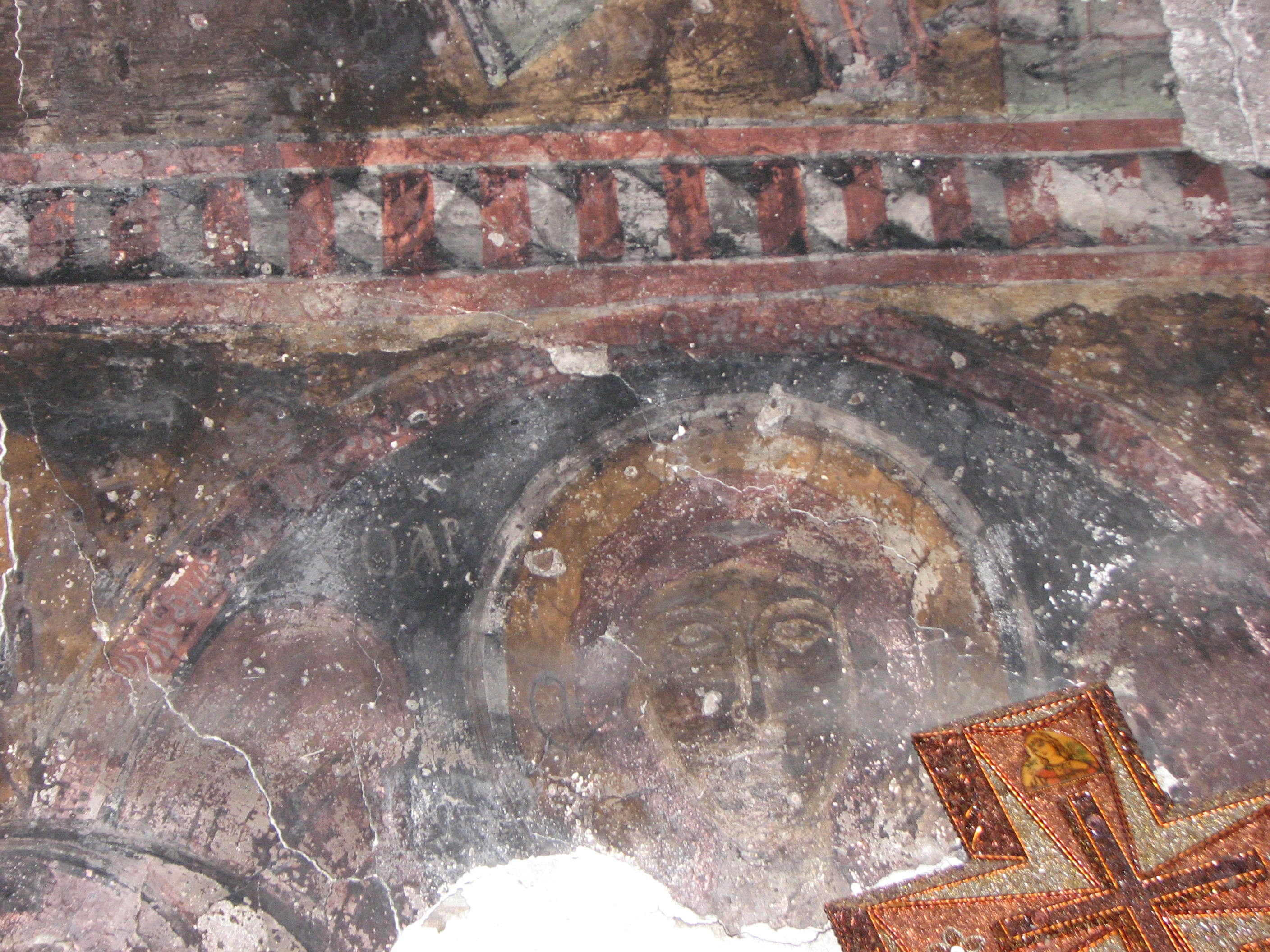
In the lower tiers there are many figures of various saints, the saint warriors, the female saints, the Fathers of the church (St. Barbara, St. Katherina, St. George, St. Basil the Great, St. John Chrysostomos etc.) The figures in the lower tiers are represented under the painted arches.
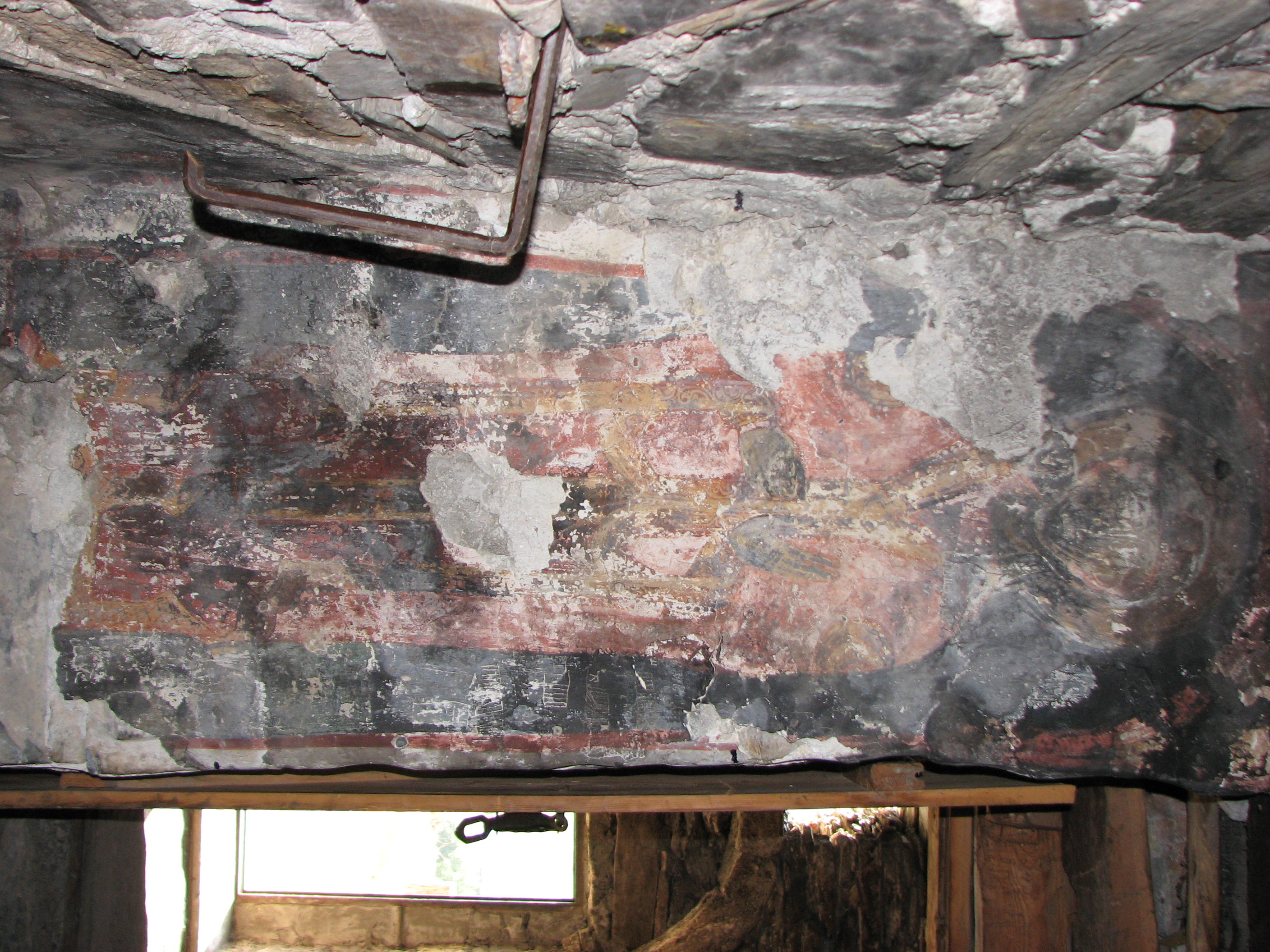
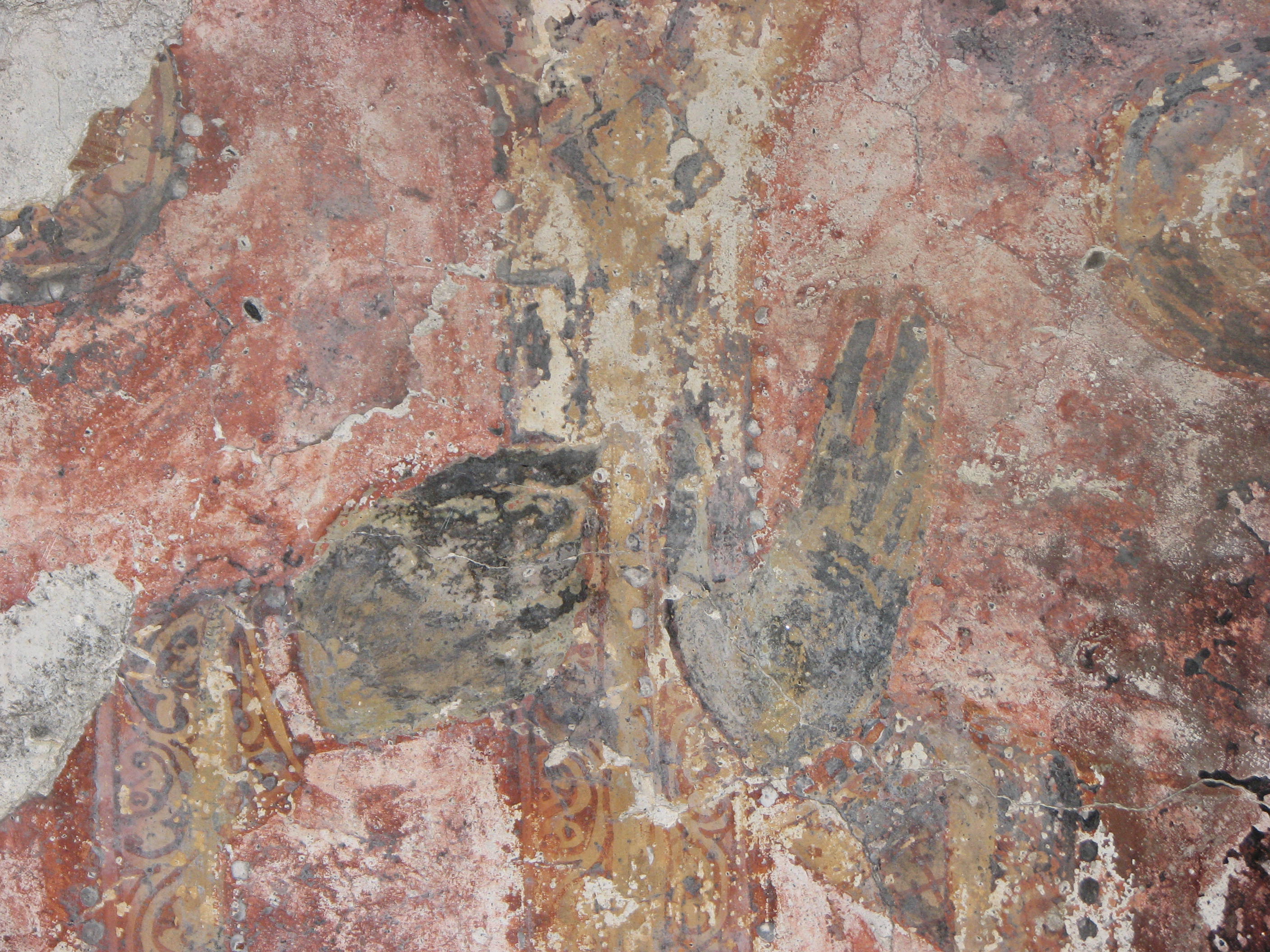
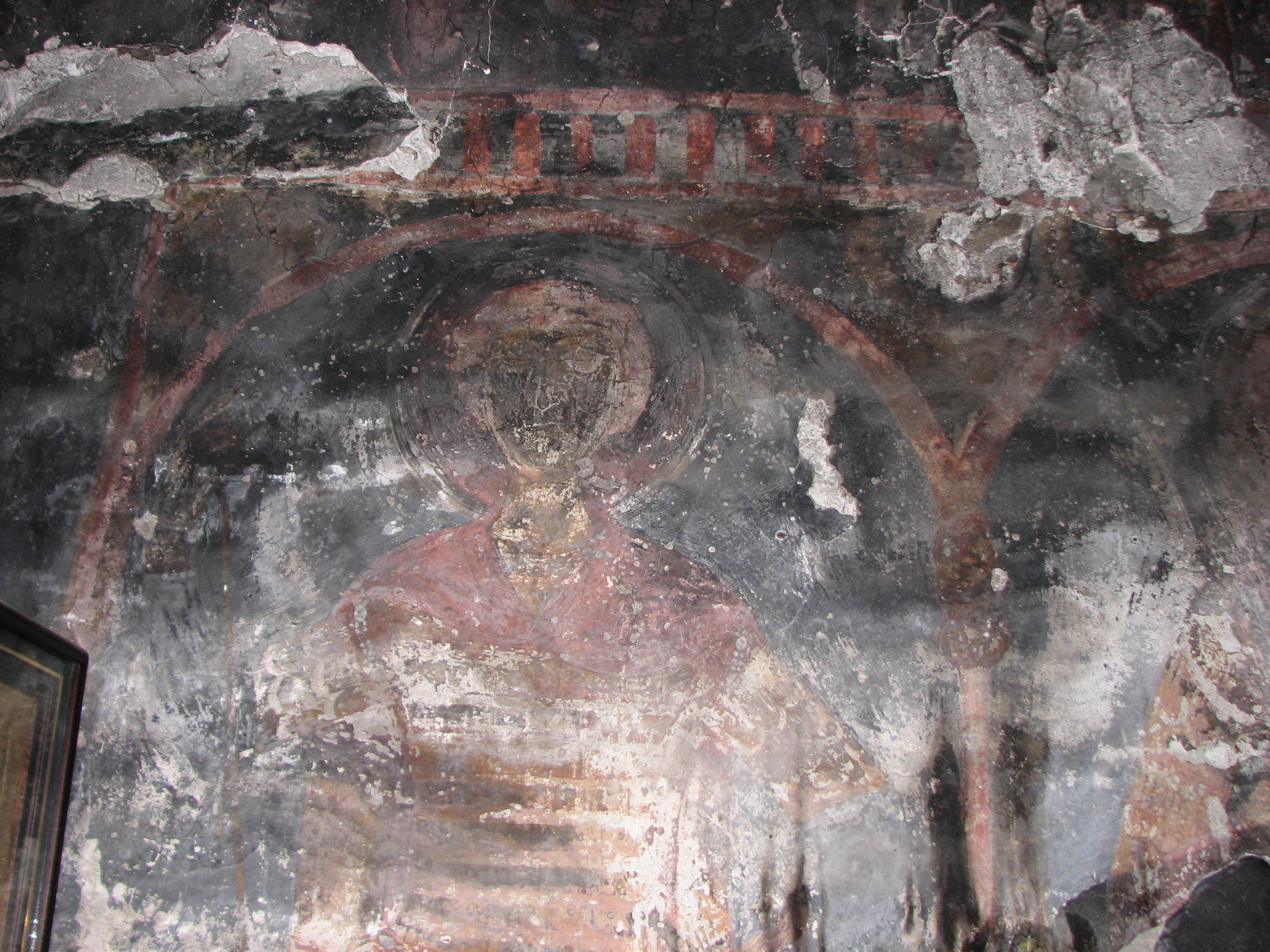
Based on the style and iconography of the murals, the wall painting of the Tsvirmi-Zagar church is dated to the second half of the 13th c. It clearly reveals the traits characterizing this period: reduced monumentality, small scale of figures, dynamic movements, narrative details etc. The murals are of somewhat provincial style: coarse outlines, distorted proportions etc. Due to strong deteriorations it is nearly impossible to describe the manner of modeling and coloring.
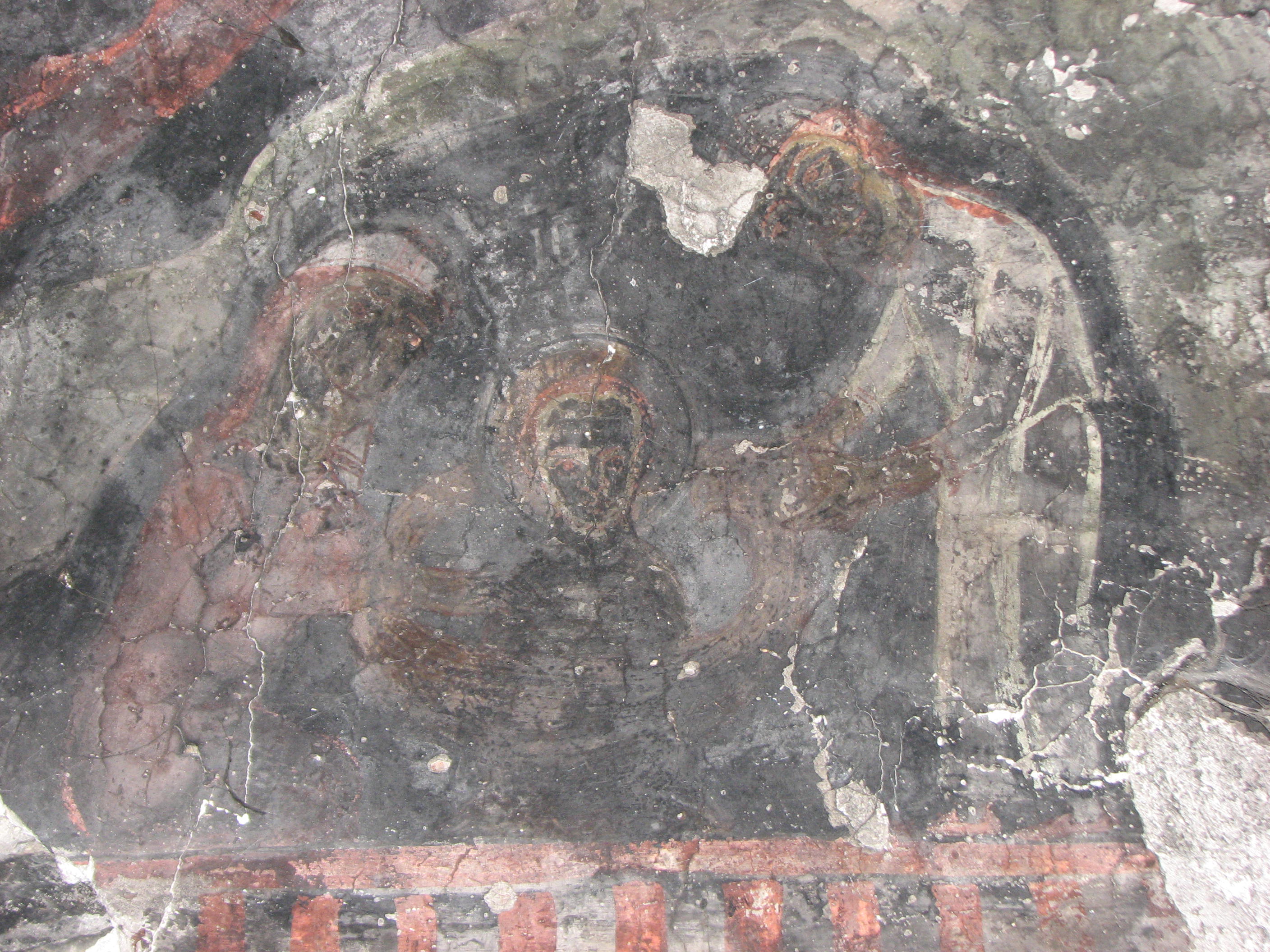
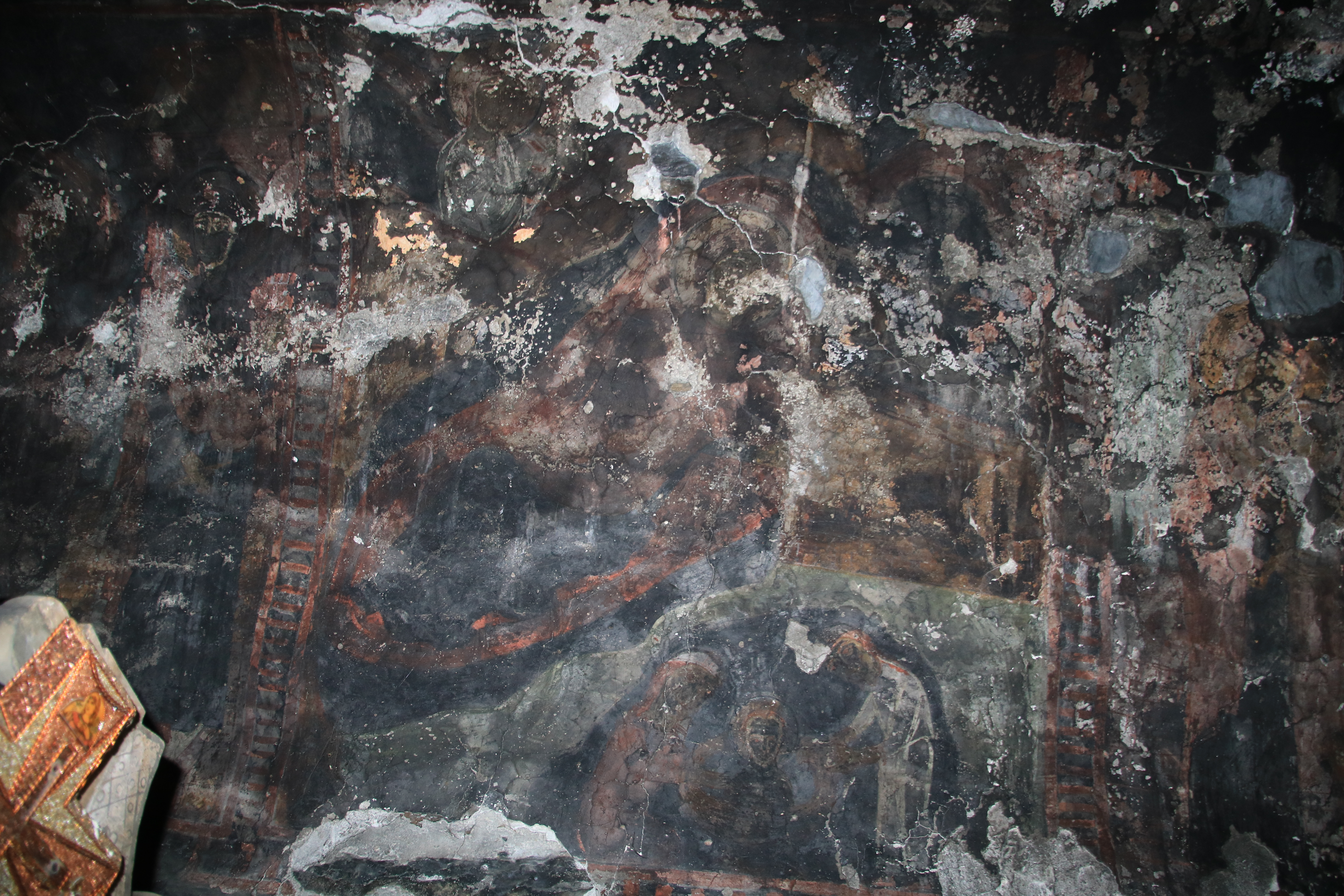
The painting is in a very poor condition: strongly defaced and darkened by smoke: flaking of the painting and destruction of plaster are clearly visible.