





The St. George church is located in the region of Shida Kartli in Tedzami valley, in the picturesque forest, near the village of Ikvi, not far from the Rkoni monastery.
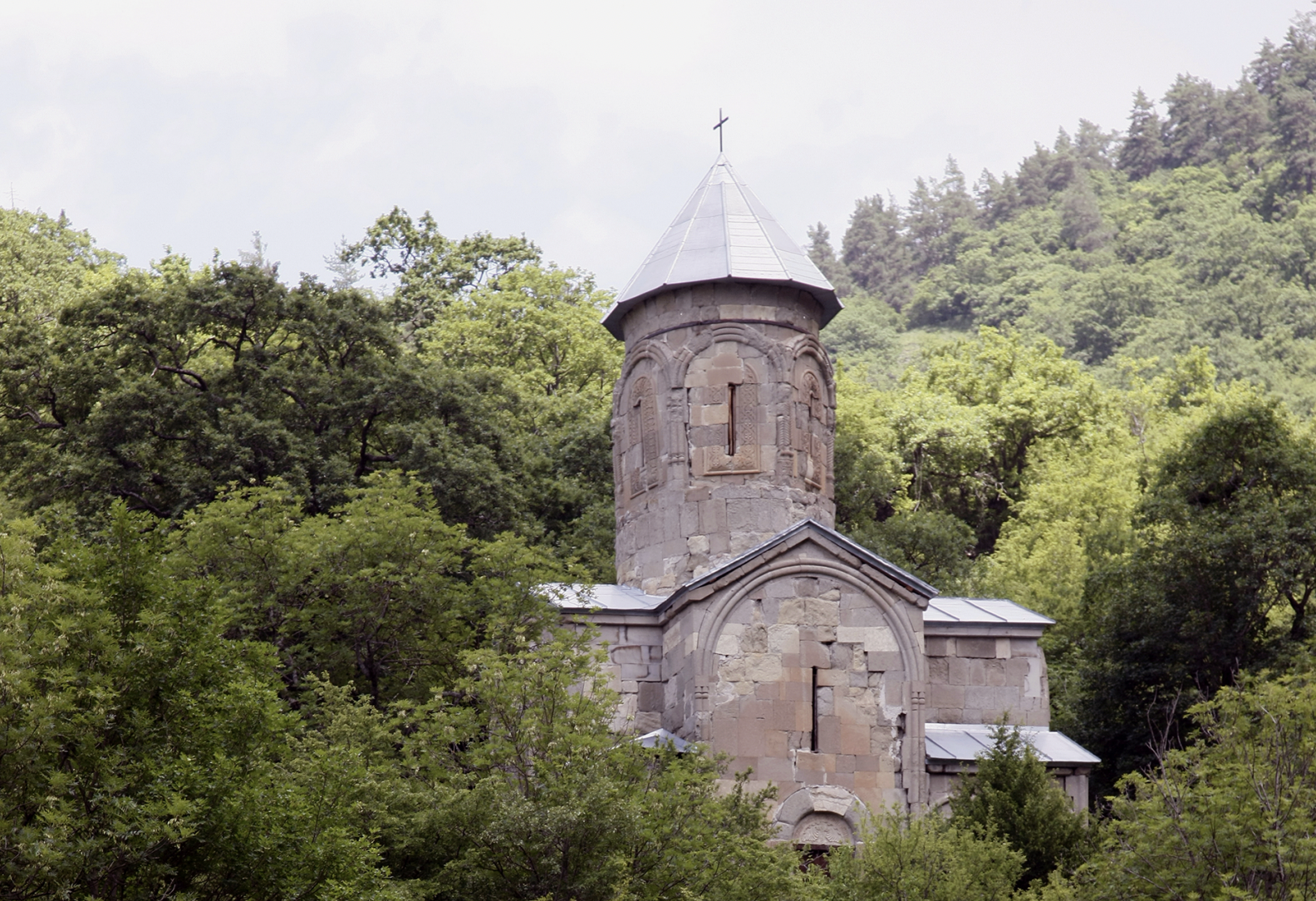
St. George church, Ikvi, Kartli, early 11th c.
The church belongs to the architectural type of the Croix Libre with the diaconicon and the prosthesis on both sides of the sanctuary apse. The church is dated to the turn of the 10th and 11th cc. and is built with well cut ashlar with richly decorated windows and entrances.
The wall paintings cover nearly all parts of the interior although in some places they are damaged and defaced (in the sanctuary conch, the hemisphere of the dome, the eastern part of the south arm, the most part of the vaults, etc.). The murals were executed in two phases: first in the mid 12th in the sanctuary, the dome, the south and the north cross-arms and then in the early 13th cc. in the western arm and on the supporting arches. However, the program of the painting is homogenous enough. It reveals several noteworthy and rather unique features.
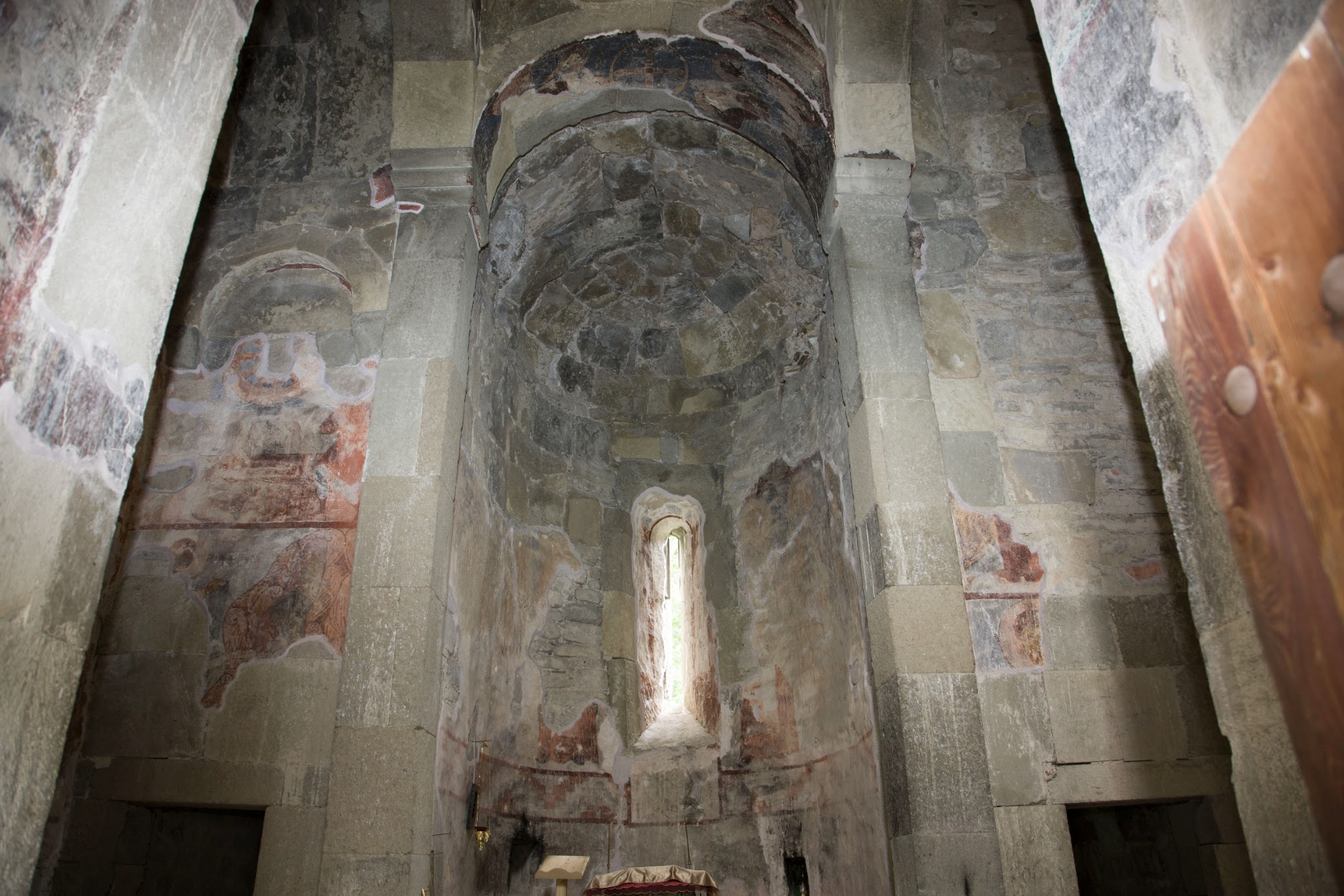
St. George church, view towards sanctuary
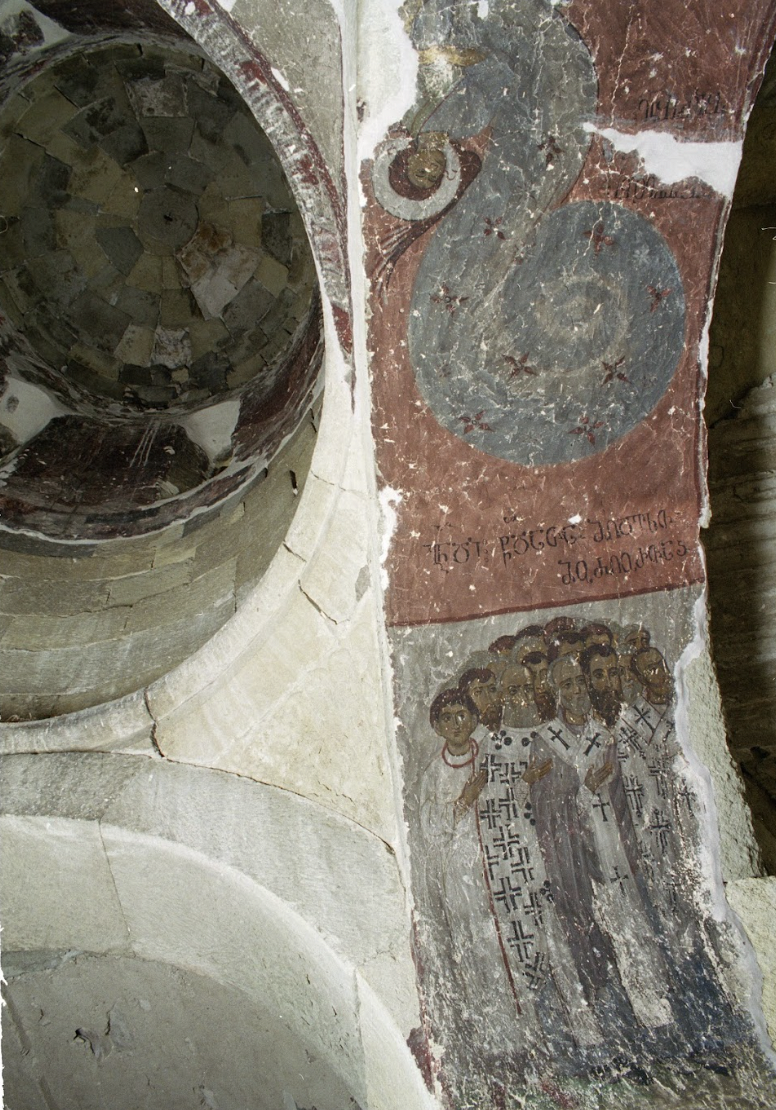
Although there is no trace of painting in the sanctuary conch, taking into consideration local traditions, there could be an image of the Majestas Domini. The sanctuary apse has preserved a row of frontally depicted Holy Bishops, flanked by two high chandeliers with burning candles. Under the window there is an image of the Mandilion, the symbol of Incarnation, and hence an implication of the Sacrifice. This is supported by the figures of the deacons in the jambs of the window referring to the Communion of the Apostles depicted on the intrados of the eastern supporting arch with very peculiar rendering of this composition: actually only the figures of the Christ and the Apostle Peter (Communion with Bread) on the north side, and Christ and Apostle Paul (Communion with Vine) on the south side are represented with a Cross in the medallion in the apex of the vault. No other Apostles are depicted. This abbreviated iconography of such an important theme is rather noteworthy and indicates certain changes in the development of the painting programs in the 12th c. Georgian art.
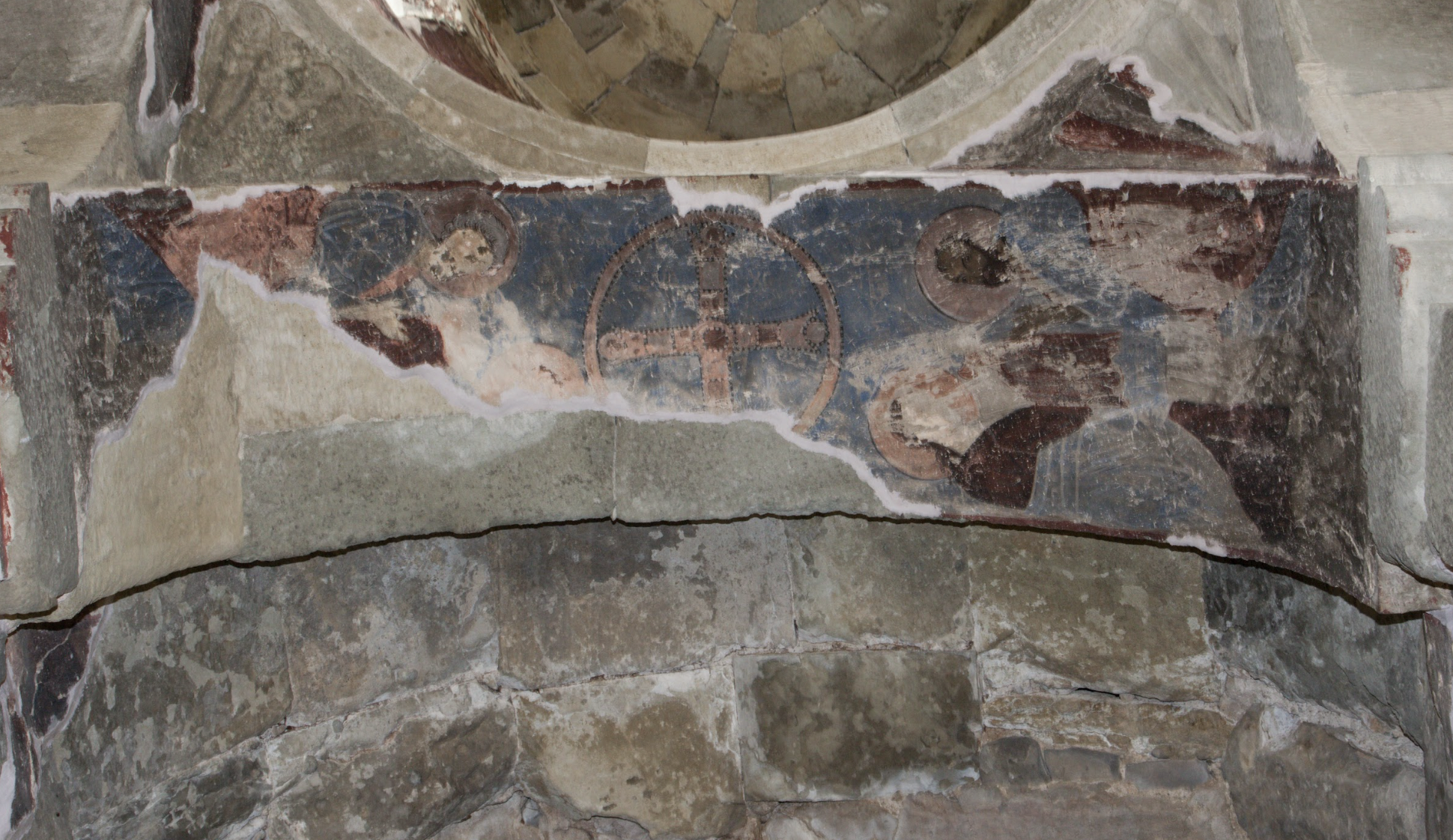
The Communion of the Apostles, eastern supporting arch. The 12th c.
The hemisphere of the dome also lacks any traces of painting. However, the figures of the Apostles (given in pairs) and of the Virgin between the windows of the drum permit us to suppose that there was an image of the Ascension of the Christ in the dome. The program of the drum presents quite a unique feature, namely, on the wall under the windows there are scenes from the Christological cycle. Such arrangement has no parallels in the Georgian monumental art of this period. There are four scenes: the Transfiguration iconology of which refers to the divine Nature of the Christ and to the Second Coming, thus creating a conceptual link with the grand composition of the Last Judgement in the west arm. Other three scenes are: the Crucifixion, the Deposition and the Lamentation. Only the upper parts of the scenes are preserved. The content of these scenes is tightly related to the main idea revealed in the sanctuary – the Incarnation and the Sacrifice of Christ.
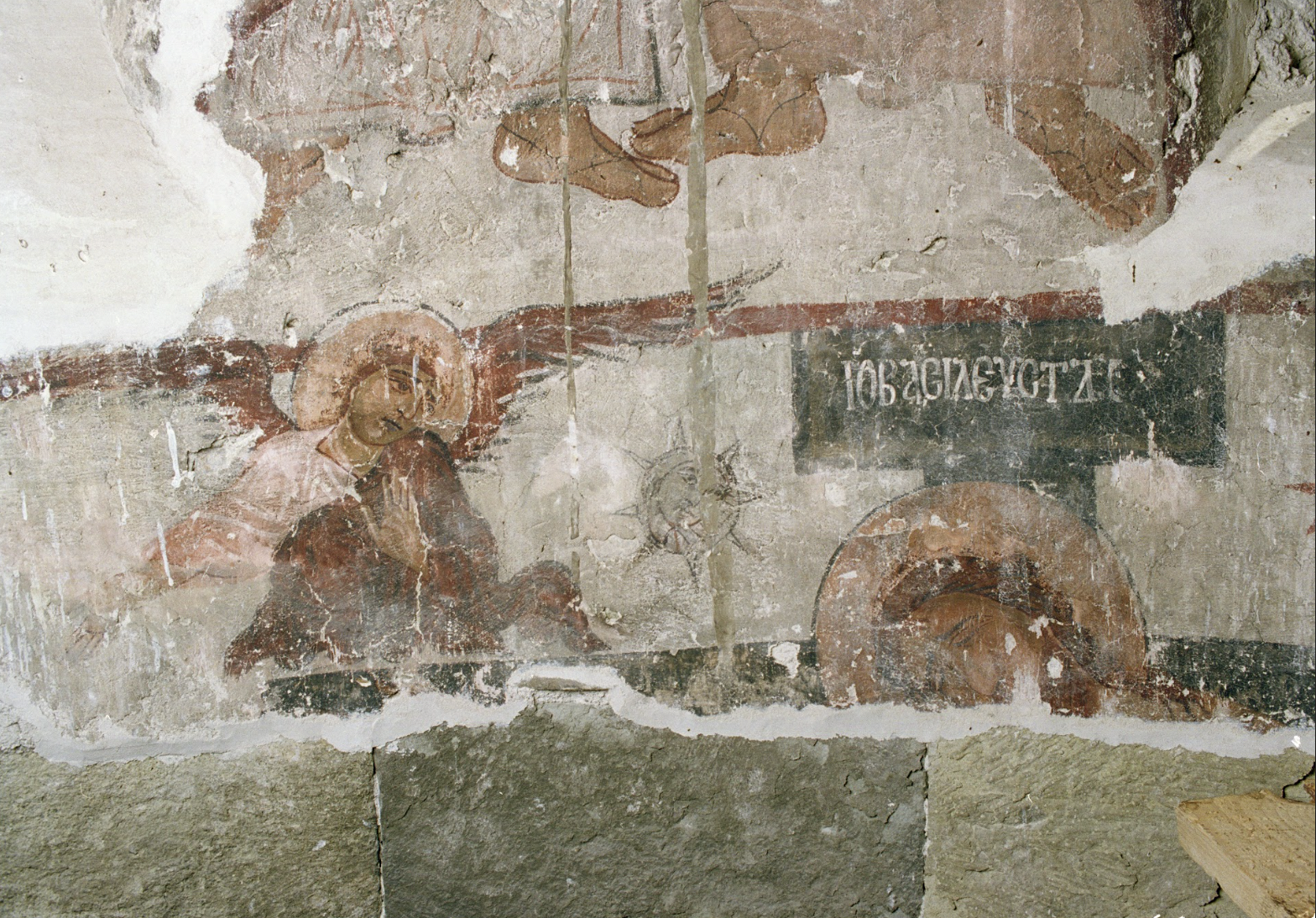
The Crucifixion, fragment, drum of the dome. The 12th c.
Like many other painting ensembles in Georgia, the cross arms of the Ikvi church comprise particular themes: the north cross arm is dedicated to the Life cycle of St. George, the south crossarm to the Christological cycle, and the west arm – to the Grand composition of the Last Judgement covering the intrados of the rather wide west supporting arch as well.
However, as it was pointed above, conceptual links between these spaces are quite obvious.
Besides, it must be marked out, that in spite of the chronological gap between the painting of the west arm and other parts of the church, homogeneity of the iconographic and iconological concepts is definitely preserved. However, there are differences in the style of the paintings in accord with the traditions of the period that serves as a base for establishing dates of the different parts of the murals.
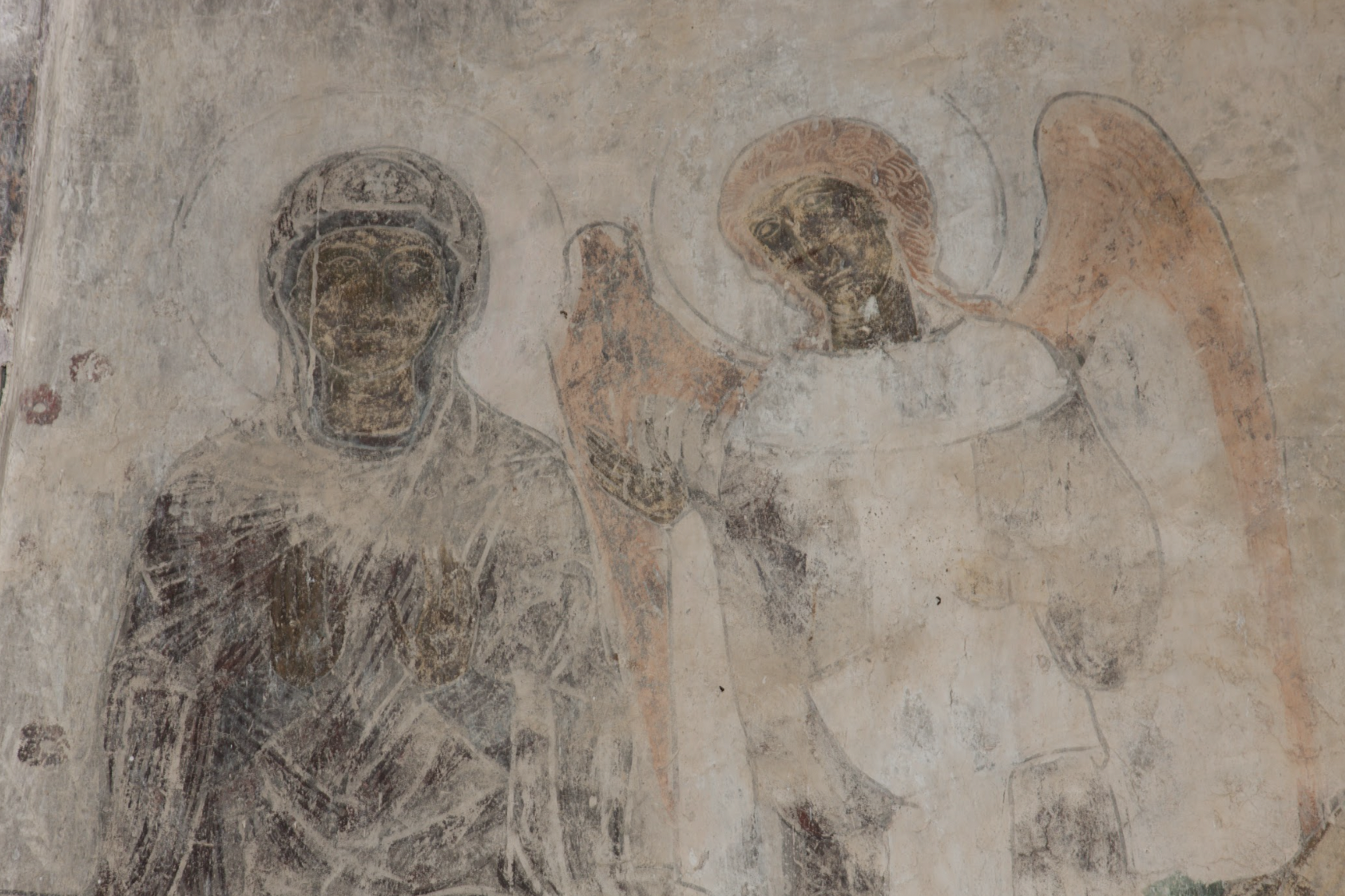
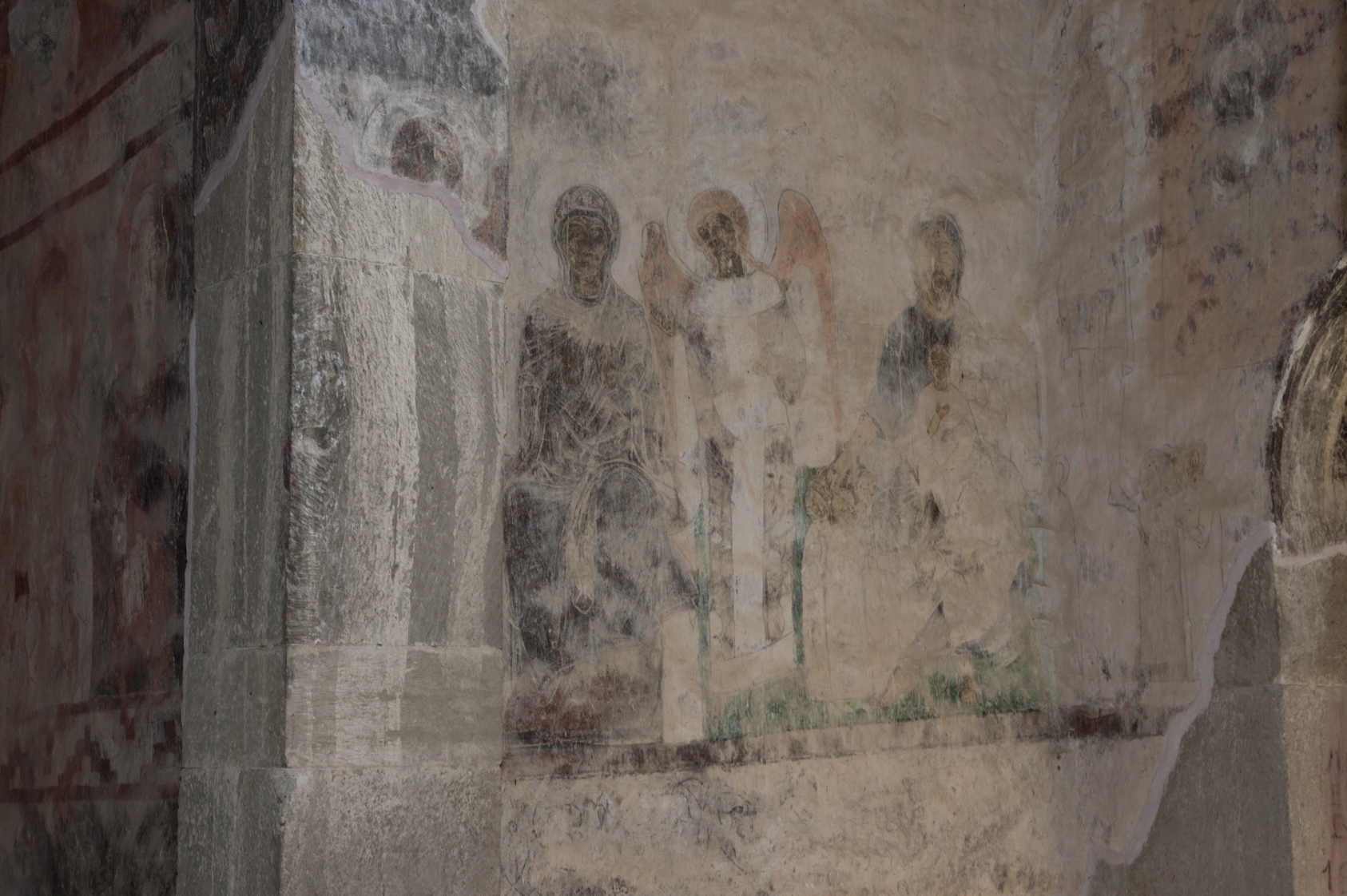
St. Virgin Mary and the angel in the Paradise, fragment of the Last Judgement, west wall, the 13th c
The murals of the south arm are in accord with the traditions of the Georgian paintings on the turn of the 11th -12th cc. There are several scenes from the Christological cycle, namely: the Annunciation, the Nativity, the Presentation in the Temple, the Dormition of the Virgin (presumably) and a row of monumental big half figures of the Holy Warriors in the lower register.
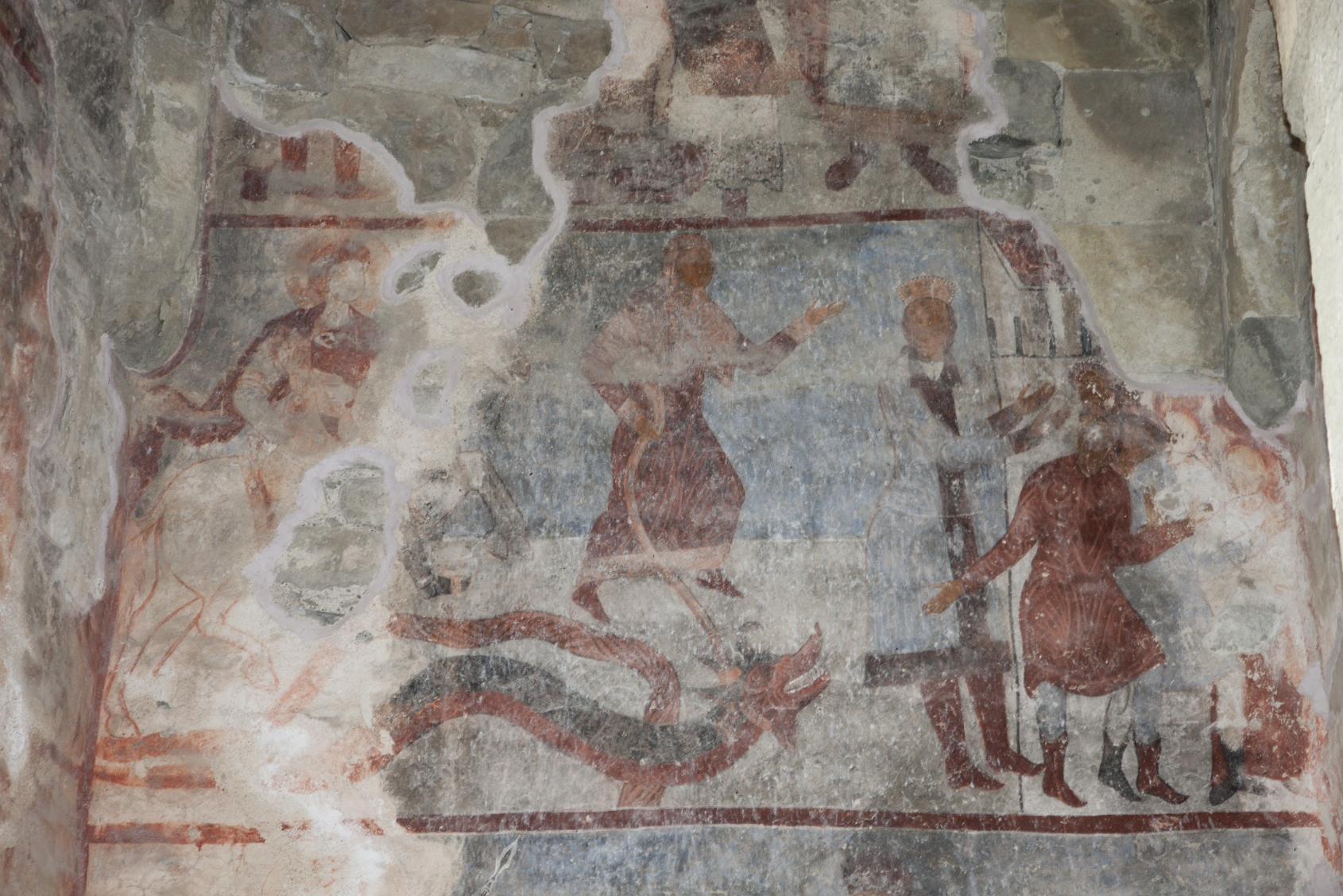
The north cross arm entirely features the life cycle of St. George, the Patron saint of the Ikvi church. St. George is one of the most venerated Christian Saint in Georgia; there are numerous icons created in different media, as well as many murals comprising his life- cycle. In the Ikvi church there is one of the most elaborated cycles of St. George in Georgian mural painting. The program includes the scenes of his miracles and of the passions as well.
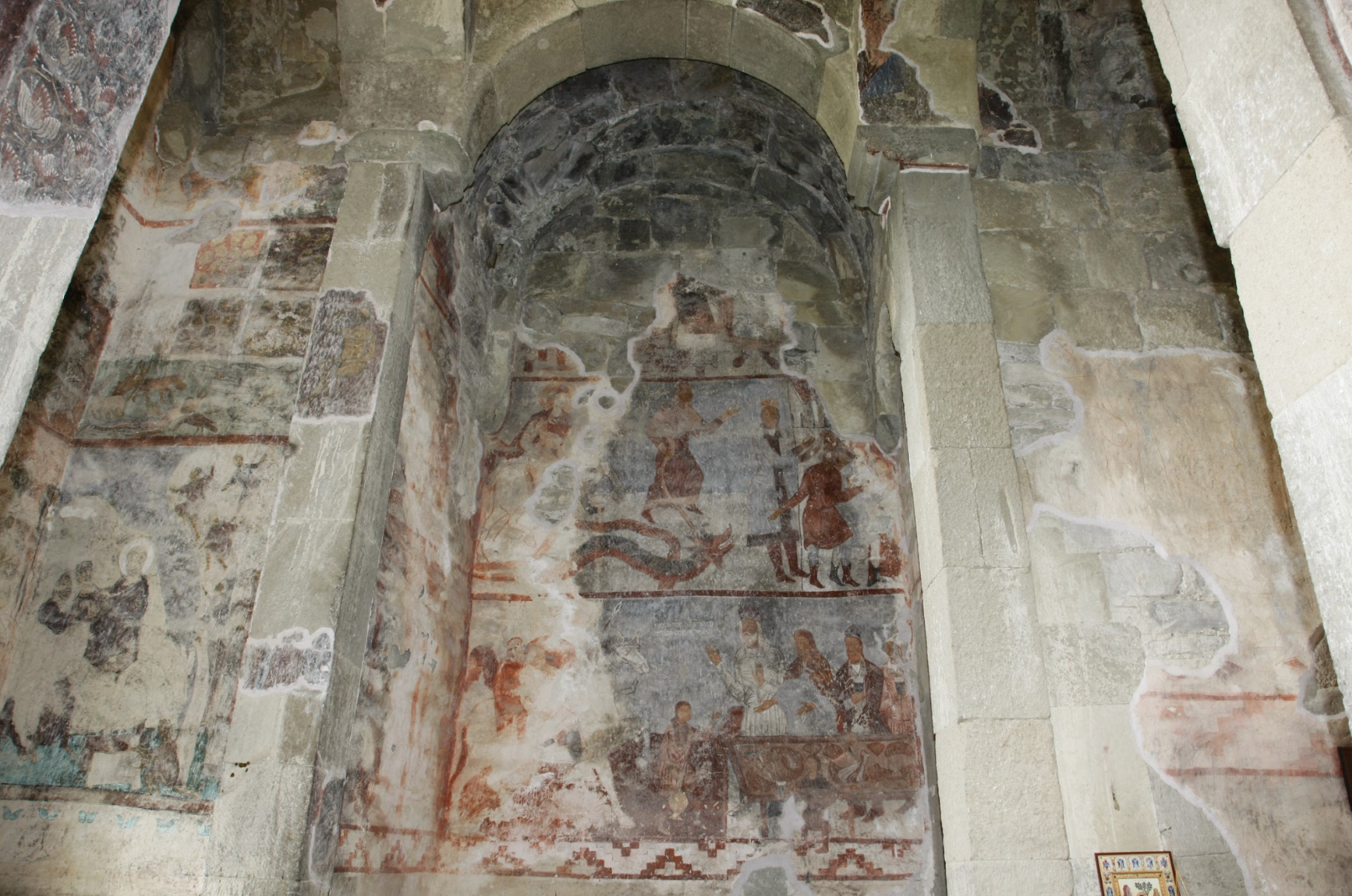
Murals of the North cross-arm, the 12th c.
On the north wall there are presented three monumental scenes occupying the whole register: the Interrogation -St. George Speaking with the Emperor Diocletian; the Miracle of St. George with the Dragon (the other title is the Converting the City of Lasia); St. George returning the enslaved youth to his parents. On the east wall of the same cross arm there is the Martyrdom of St. George on the Wheel and St. George plunges the devil into a cliff. On the west wall there is the Miracle with Saracen and Martyrdom with the heated boots. The last scenes are totally defaced.
As mentioned above, three walls and the vault of the west cross-arm were decorated later, after a gap of time, presumably in the first half of the 13th c. It is entirely dedicated to the grand composition of the Last Judgement including intrados of the wide west support arch.
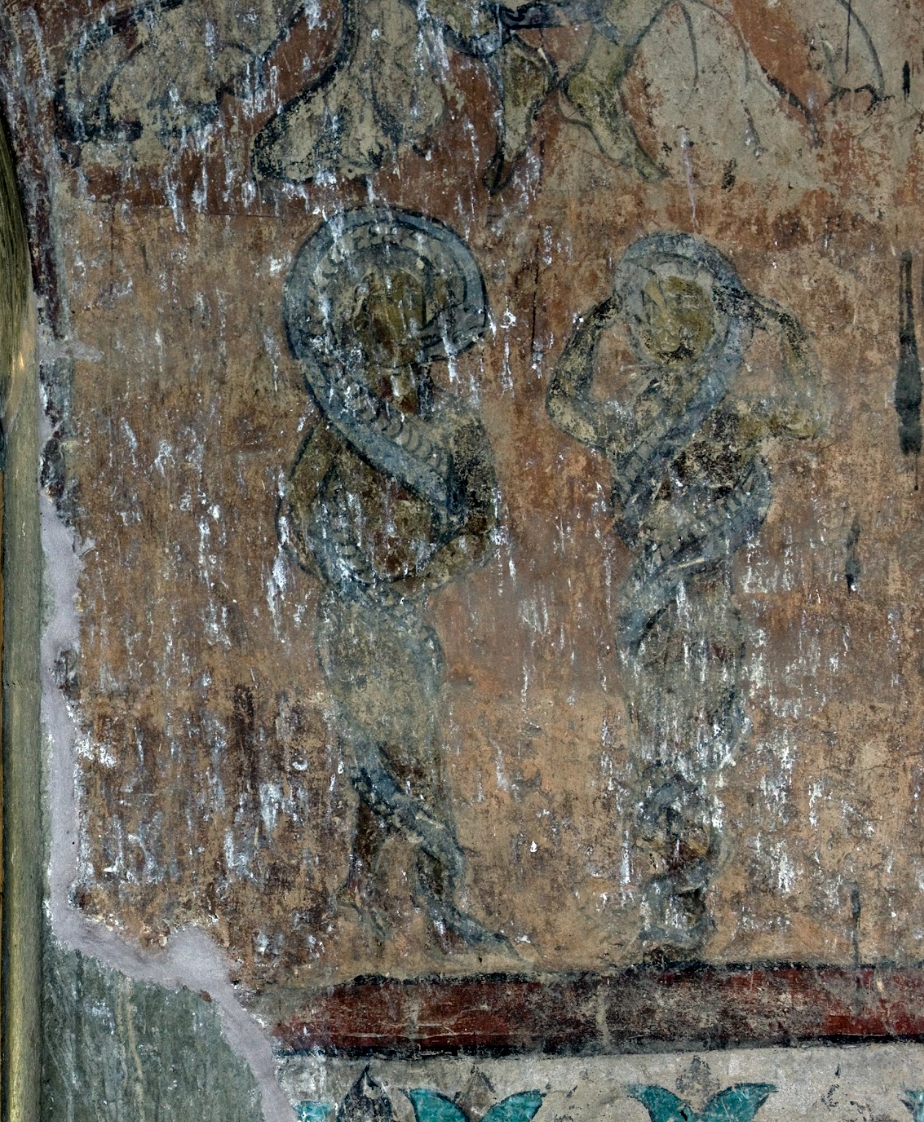
This complex composition comprises all main elements of the iconography of this scene: the Deisis in the upper tier (the figure of the enthroned Christ slightly moved to the right due to the window in the center of the wall), the Apostles on both sides, the Hetoimasia with kneeling figures of Adam and Eve. The Angel enrolling the sky; The groups of Righteous, the Paradise with figures of the enthroned Virgin, the Womb of Abraham, the Blessed Thief, the Flamboyant Cherub.
On the north part of the wall there is represented the Hell with small panels of diverse tortures of the sinners, the Hades riding the Dragon with a small figure on his knees; the angels with scales and spears, pushing sinners to the hell and other narrative details.
In the lower tier of the north wall of this cross arm unexpectedly there is a scene of the Entry into Jerusalem that belongs to the Christological cycle but was not included in the program of the south arm.
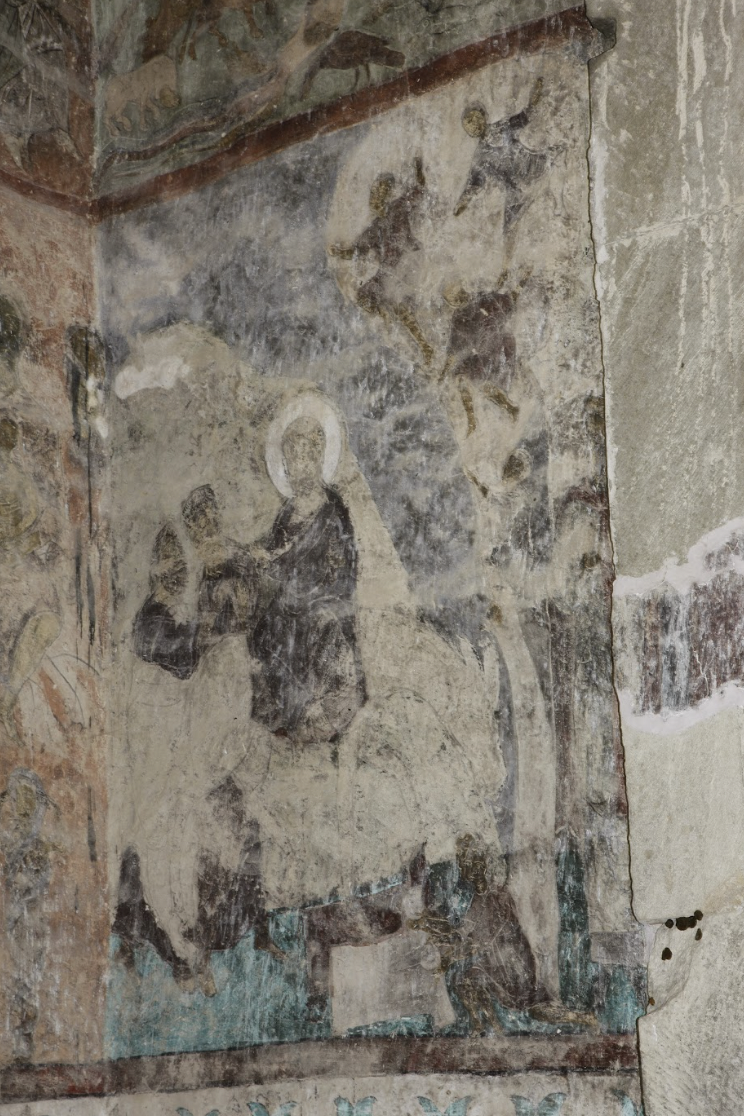
The explanation may be the inherent connotation (relation) of this image with the idea of the Redemption and Salvation through the self-sacrifice of Christ demonstrated in the Last Judgment. And certainly because of the symbolic meaning of the city of Jerusalem with the idea of Heavenly Jerusalem – the Paradise, thus enriching the Last Judgement content and relating it to the terrestrial life of Christ.
In the intrados of the arches and the jambs of the openings there are the figures of Saints while in the tympanum of the west door there may be the image of the Vision of the Peter of Alexandria (other interpretation is the Communion of St. Mary of Egypt).
As it was mentioned above the program of the painting seems quite coherent and homogenous. Indeed, it is clear that the designers and the painters of the new part took into consideration existing images and created a new program in accord with the main ideas and themes of the initial paintings. However, the artistic rendering clearly reveals different style, manner and different coloring as well. Indeed, the initial painting sounds more monumental and tectonic with large figures, somewhat heavy outlines, more static postures etc. The coloring is based on applying red and yellow ochre, pale blue, brown, white, while the second layer features more dynamic postures, elongated proportions, thin and refined outlines and drawing of the vestments. The coloring consists of using lazuli, light green, emerald green, even turquoise shades. The artistic style of this part of the murals is characteristic for the Georgian painting of the 13th c.
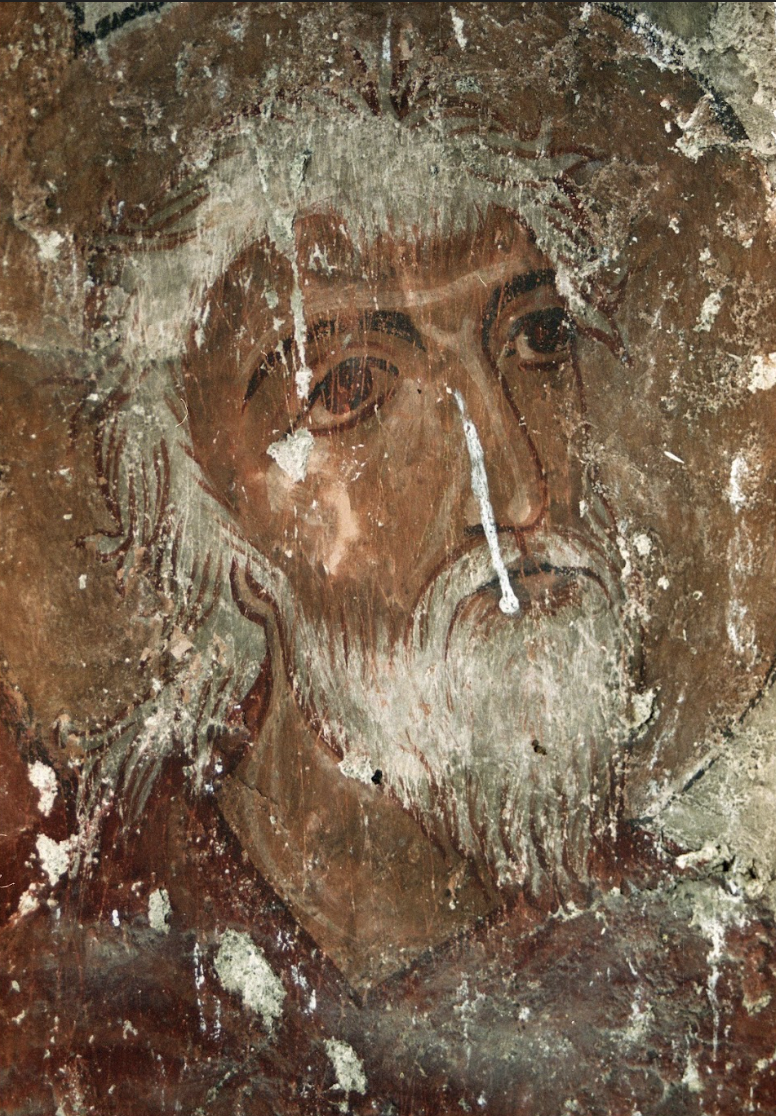
At the same time the manner of several painters may be observed in the 12th c. paintings as well. E.g. the figures of the Apostles in the drum are bigger and have heavier proportions and course outlines that those of the Christological scenes beneath the windows of the drum
On the pilasters and arches, there are many beautiful floral and geometrical ornaments. Wide stripes of the ornaments frame the compositions of the 12th c. paintings. All the inscriptions are done in the old Georgian script Asomtavruli.
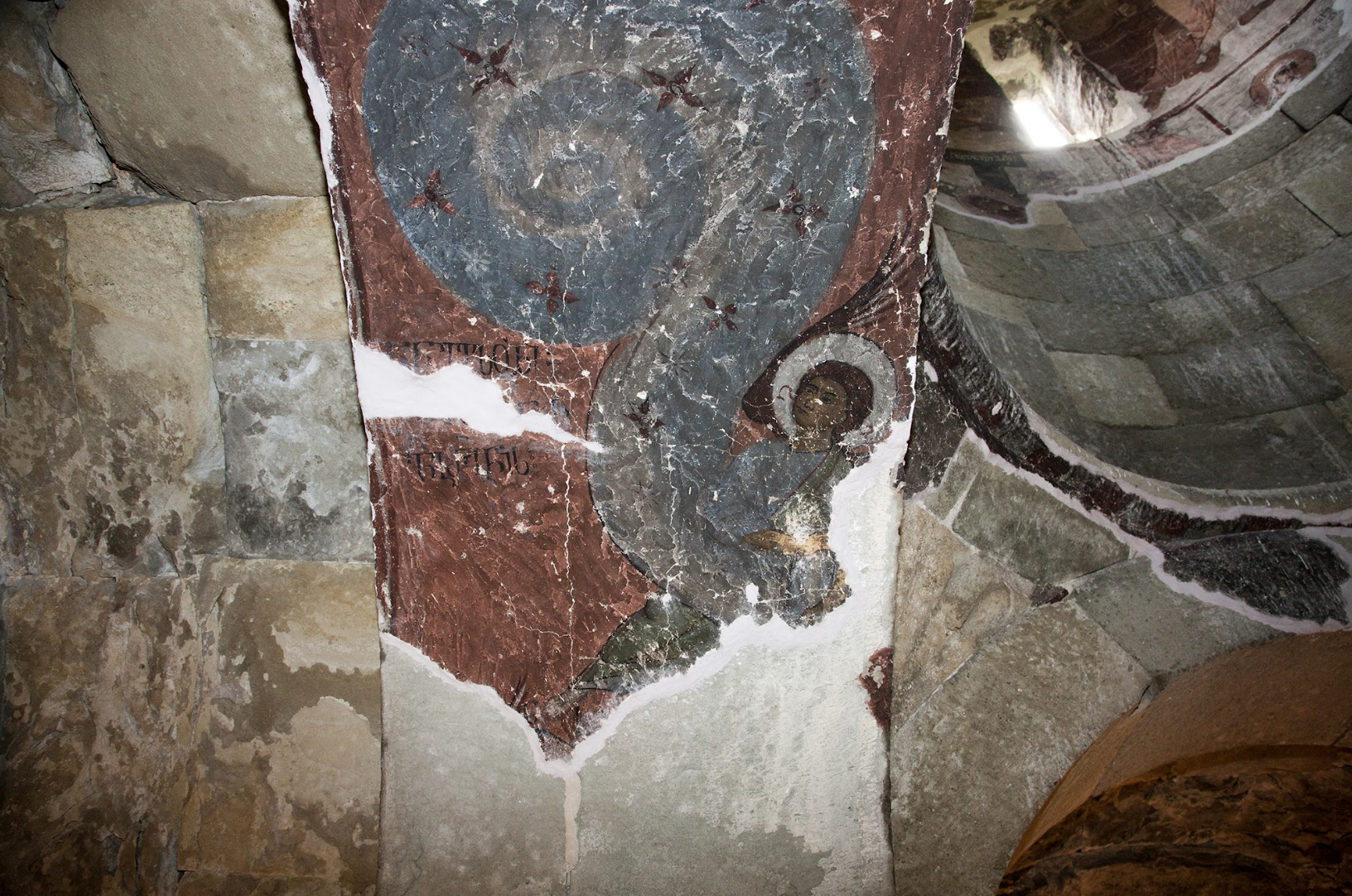
The murals of the St. George's church at Ikvi reveal a very high artistic level, at the same time displaying a somewhat transitional stage of development between the monumental and tectonic character of the 12th c and more dynamic rendering in the 13th c. Besides, they are of special interest due to the elaborate cycle of the Life of St. George.