




 Share this article
In his farewell letter to David (Duda) Gabashvili (1914-1995)- painter, graphic artist, sculptor, teacher, Honored Artist of Georgia, and People’s Artist of Georgia - the art historian and Academician Vakhtang Beridze noted that Gabashvili was an artist of impeccable taste and refinement, possessing the highest artistic culture and professionalism.[1] Art historian Gogi Khoshtaria, meanwhile, argues that David Gabashvili’s art has not received the recognition it deserves. Rather than appealing through superficial effects, it demands a thoughtful and discerning viewer capable of engaging with its deeper artistic and intellectual dimensions.[2]
The given article seeks to present a general overview of the rich and versatile art of David (Duda) Gabashvili. His oeuvre encompasses book illustration, easel graphics, poster design, painting, and sculpture, reflecting the diversity of his artistic interests, his professionalism, excellent taste, and his intuitive understanding of the distinctive nature of each artistic field.
Distinguished by his aristocratic bearing, refined appearance, and equally refined inner world, the artist grew up in an educated, patriotic family within a culturally and intellectually rich environment. His father, Alexander Gabashvili, received a higher education, while his mother, Eugenia, was brought up at the St. Nino Boarding School. A highly cultivated woman, she was fluent in French. David’s grandfather was General Vasil Gabashvili, who played a major role in the establishment of the Georgian National Army. Among his close relatives were the founder of Georgian art history, Academician Giorgi Chubinashvili, the writer Ekaterine Gabashvili, the painter Gigo Gabashvili, and other prominent figures of Georgian culture.
In 1933, David (Duda) Gabashvili graduated from the Construction and Architectural Technical College with a specialization in architecture. It was there that he developed an understanding of structure, proportion, the logical organization of form, and the relationship between two-dimensional and three-dimensional objects. From 1934 to 1939, Gabashvili studied at the Tbilisi Academy of Arts in the studio of Joseph Charlemagne. He subsequently completed postgraduate studies and, in 1944, began working as a senior teacher in the Academy’s Department of Graphic Arts. In 1947, he was appointed Associate Professor in the same department, and in 1974 he was promoted to Professor and became Head of the Department of Drawing. His long and highly productive career as a teacher deserves special recognition. Among his students were such distinguished artists as Dimitri Eristavi, Levan Tsutskiridze, Gibson Khundadze, Zurab Lezhava, Vladimir Kandelaki, Alexandre Bandzeladze, and many others.
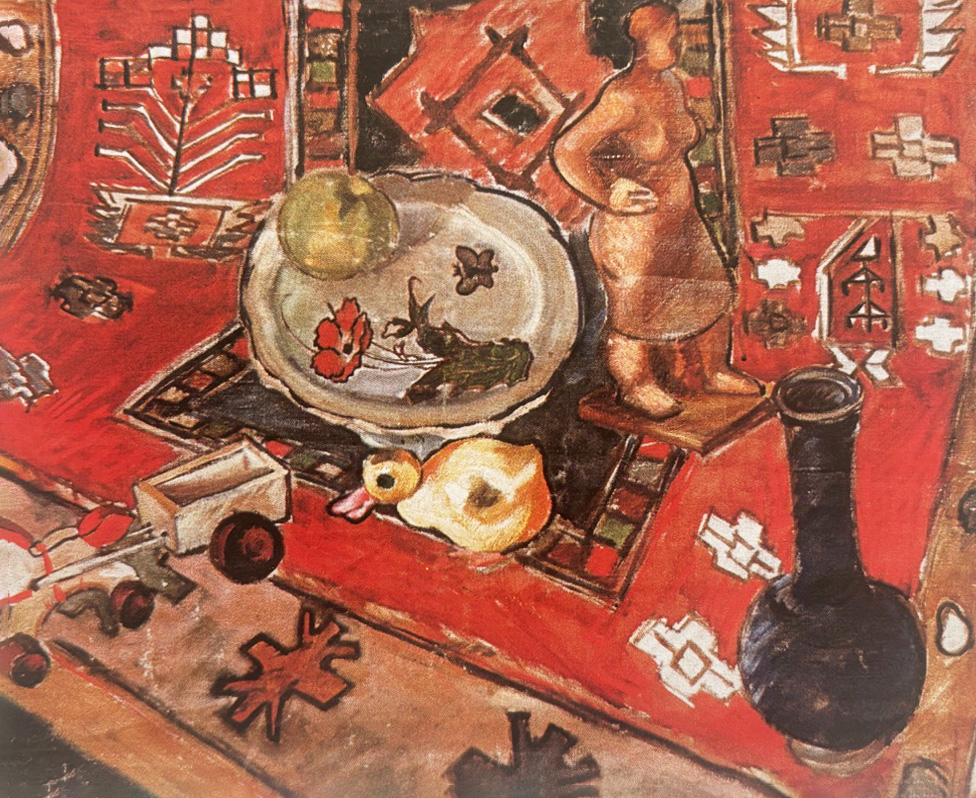
David Gabashvili's artistic development coincided with the establishment of Socialist Realism as the official artistic doctrine of the Soviet Union and the spread of socialist ideology. In the Soviet context, this was a time when talented artists with distinctive visions and individual artistic identities tried, to varying degrees, to preserve their personal modes of expression within a state-imposed system. It was in this environment that Gabashvili developed his artistic language.
Gabashvili's work is firmly grounded in the principles of academic training. His extensive knowledge and exceptional artistic intuition define the distinctive character of his art, in which compositions are invariably constructed with clarity and structural precision. Even his artistic experiments and more freely conceived compositions are built upon a solid academic foundation.
Gabashvili's art is characterized by a strong sense of structure, a thoughtful organization of pictorial space, precise lines, and a constructive approach to composition. It reveals a synthesis of the particular and the generalized, a harmonious integration of two-dimensional surface and three-dimensional form, and a rhythmic arrangement of compositional elements. He transforms the rhythm of line and form into a unified artistic whole endowed with aesthetic resonance. At times, his work also incorporates subtle chiaroscuro modelling and the vigorous rhythm of bold brushstrokes, whose interplay and contrast become powerful aesthetic and expressive devices.
Although deeply rooted in academic traditions, David Gabashvili remained keenly attuned to developments in modern art. He attached great importance to the expressive potential of artistic media and expressive language. In his works, plane, line, color, form, and texture are all highly expressive, and are animated with artistic meaning. His interest in various artistic disciplines and his use of diverse methods and techniques testify to the breadth of his artistic and intellectual capacities. He was not content with mere realistic representation; for him, the visual qualities of the medium and the expressive power of artistic language were decisive elements in creating the expressiveness of the work.
Gabashvili's creative work is distinguished not only by its variety of subject matter, but also by the diversity of genres, which encompass still lifes, portraiture, nudes, and landscapes.
David Gabashvili was thoroughly versed in the history of art. His work reveals an interest in the art of Cézanne and Matisse, evident in the compositional structure of his early works, the selection and arrangement of compositional elements, the use of reverse perspective, the emphasis placed on the expressive function of color, and the distinctive treatment of multiple viewpoints and spatial planes.
Throughout his career, Gabashvili maintained a deep interest in graphic art, working in a wide range of media, including pencil, watercolor, etching, lithography, and linocut. He was one of the foremost masters of Georgian book illustration and also made a significant contribution to the development of the Georgian script.
.jpg)
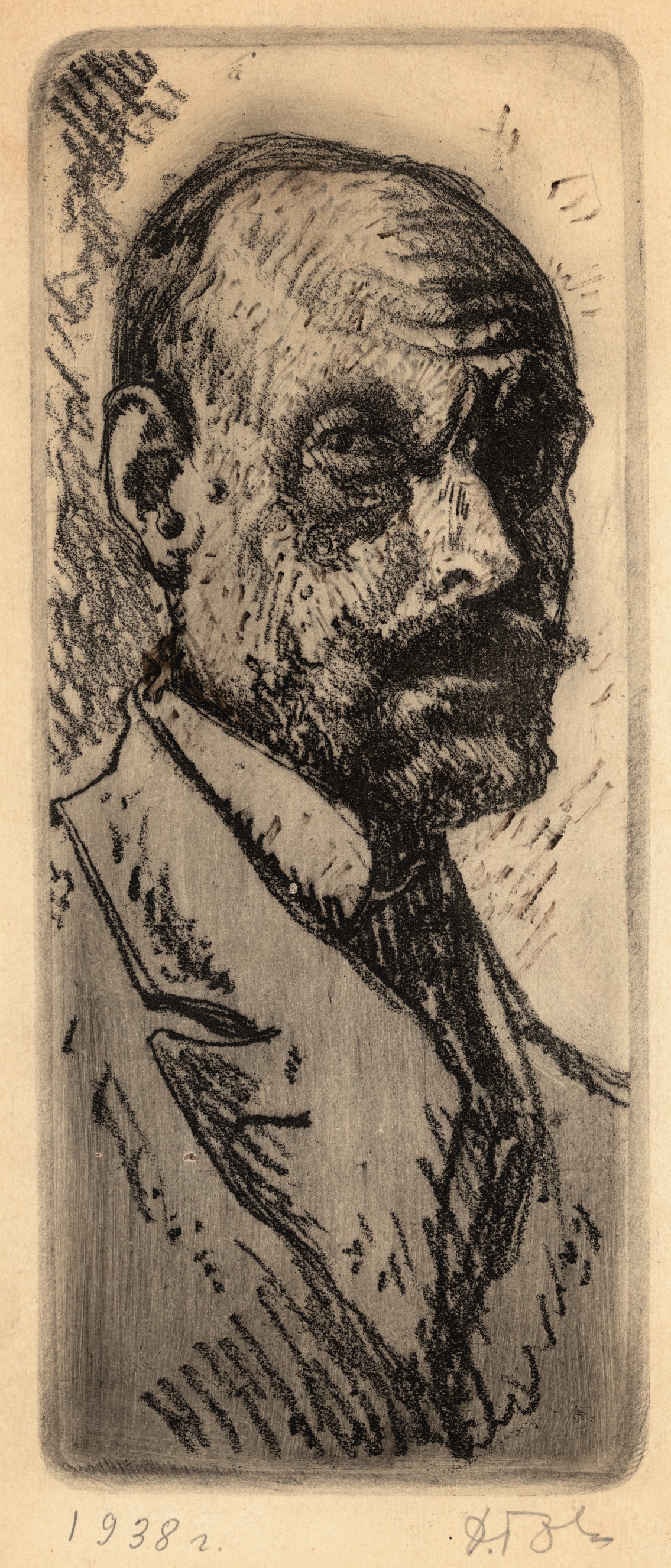
Among his graphic works, his portraits deserve special attention. In them, the artist combines realistic representation with modern artistic devices, using the expressive qualities of each medium to enhance the impact of the image. At the same time, capturing the sitter’s character remains of the greatest importance. For example, in his graphic portrait of Charlemagne, Gabashvili employs chiaroscuro modelling to create a convincing sense of realism. He also makes masterful use of line, stroke, plane, texture, the sitter’s pose, and the overall compositional structure, to reveal the distinctive qualities of the etching technique and imbue the image with aesthetic depth. The bold strokes etched into the paper’s surface enhance both its material presence and expressive strength. Yet the artist’s primary concern is to emphasize the sitter’s intelligence and wisdom, conveyed above all through the expression of the eyes and the deliberate use of shadow. One side of the face is partially obscured, introducing an element of mystery into the composition. The viewer perceives not merely a physical likeness but also an inner state: a mood that is serious, contemplative, and tinged with melancholy.
Gabashvili adapted his artistic approach and technique according to the demands of each work, always drawing upon the inherent qualities of the chosen medium. Thus, whereas the portrait discussed above relies on texture and the expressive power of etched lines to convey character, in the Portrait of Eteri, he employs soft modelling and an emphatic contour as his principal means of expression. The visual language of the work is built upon the rich tonal qualities of sanguine and the fluidity of the contour line, both of which serve to underscore the sitter’s softness, grace, and femininity.
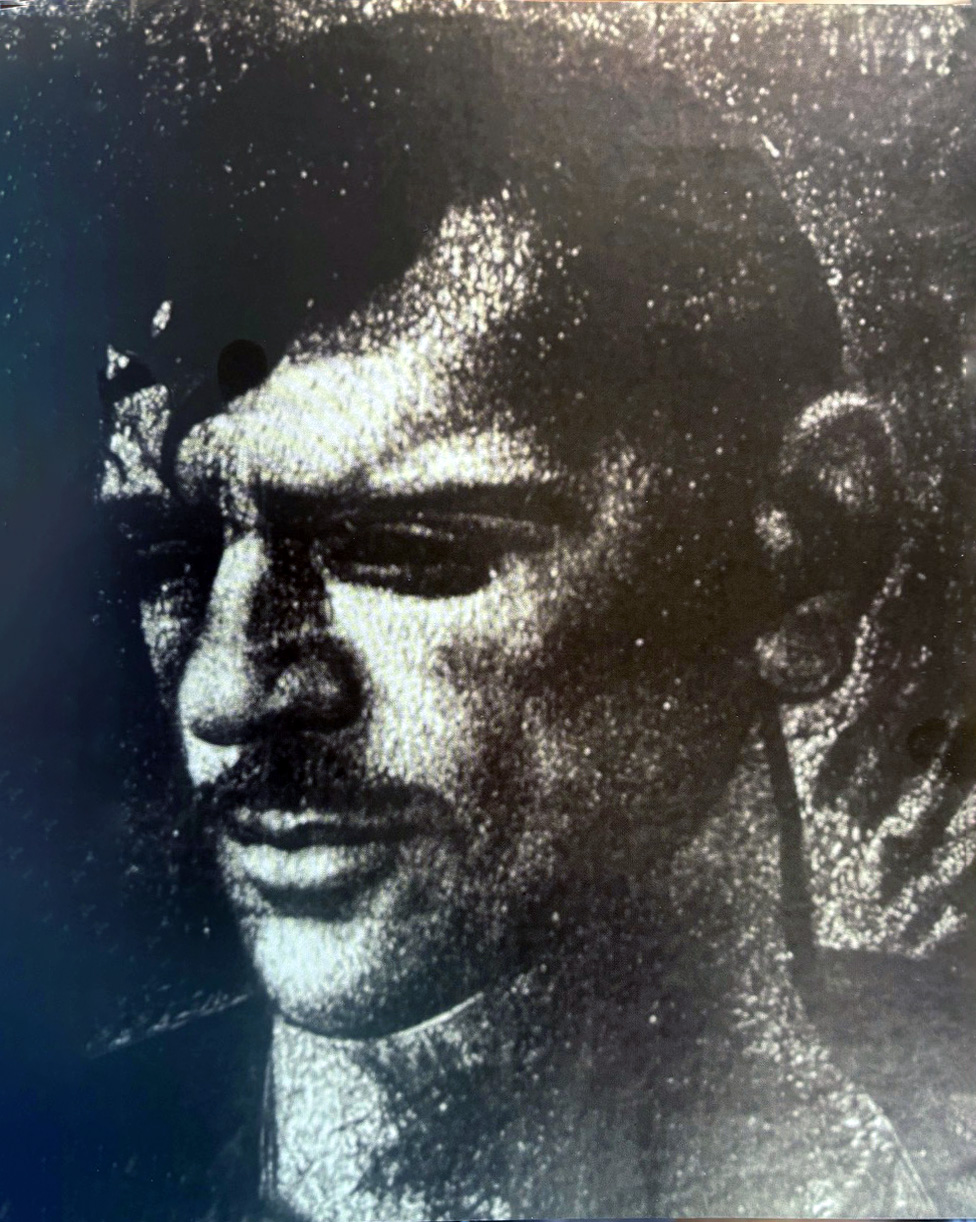
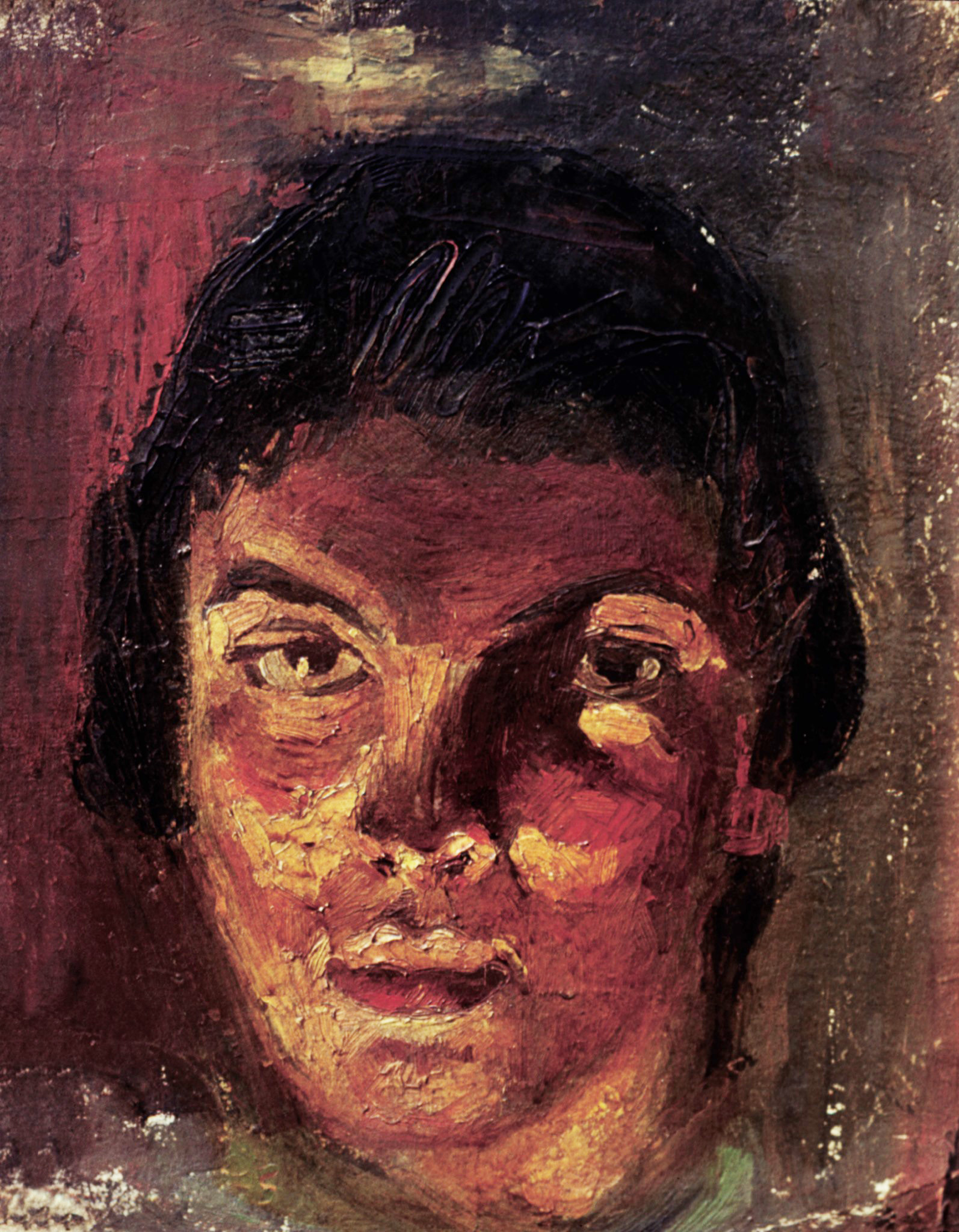
Texture serves as the primary means of expression in his portrait of aWorker from Kavtiskhevi. Here, the artist seems to "forge" the worker's powerful face, shaped and sculpted by labor and life experience. A different approach is evident in the painted version of Portrait of Eteri. Through the impasto quality of the oil paint, the dramatic interplay of light and shadow, and the close-up composition that allows the figure to fill the entire picture plane, the artist reveals the woman's melancholy mood and profound inner spirit.
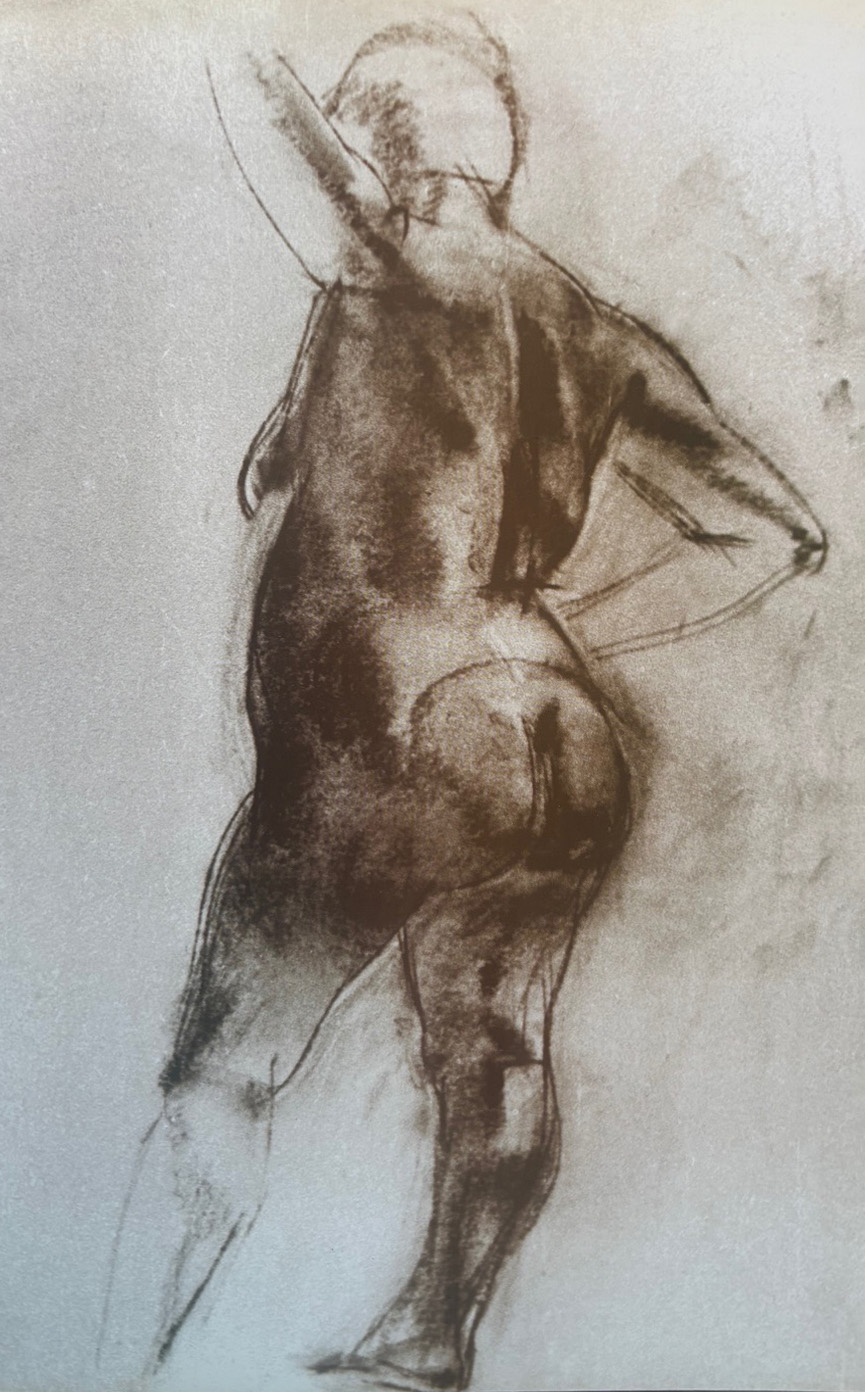
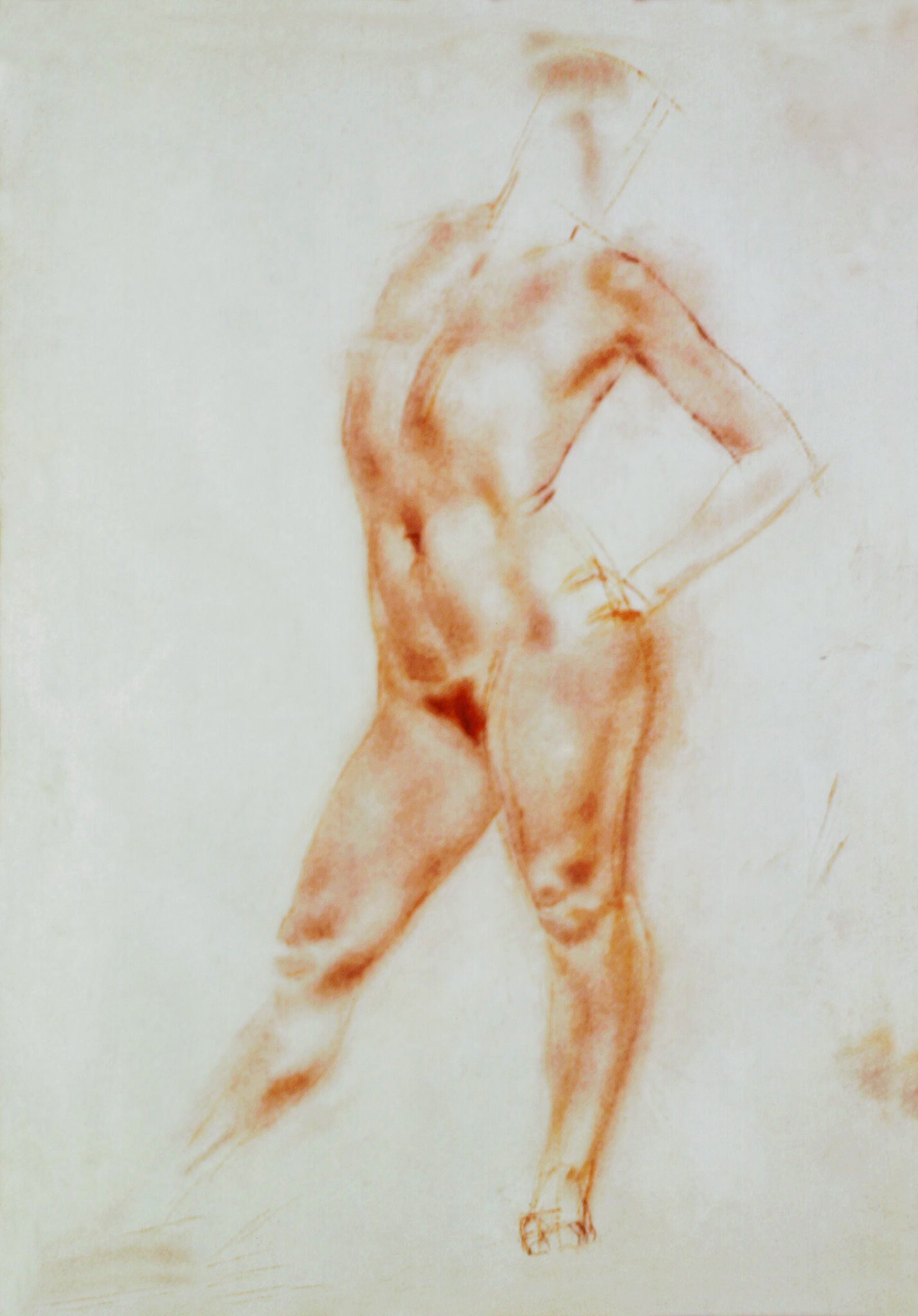
The nude figures executed by the artist in the 1930s are essentially sketches rendered with a few strokes, simplified forms, and concise images. The emphasis is placed on the dynamics of movement, while the relationship between line and form and the organization of the figure within the space remain central to the composition. Some of the nudes preserve that spontaneous, sketch-like immediacy, while others intentionally evoke a sense of incompleteness. Their expressive force derives from both the intrinsic qualities of the medium and the energetic rhythm of the forms in motion. In Seated Model, for example, the principal expressive device is the interplay and juxtaposition between finished and unfinished forms.
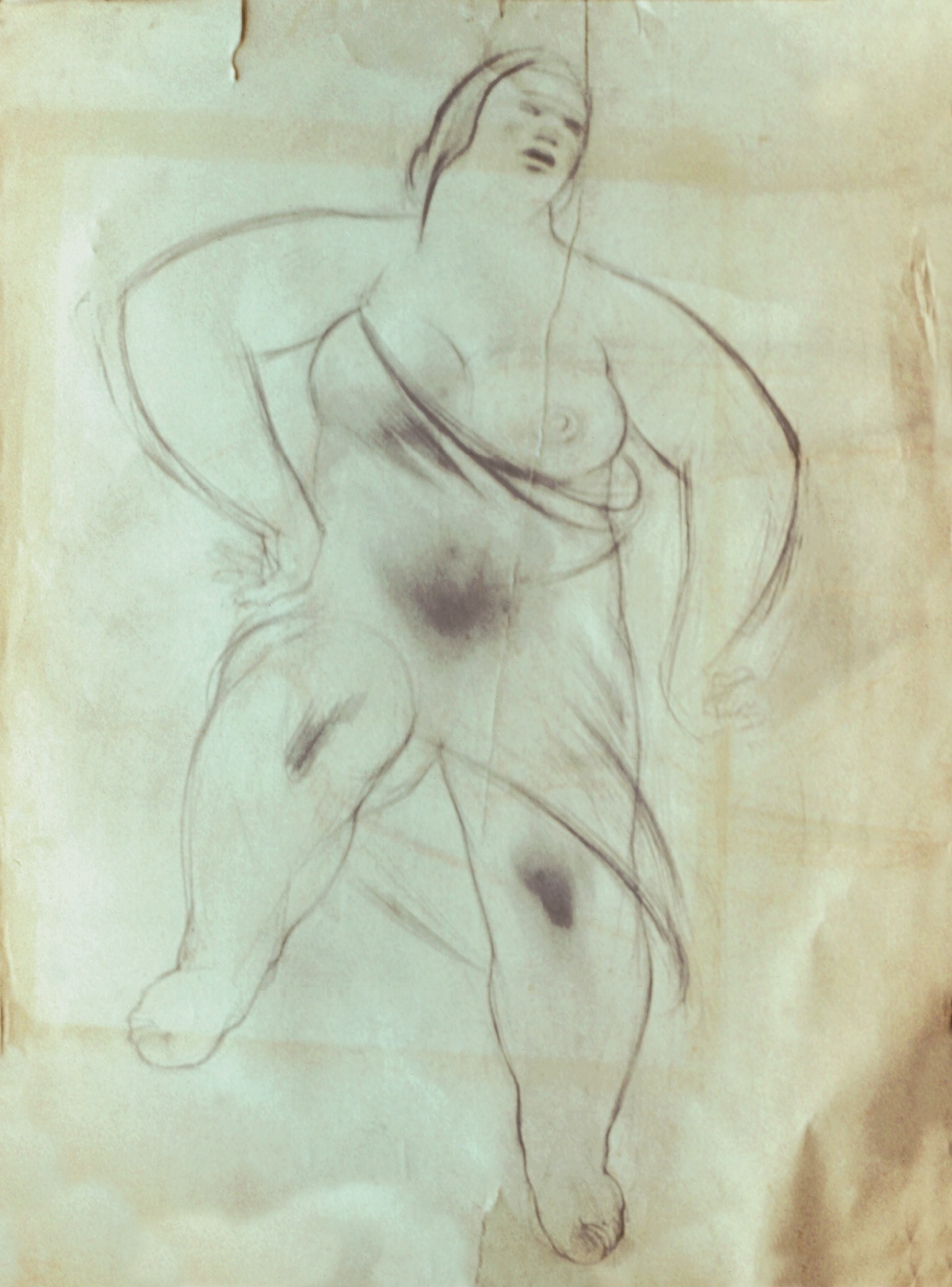
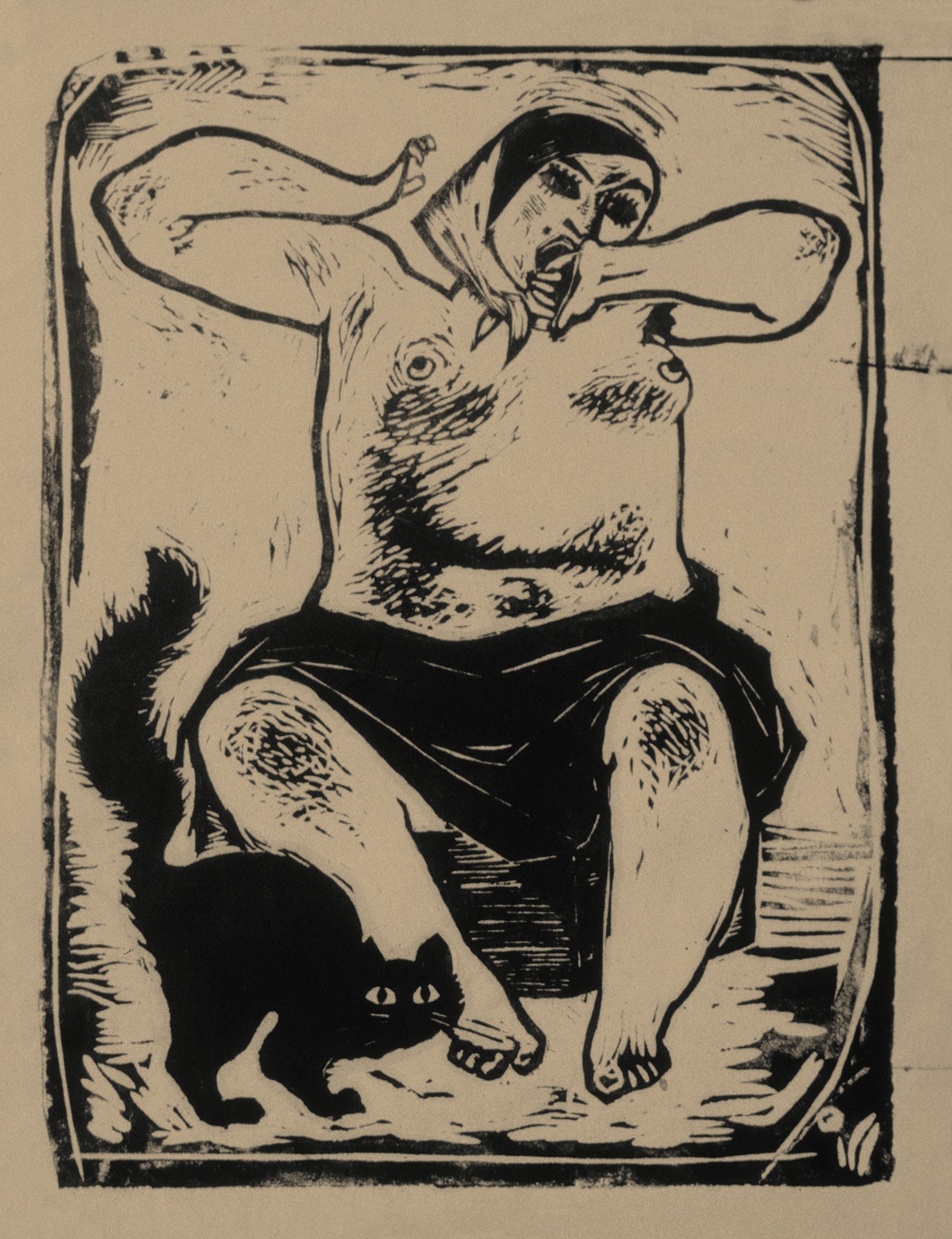
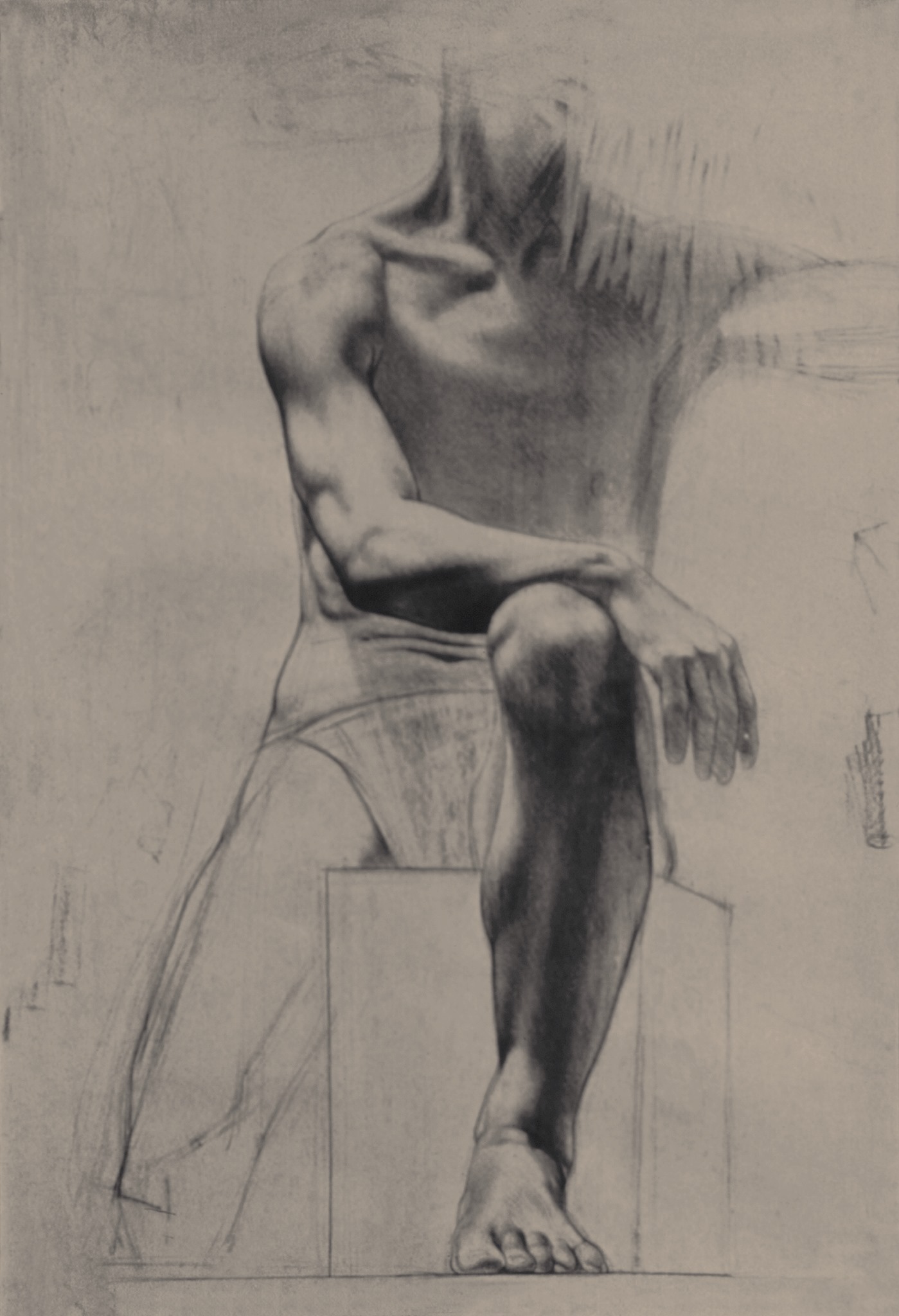
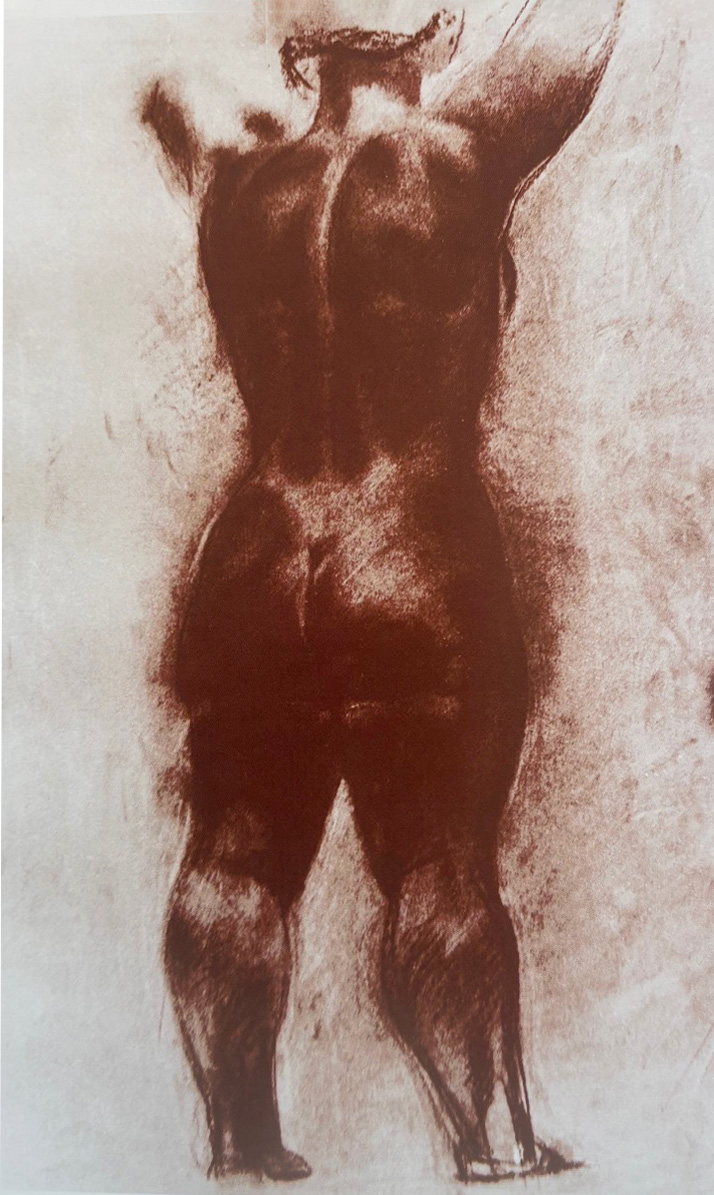
Gabashvili’s later graphic nudes demonstrate the artist’s progression from realistic representation towards a fuller exploration of the expressive potential of the medium itself. Here, the material acquires an artistic voice of its own, and its distinctive qualities are brought to the fore. As a result, the nude becomes not only aesthetically beautiful, but also more expressive and emotionally charged.
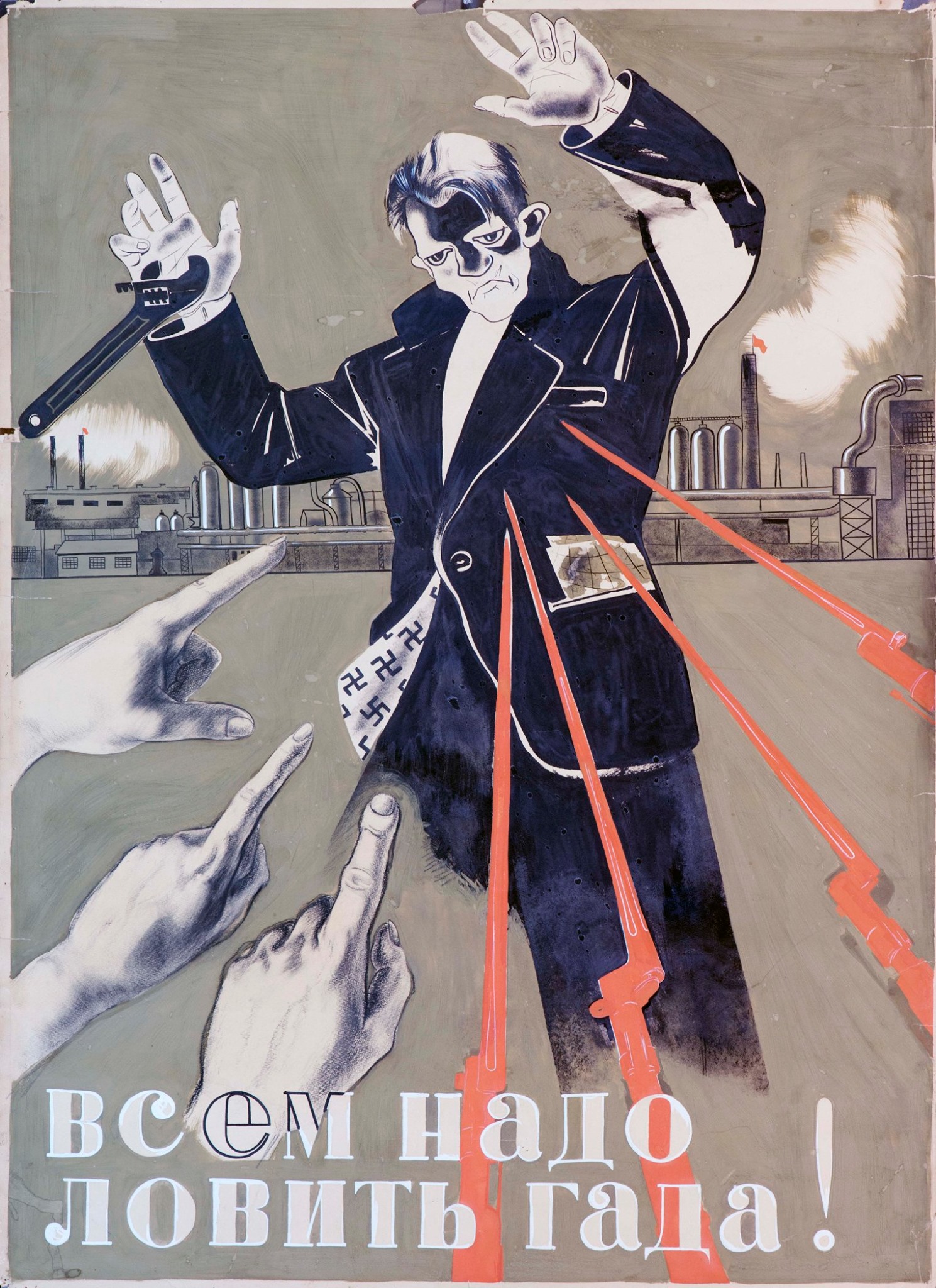
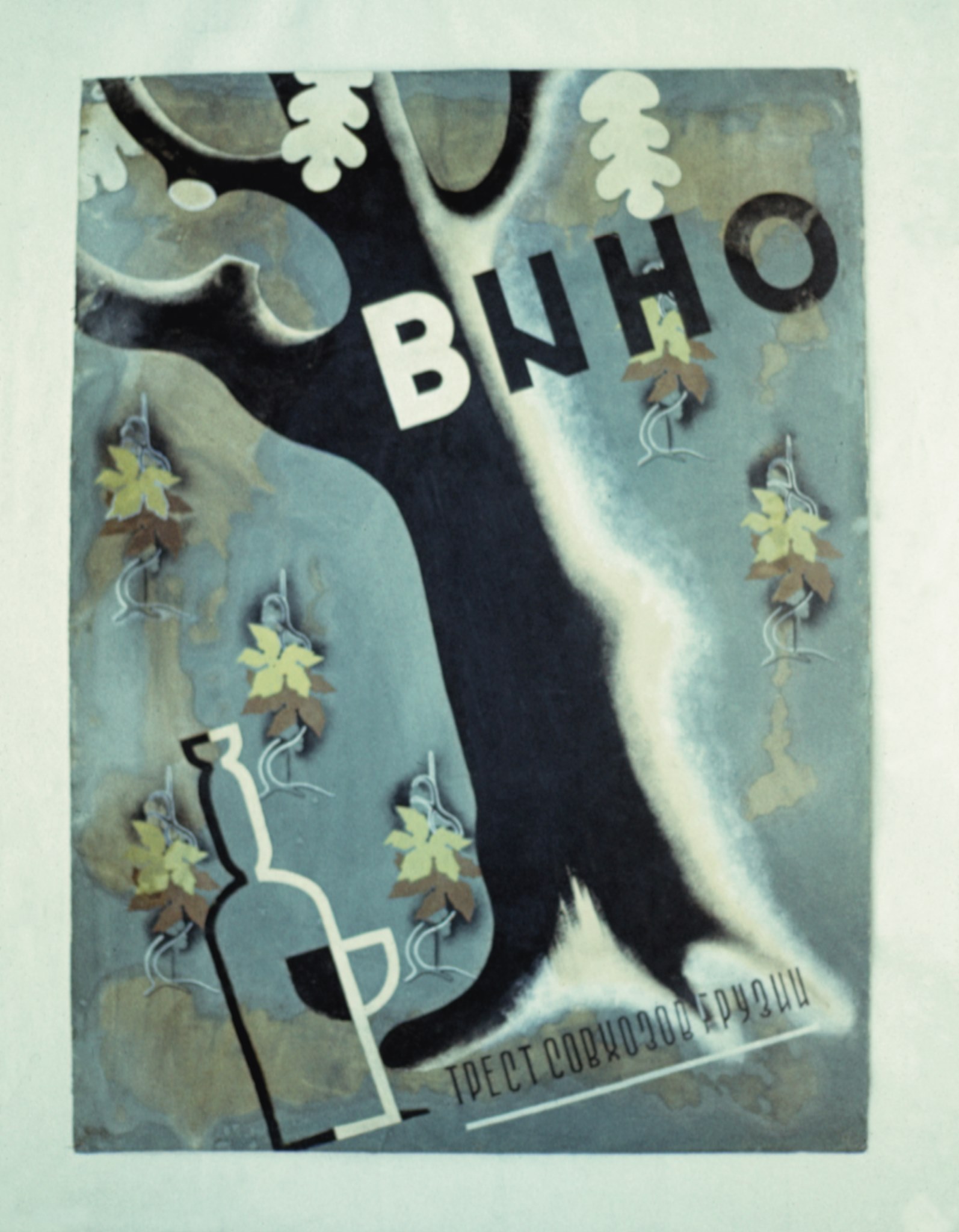
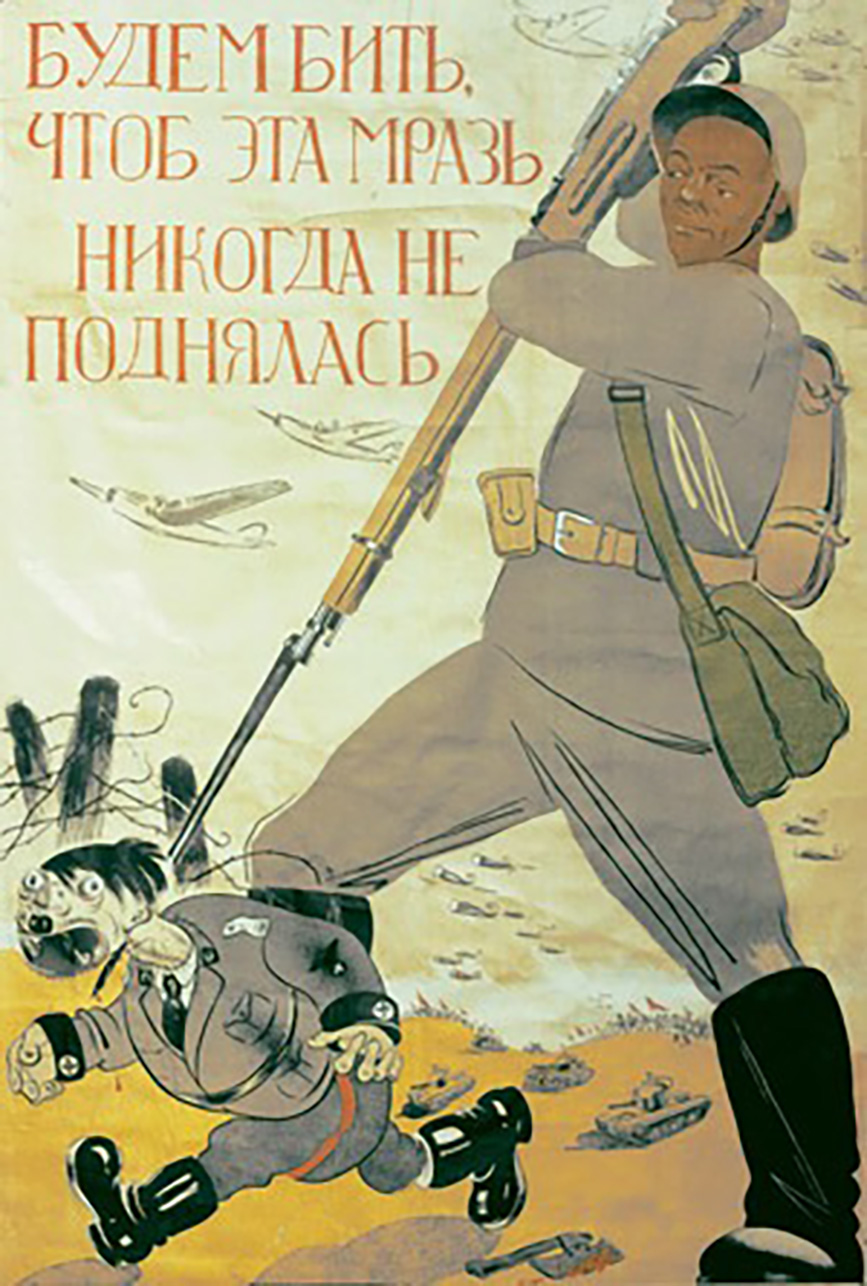
Poster art occupies an important place in David Gabashvili’s creative work, revealing the directness and expressive power characteristic of the genre. His posters convey clear, concise, and visually striking messages, often enriched by touches of humor expressed either through the imagery itself or through the accompanying slogan. Particularly noteworthy are his posters created during the Second World War, in which a laconic visual language, powerful expressiveness, and a precisely articulated message are seamlessly combined.
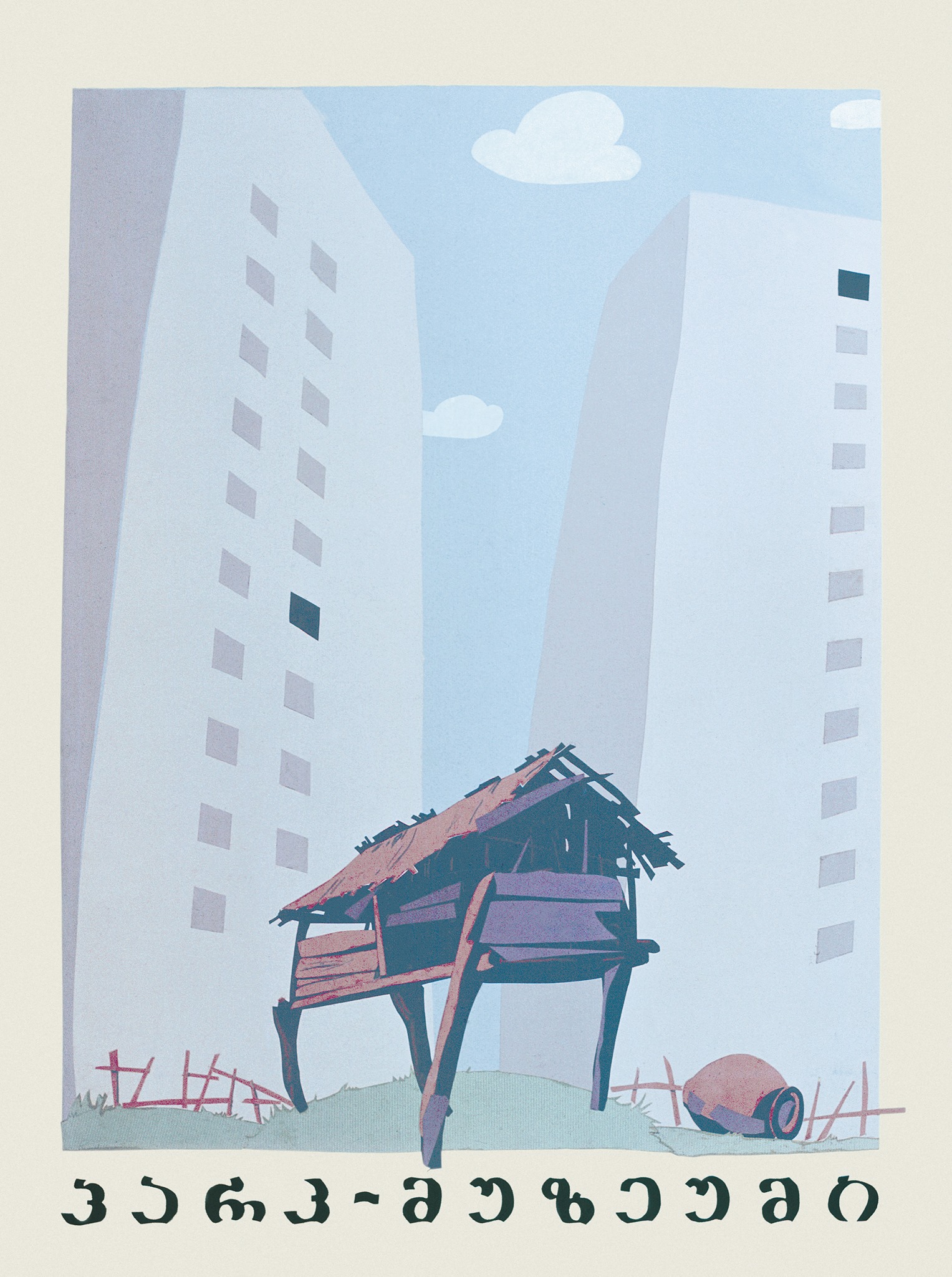
In his poster designs, the artist employs a variety of visual devices and techniques. In some works, he relies on graphic drawing and simplified forms, while in others he incorporates elements of the appliqué technique, adding a greater sense of materiality and decorative richness to the composition.
His poster Park-Museum, dedicated to the Tbilisi Ethnographic Museum, was created using the appliqué technique. In this work, the artist offers an original solution by integrating ethnographic motifs into an urban setting, thereby emphasizing the coexistence of tradition and modernity, as well as the museum’s conceptual mission. The poster’s artistic language is minimalistic and highly simplified. The composition is dominated by the silhouettes of modern high-rise buildings, among which appear images of a traditional hut and a Qvevri. This contrast creates a clear visual metaphor for the preservation of cultural memory within the modern urban landscape.
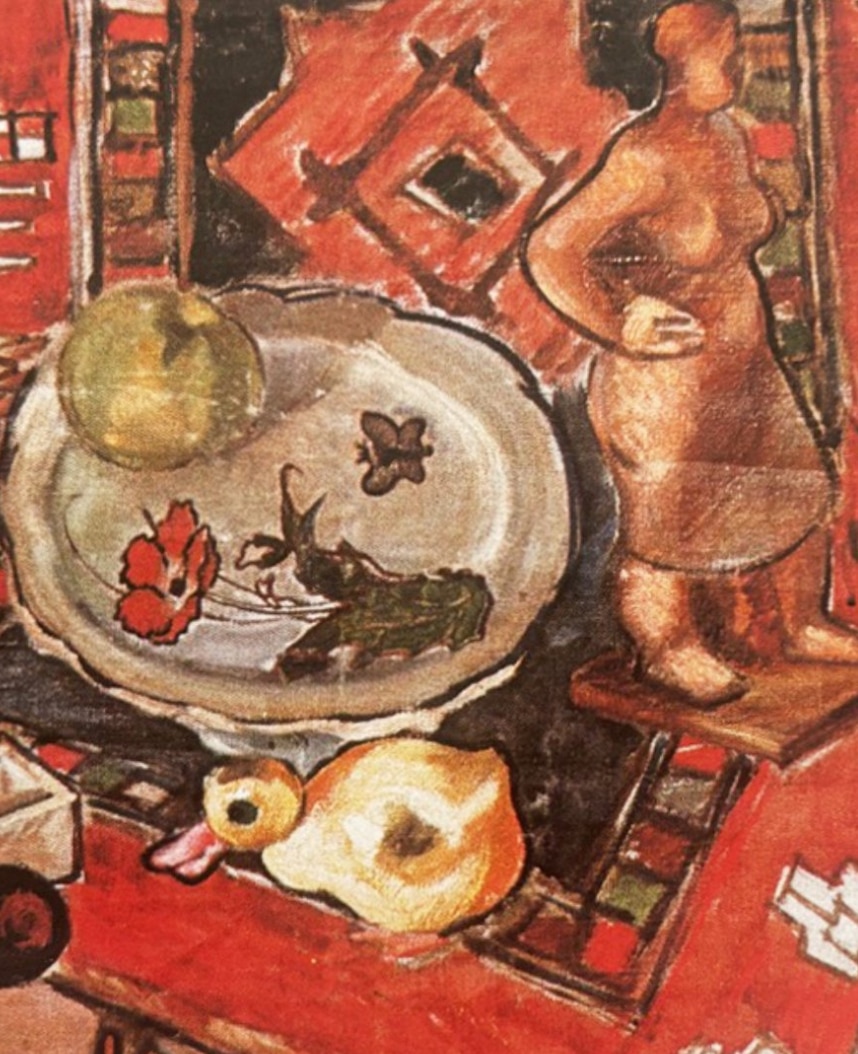
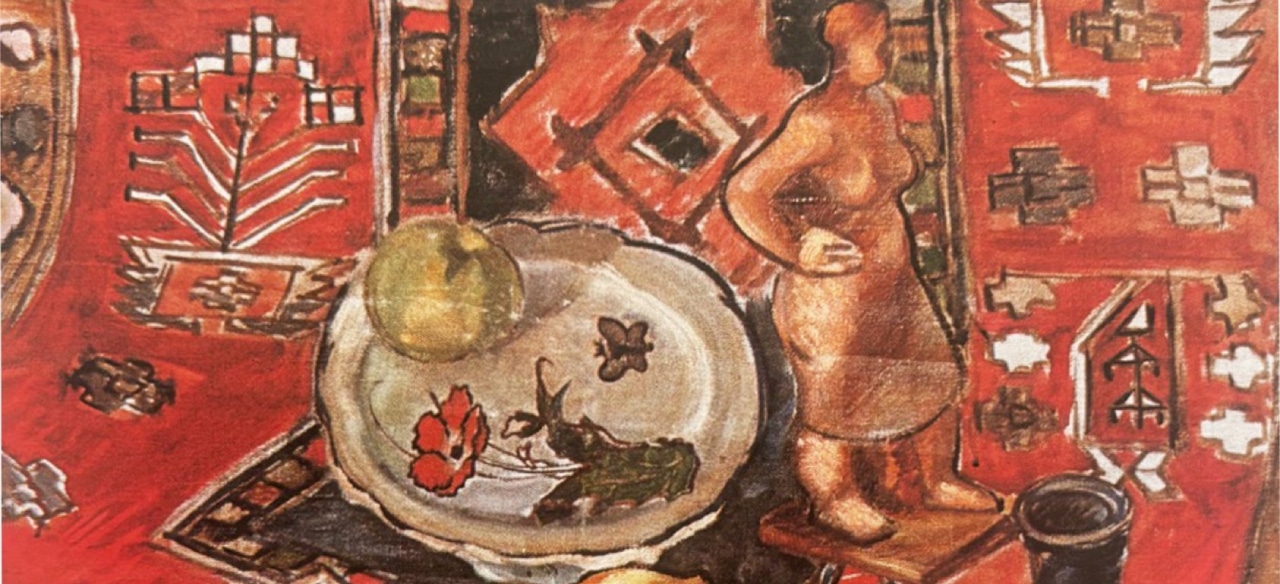
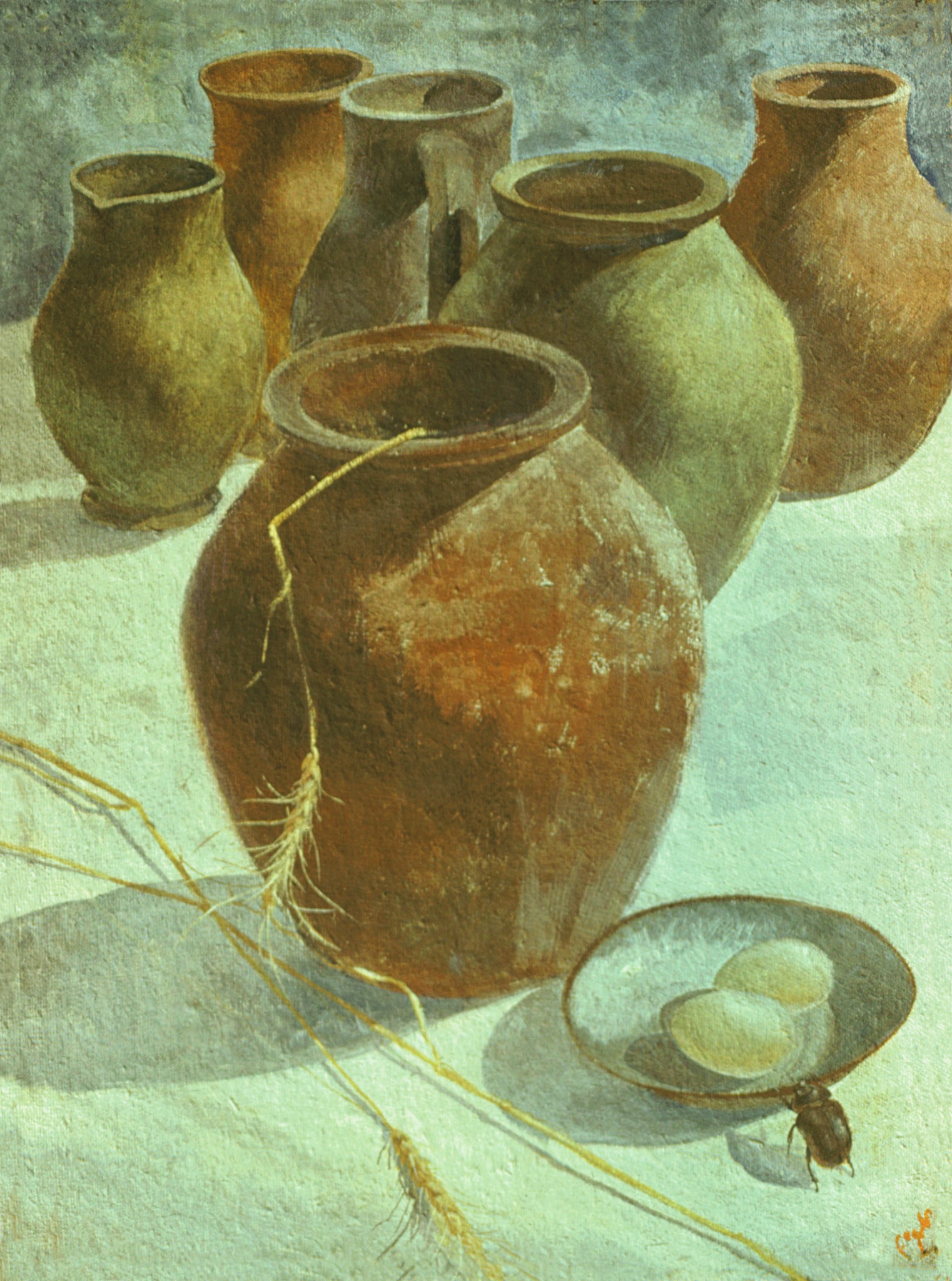
The artist’s paintings likewise demonstrate his remarkable ability to organize form in space, construct a coherent composition, and convey the expressive qualities of texture. A notable example is Still Life with a Beetle. The work is distinguished by its monumentality, rich textural treatment, rhythmic interplay of forms across space, generalized shapes, and, at the same time, its careful rendering of characteristic details. The ear of wheat, the beetle, and other elements of the composition are depicted with pronounced textural emphasis, together forming a striking and highly distinctive artistic whole. The colour palette of the painting further enhances its expressive impact. Resonant yellow, golden, and sanguine hues are set against the cool grey tones of the tabletop and background. These cooler tones are subtly infused with warm yellow accents, creating a chromatic unity that binds the composition together and lends it a particular richness, harmony, and visual vitality.
From the 1950s, sculpture became an important part of Gabashvili’s artistic practice. As noted above, the artist was naturally inclined to think in terms of volume and spatial relationships. His training as an architect endowed him with a keen sense of structure and proportion, as well as a profound understanding of how three-dimensional forms interact within space. In his sculptural portraits, Gabashvili pays close attention to the distinctive features of each sitter, while ensuring harmonious proportions and a balanced relationship between individual parts and the whole. In this context, material plays a significant role. Its texture, along with the expressive qualities of the silhouette, contour, and formal outline, contributes to the overall plastic unity of the work.
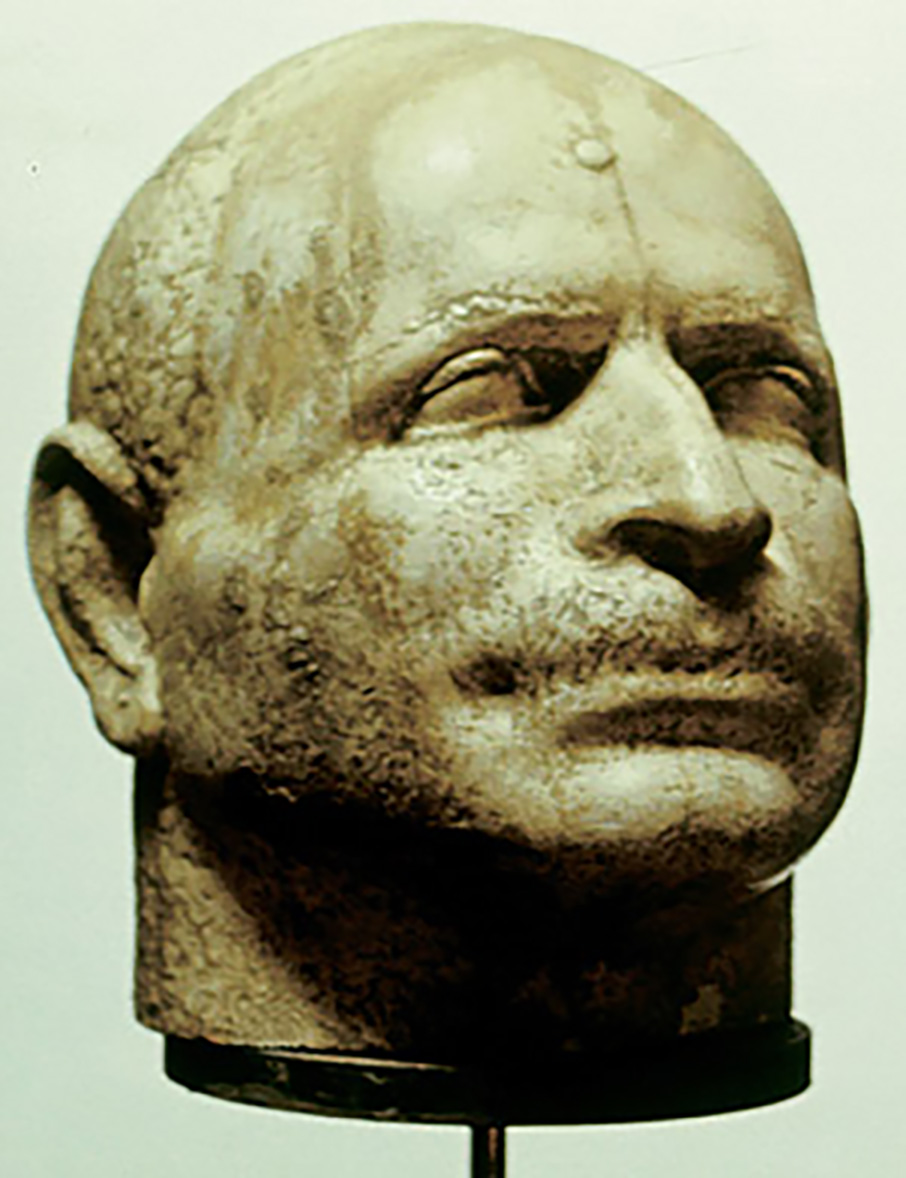
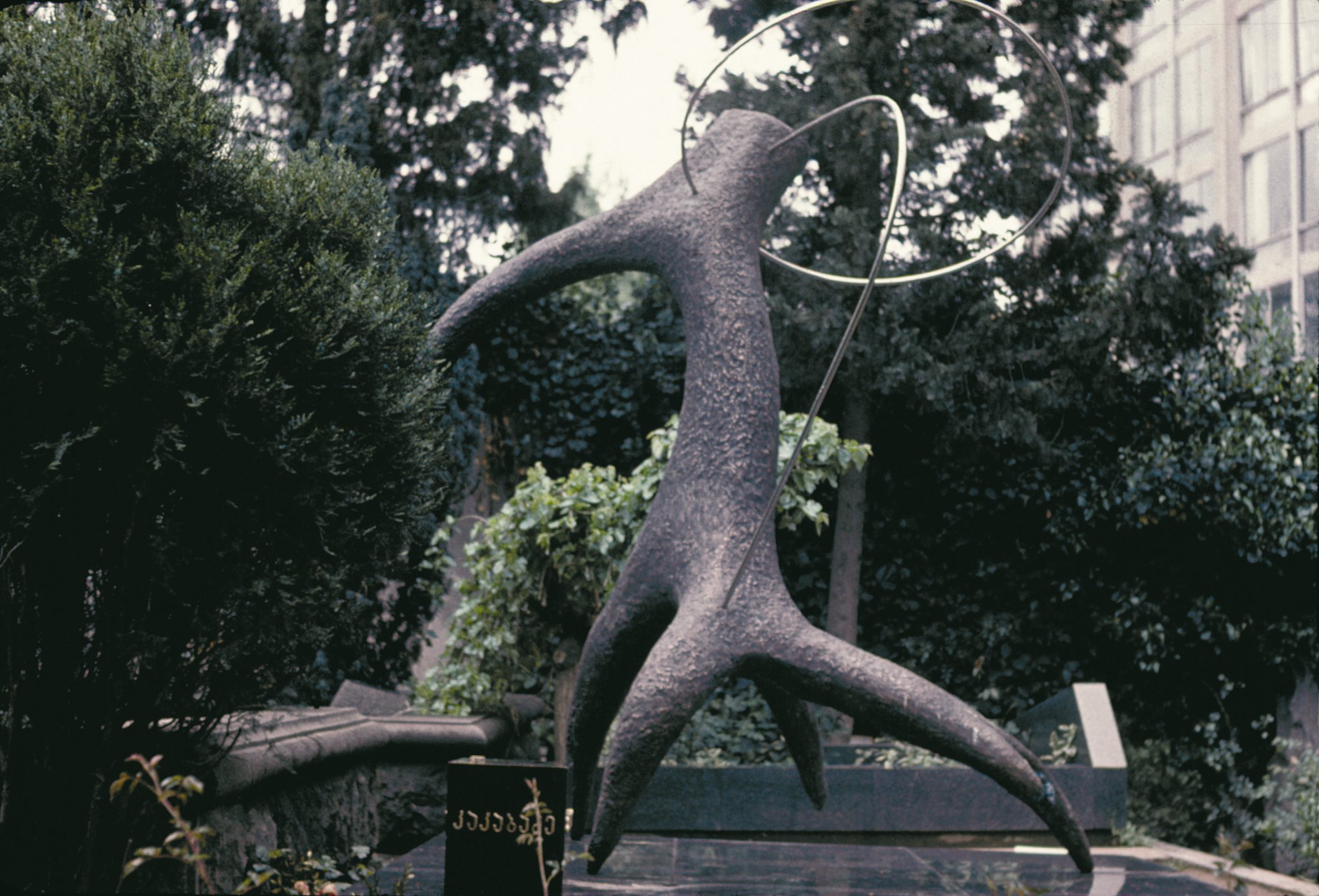
I would particularly single out the portrait of David Kakabadze, in which, alongside the individuality, an extraordinary expressiveness of character comes to the fore. This effect is achieved both through the artist’s distinctive treatment of the material (incised marks on the surface that create additional effects of light and shadow) and through the highly characteristic rendering of individual features: tightly pressed lips, furrowed brows, and eyes that seem to direct the viewer towards the artist’s inner self. Together, these elements imbue the portrait with a sense of tragedy and powerful emotional intensity. Similar expressiveness characterizes the monument marking Kakabadze’s grave: an abstract bronze composition that conveys intense movement and a sense of energy seemingly enclosed within itself, echoing both the artist’s biography and the tragic final days of his life.
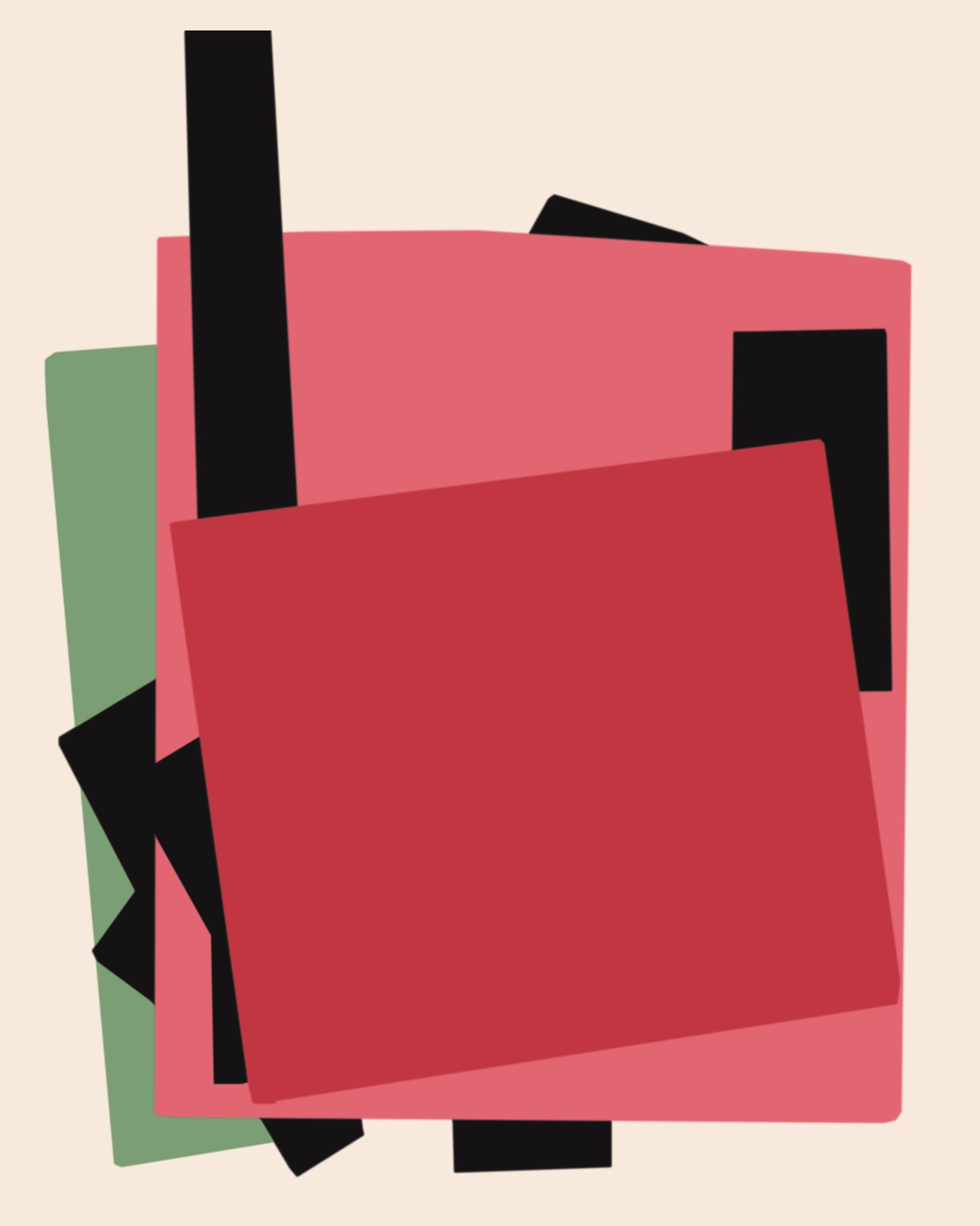
Abstract compositions began to appear in Gabashvili’s work in the late 1970s. It is noteworthy that he frequently employed the collage technique in these abstractions. The abstract forms, cut from colored paper, create a dynamic interplay between plane and space, while emphasizing their architectonic structure. His abstractions organically unite the architect’s spatial thinking, the illustrator’s decorative and symbolic vision, the graphic artist’s linear precision, and the painter’s emotionally expressive use of color. Through this synthesis, Gabashvili creates multilayered, rhythmically organized compositions in which form, color, and space acquire independent expressive significance.
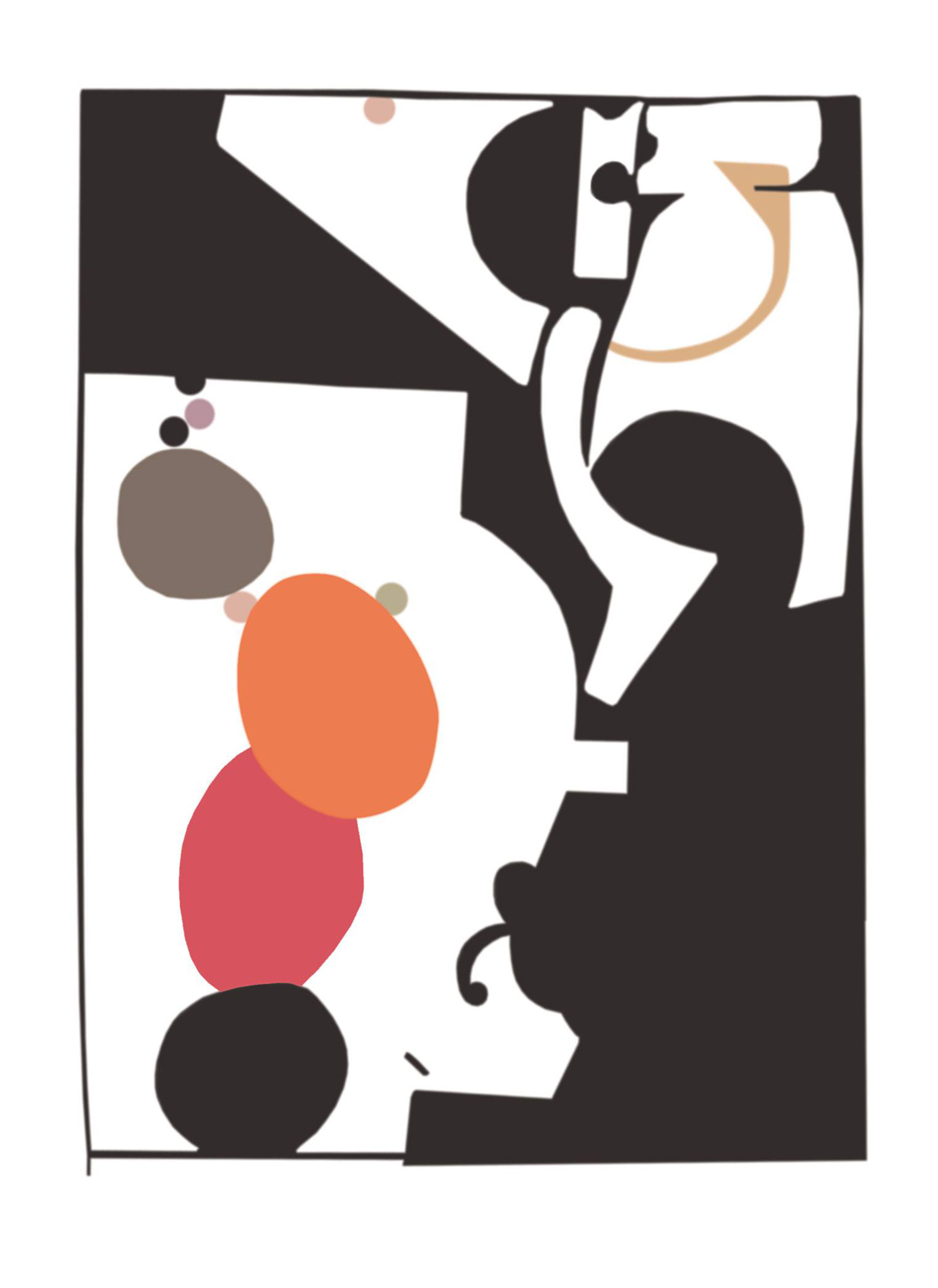
Even in abstraction, the artist remains faithful to his fundamental artistic principles. His abstract works are characterized by structurally coherent compositions, a harmonious interplay of plastic forms, rhythmic movement, and a strong constructive foundation. The outlines and forms are arranged across the picture plane in such a way as to create a sense of spatial depth, while line, form, and color are brought together in a harmonious unity. In some works, the artist places particular emphasis on the expressive power of color; in others, he achieves expressiveness through the dynamic interaction of contours and forms.
Another intriguing aspect of these abstractions is that the viewer inevitably recognizes the handwriting of a graphic artist who possesses a masterful command of illustration and typographic design. The outlines and forms seem to echo the contours of Georgian letters, although there is nothing literal or explicitly referential about them. These visual signs are transformed into abstract silhouettes and a free play of forms, where compositions built upon the rhythms of line, plane, and simple geometric shapes create a compelling artistic and aesthetic whole.

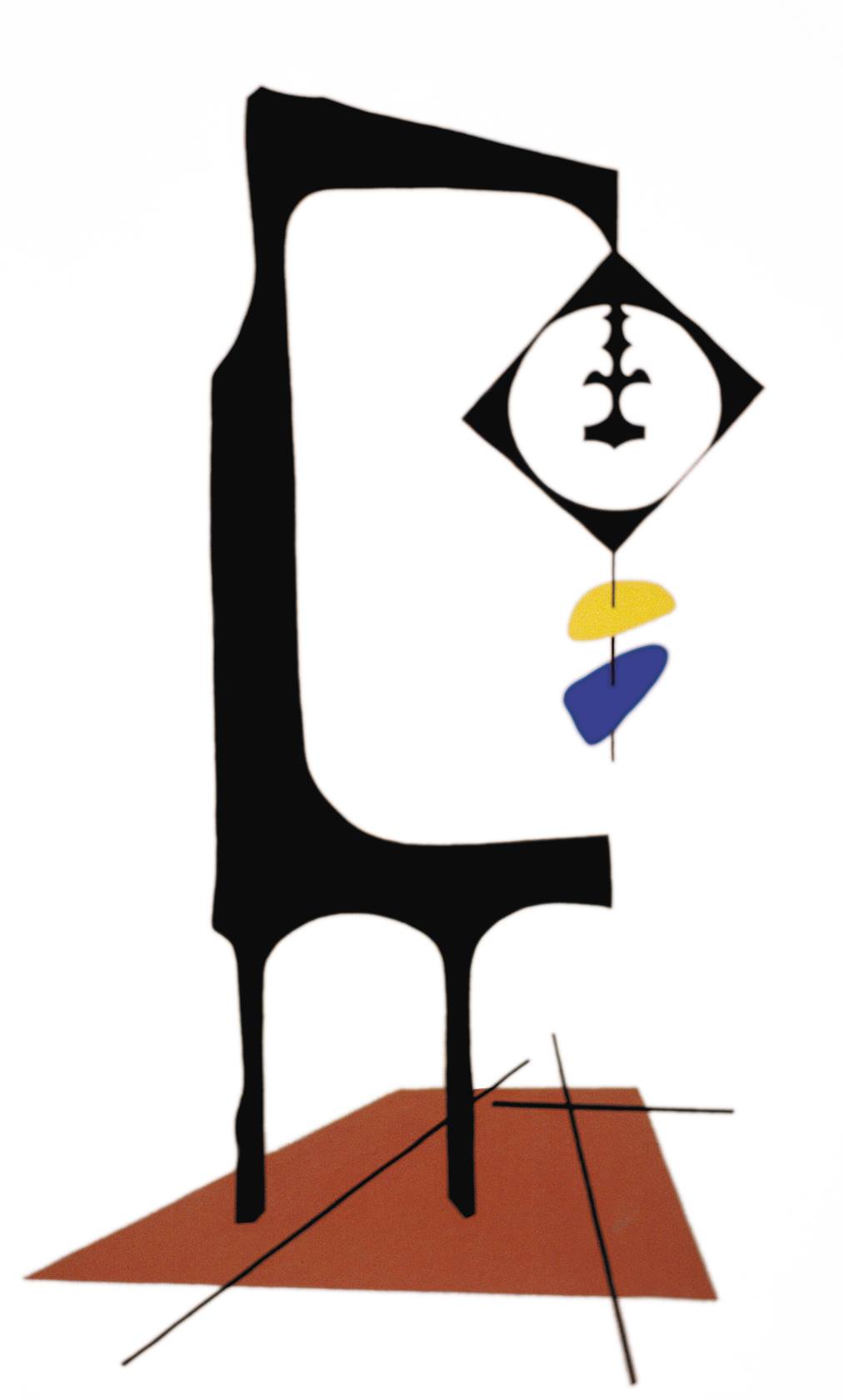
The modernist paradigm is of central importance to the artist, manifesting itself in both its formal solutions and visual language. Cubism, Suprematism, and Surrealism provide an underlying formal framework for Gabashvili’s abstractions, yet the viewer's imagination continues to search for emotions and meanings concealed behind these abstract forms. One thing is certain: the artist's knowledge and refined sense of taste never fail him in the creation of abstract works that are both aesthetically accomplished and emotionally resonant.
The artistic legacy of David (Duda) Gabashvili represents one of the most significant and multifaceted phenomena in twentieth-century Georgian art. As noted above, he worked with equal mastery in painting, graphic art, sculpture, poster design, book illustration, and lettering; creating works in every field in a manner distinguished by exceptional professionalism, cultural sophistication, and refined aesthetic sensibility.
Gabashvili's creative legacy holds significant importance due to his varied artistic practices and his well-defined individual artistic language. Despite the ideological constraints typical of the Soviet era, his work succeeded in preserving its identity and securing a distinctive place within the history of twentieth-century Georgian art.
References:
Giorgi Khoshtaria. David Gabashvili, Painting, Graphics, Sculpture, Abstraction, Poster, Book Illustration. Tbilisi, 2000.
Meri Karbelashvili. Creative Work of the Artist David Gabashvili. ARS Georgica, Series B, Vol. 6, 1964, p. 25-50.
Mariam Gachechiladze. David Gabashvili – 100. ARS Georgica, Series B, 2014.
Maia Tsitsishvili. Georgian Painting, History of Development. Tbilisi, 2013.
110 Years Since the Birth of David (Duda) Gabashvili, https://kvira.ge/973426
Vakhtang Beridze, Natalia Ezerskaya. The Art of Soviet Georgia 1921-1970. Moscow, 1975.
Vakhtang Beridze. Farewell. Literary Georgia, Tbilisi, 1995, 17-24 March.
Mariam Gachechiladze. David (Duda) Gabashvili. Mtsignobari ’16, Tbilisi, 2016. p. 187-201.
David Andriadze. The Art of the Georgian Book. Tbilisi, 2013.
.png)
.jpg)