




 Share this article
In 1970s Soviet Georgia, the pressure of socialist realism propaganda and censorship had lessened significantly, but nonconformist artists were still unable to take advantage of state benefits. Without large orders, they were unable to buy cars, apartments, or country homes with party lists, nor could they hope for a personal exhibition or widespread recognition. Yet, locked in their studios, they retained their creative freedom, refused to praise their leaders, and in doing so, learned to expect, no accolades from them. Half-starved, they continued to produce true art.
Indeed, it was absolutely intolerable for the adherents of Niko Pirosmani and Avto Varazi's "Typicon" to conform to the social norm. They witnessed how their colleagues' creativity was impacted by the compromises made in exchange for material well-being. The more socialist realism was exhibited, the more ridiculous it became. Some representatives of the 1970s contrasted the intimate and personal with the fake parade of socialist realism, responding to Soviet ideology with idealized, nostalgic, melancholic, and poetic aesthetics. Such was their silent protest.
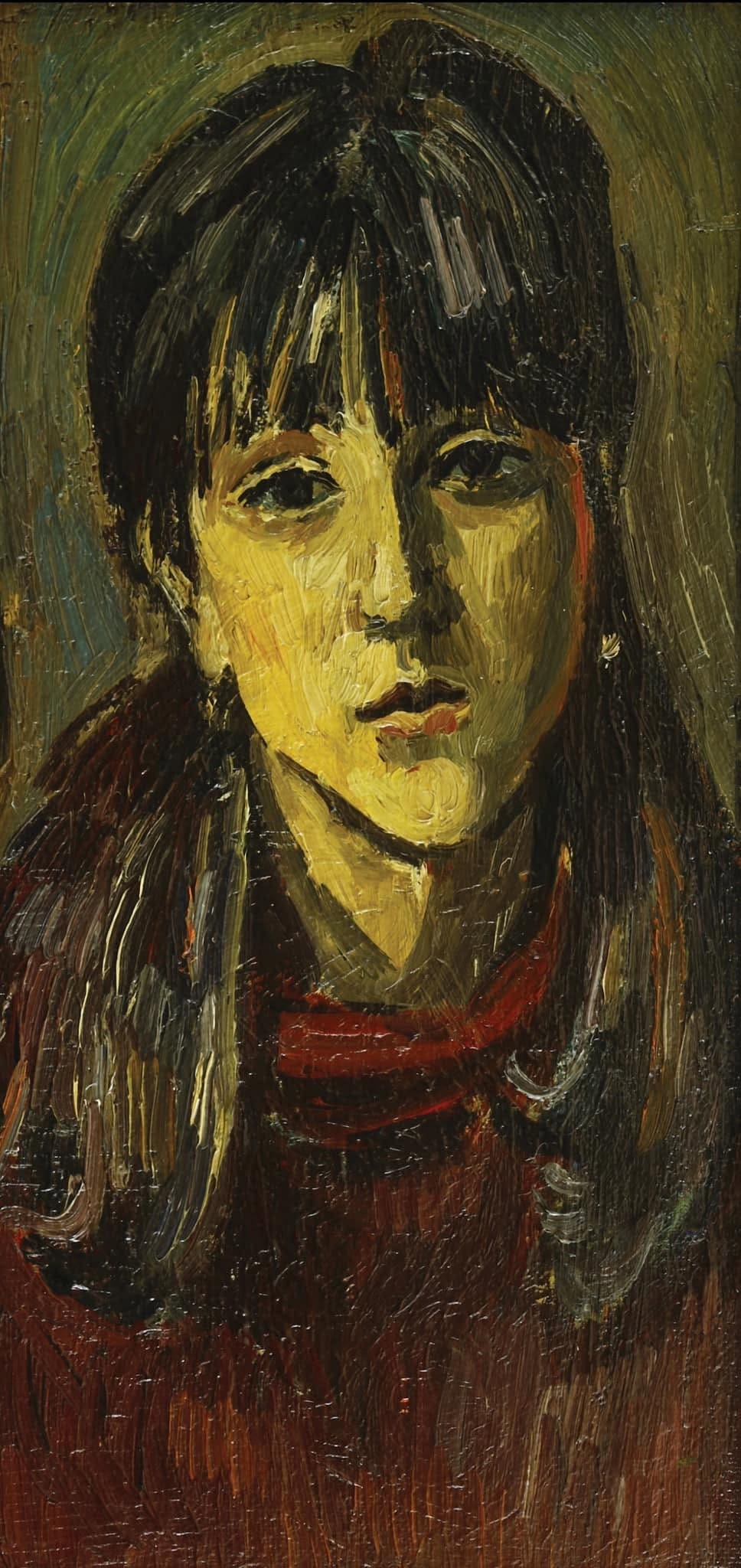
To save themselves, these artists took on private tutoring. This was more than just "tutoring" for financial gain; it was an “academic underground,” where the workshops developed into hubs for independent thought. As a result, an unbroken chain was established: these artists taught the future generation painting, integrity, sincerity, and a commitment to the truth. Temo Matchavariani (1944-2019) was among them.
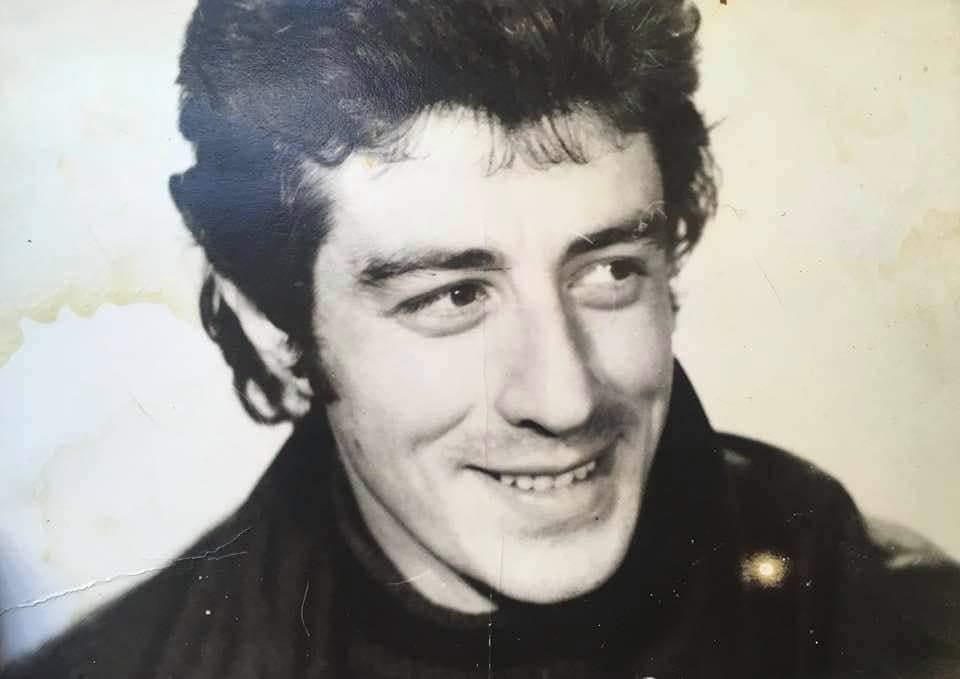
Matchavariani’s life was marked by numerous challenges. Instead of completing his education at school, he enrolled at the Iakob Nikoladze Art School, though he was not able graduate, as his love of cubism was not accepted by the authorities there. He then sought to continue his education at the Academy of Arts, but as he lacked a school certificate or art school diploma, he had to present a work certificate instead. And so began his time working at the 31st Aviation Factory.
He would wake up at six in the morning to catch the tram to the factory. Perhaps it was during this quiet hour that he fell in love with Tbilisi, still in a state of slumber.
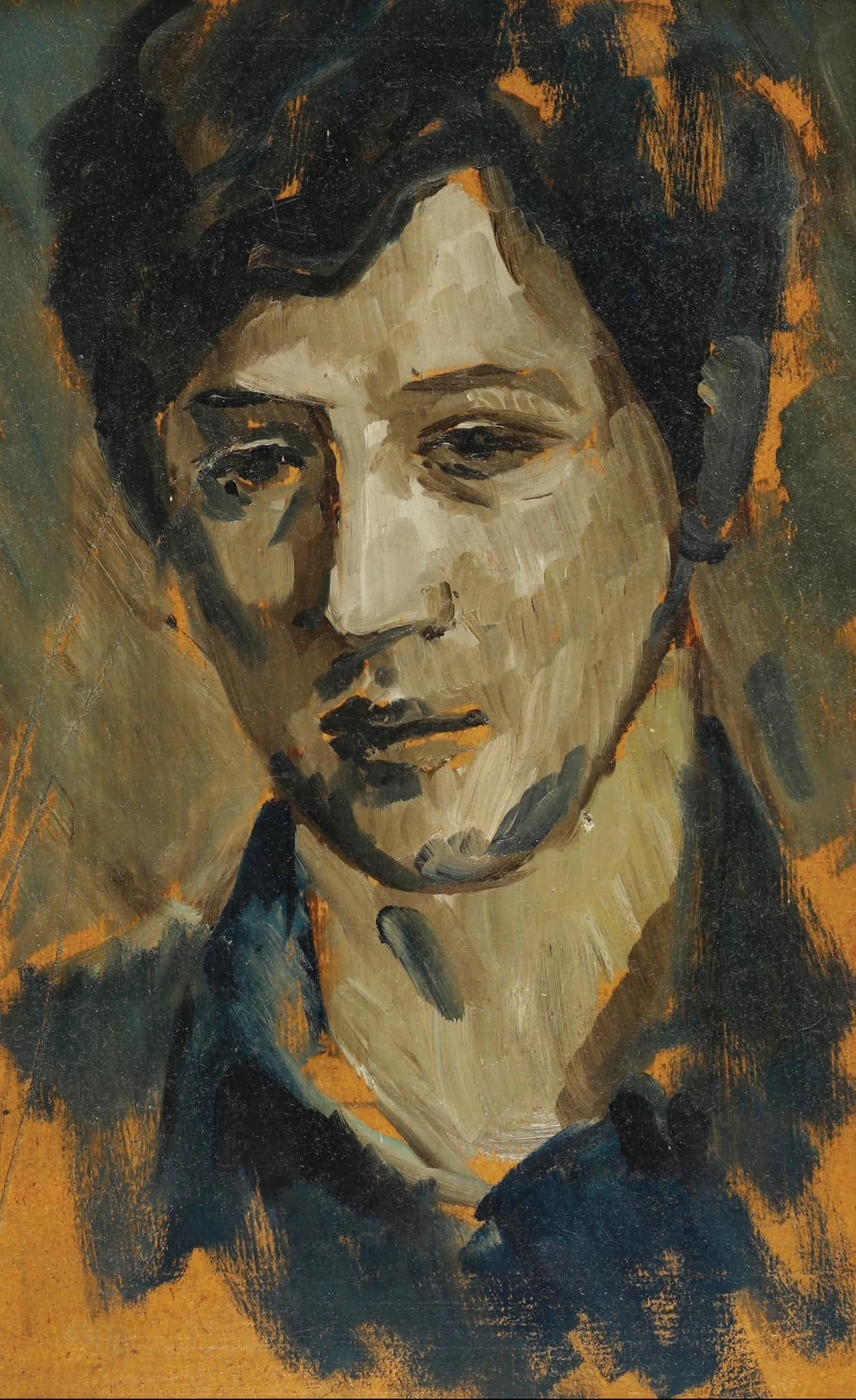
Later, on military duty, he was forced to relocate to Volgograd for three years. He went on to attend a military school after leaving the service. Having participated in numerous sports from boyhood on his father's guidance, he was physically well prepared for this time in his life.
For a short time, Temo Matchavariani was employed in the opera as a stagehand. For three years, he tried to enroll at the Art Academy. After succeeding and joining the Faculty of Art History, he moved to Parna Lapiashvili's studio at the Faculty of Theater Painting. He finished his postgraduate studies under the supervision of Ucha Japaridze. Yet Matchavariani’s goal was to paint the city he adored, regardless of the faculty he was in.
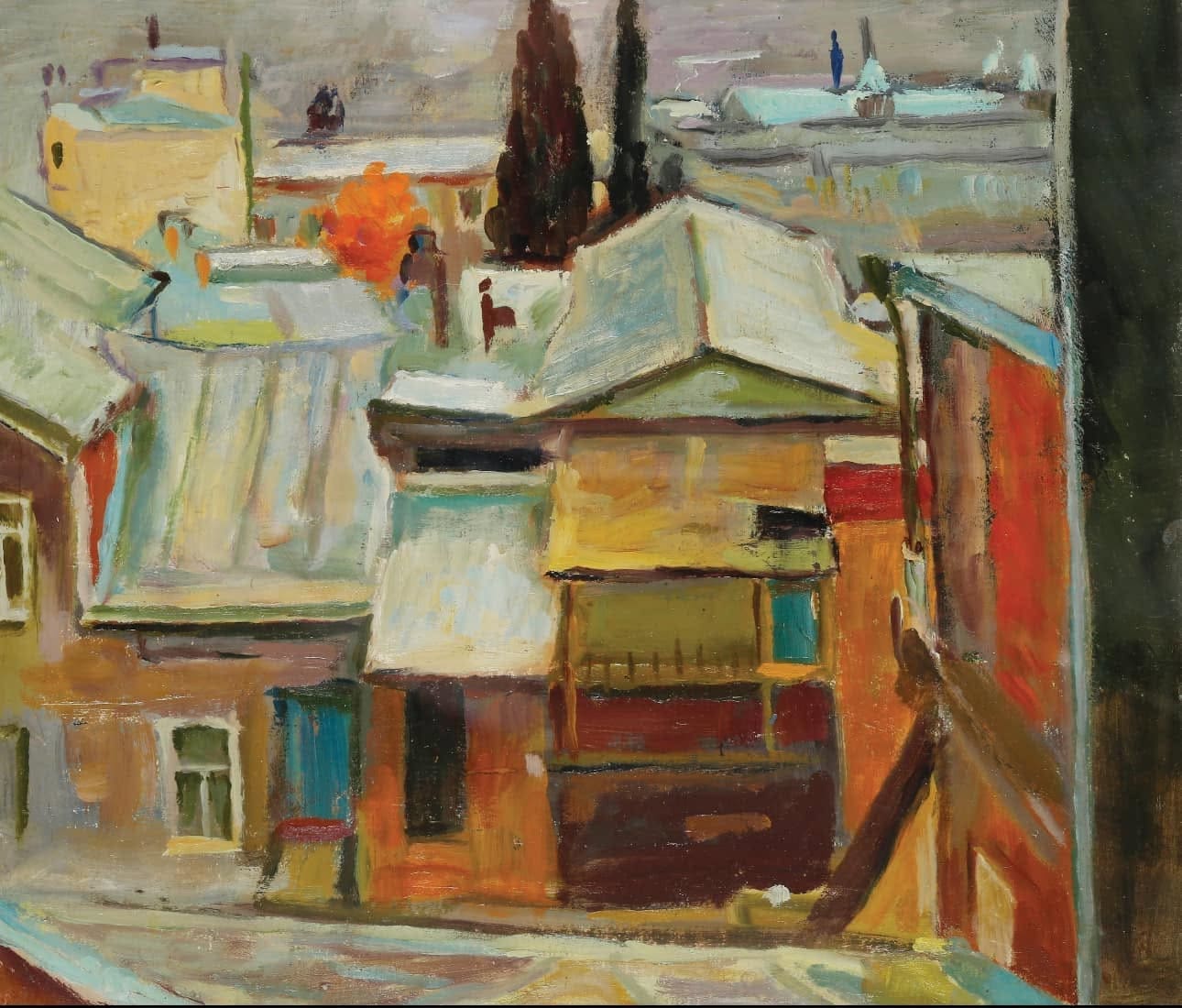
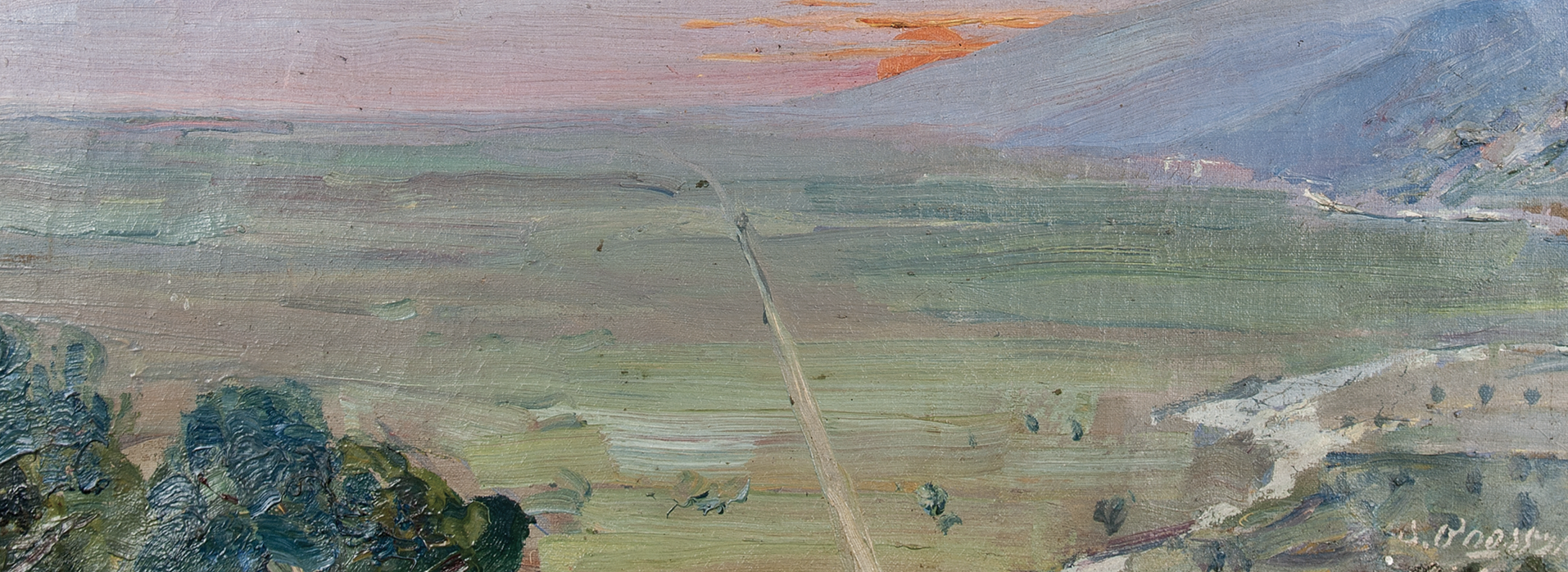
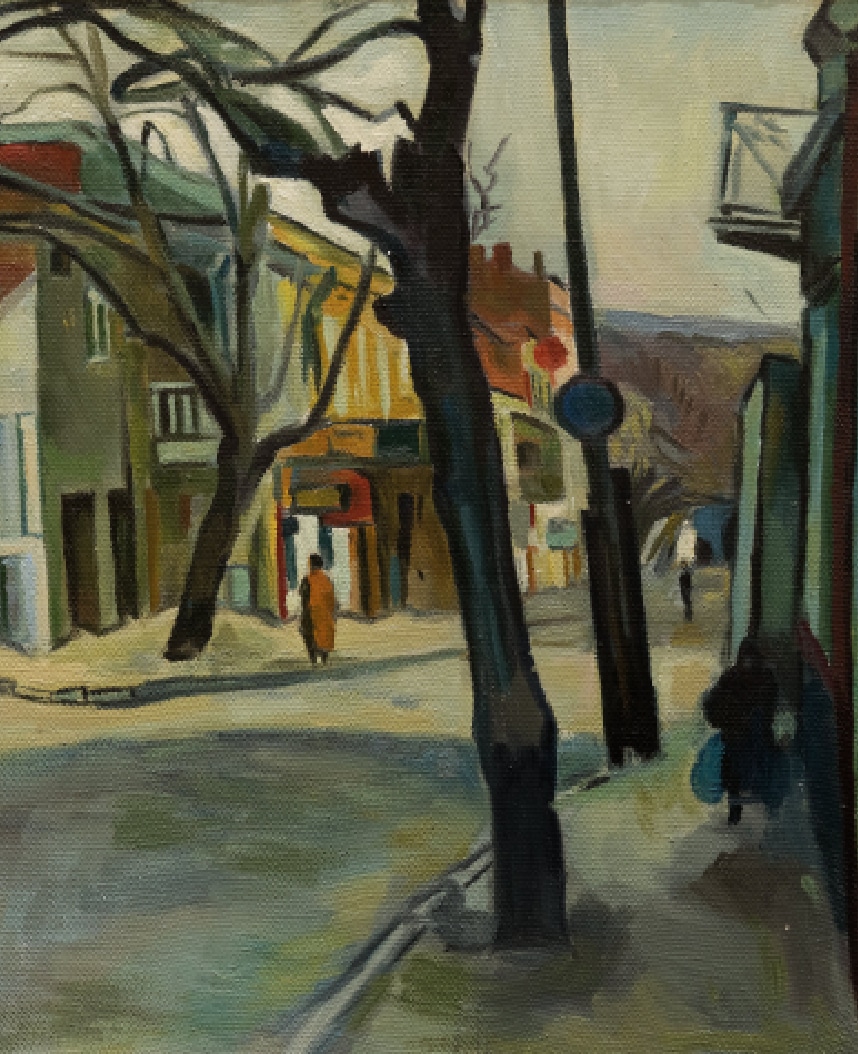
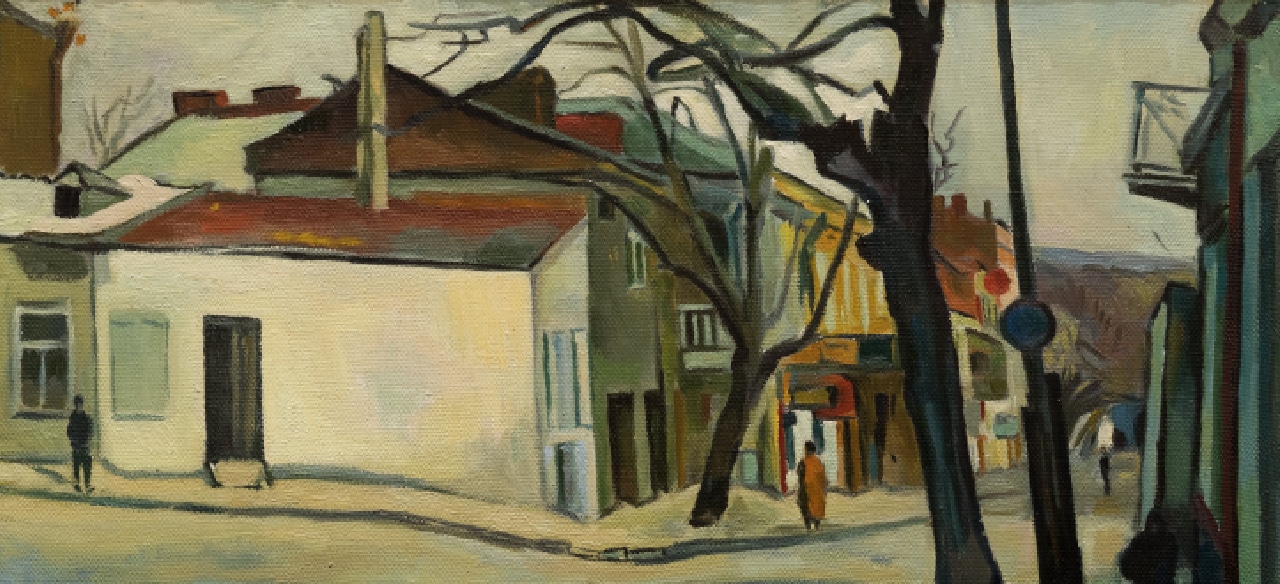
Temo Matchavariani tells the story of Tbilisi in fragments, like cinematic frames. The faded, rugged slopes are the kind you must climb with faltering steps over the cobblestones. The city is enveloped in morning silence and a pearlescent haze of half-sleep. The artist would go out at the break of dawn, when the streets were nearly empty, as it was precisely then that he could feel the city’s truest mood. One would encounter only a soul or two walking peacefully along.
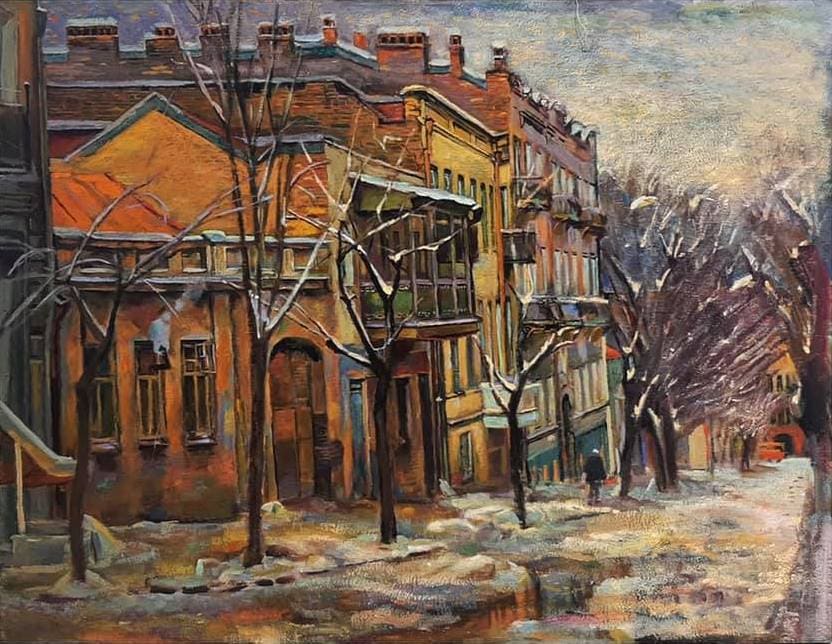
Imbued with urban solitude, these landscapes evoke the intimate charm of simple, everyday life, alongside a sense of warmth and gratitude toward the passersby.
Temo Matchavariani paints the urban landscape as if listening intently to its whisper. He is breathless with anticipation himself, and hushes you too, so that you might catch the rustle of the poplar trees. Such is the artist’s dialogue with the city: the houses tell him their stories, and he, in turn, confesses his love with every brushstroke. The artist manages to capture the true character of Tbilisi’s old quarters, where houses and their inhabitants form one whole.
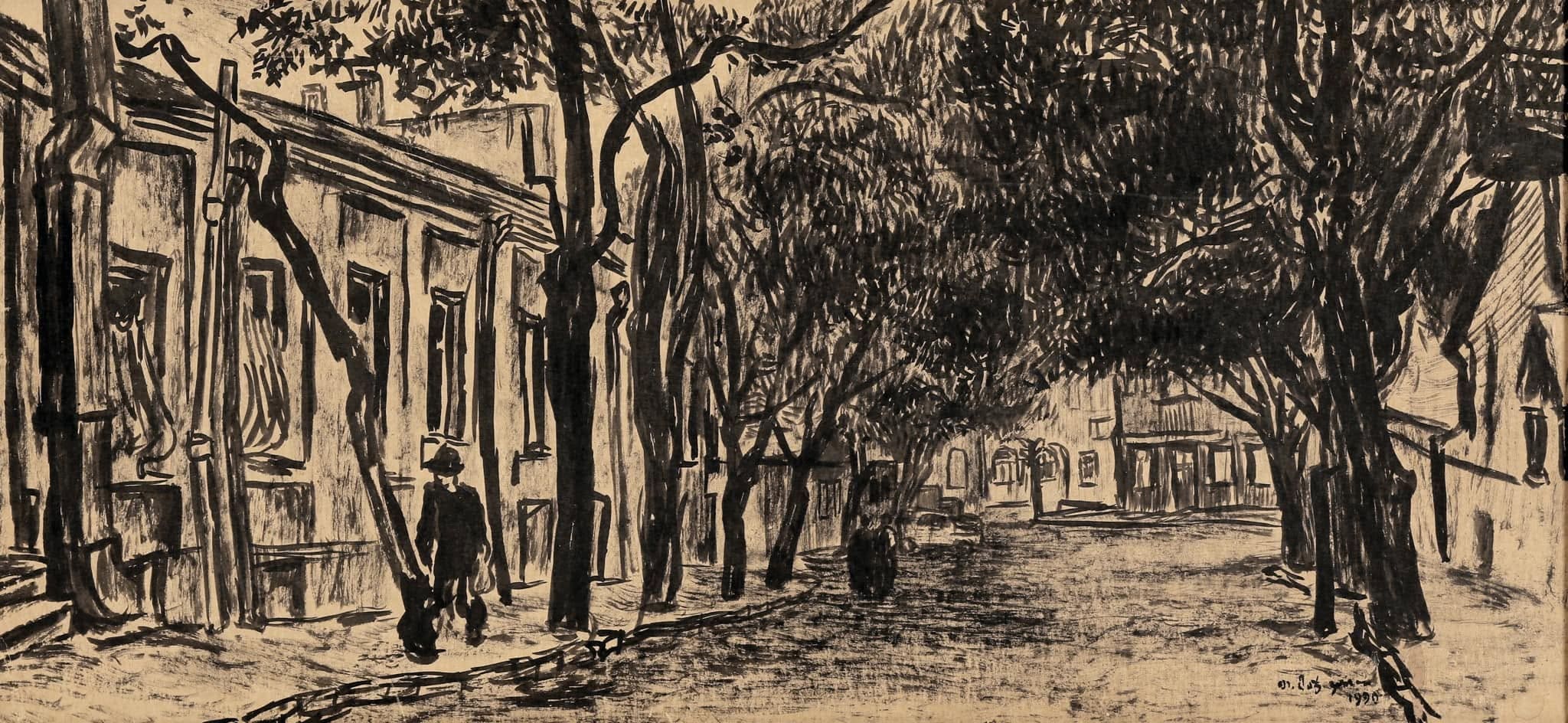
Each of Matchavarianis landscapes is warmed by an underlying love for this city, particularly for the winding streets of the Vera neighborhood, its cobblestone slopes, arched gateways, and slanted brick walls deformed by age. For him, Tbilisi was not merely a geographic location, nor a collection of typical, superficially exotic or tourist-friendly “postcard” views: Temo Matchavariani's Tbilisi was a poetic space of a lost paradise, of ancient culture, and of freedom deeply felt within, slightly melancholic, and intimate.
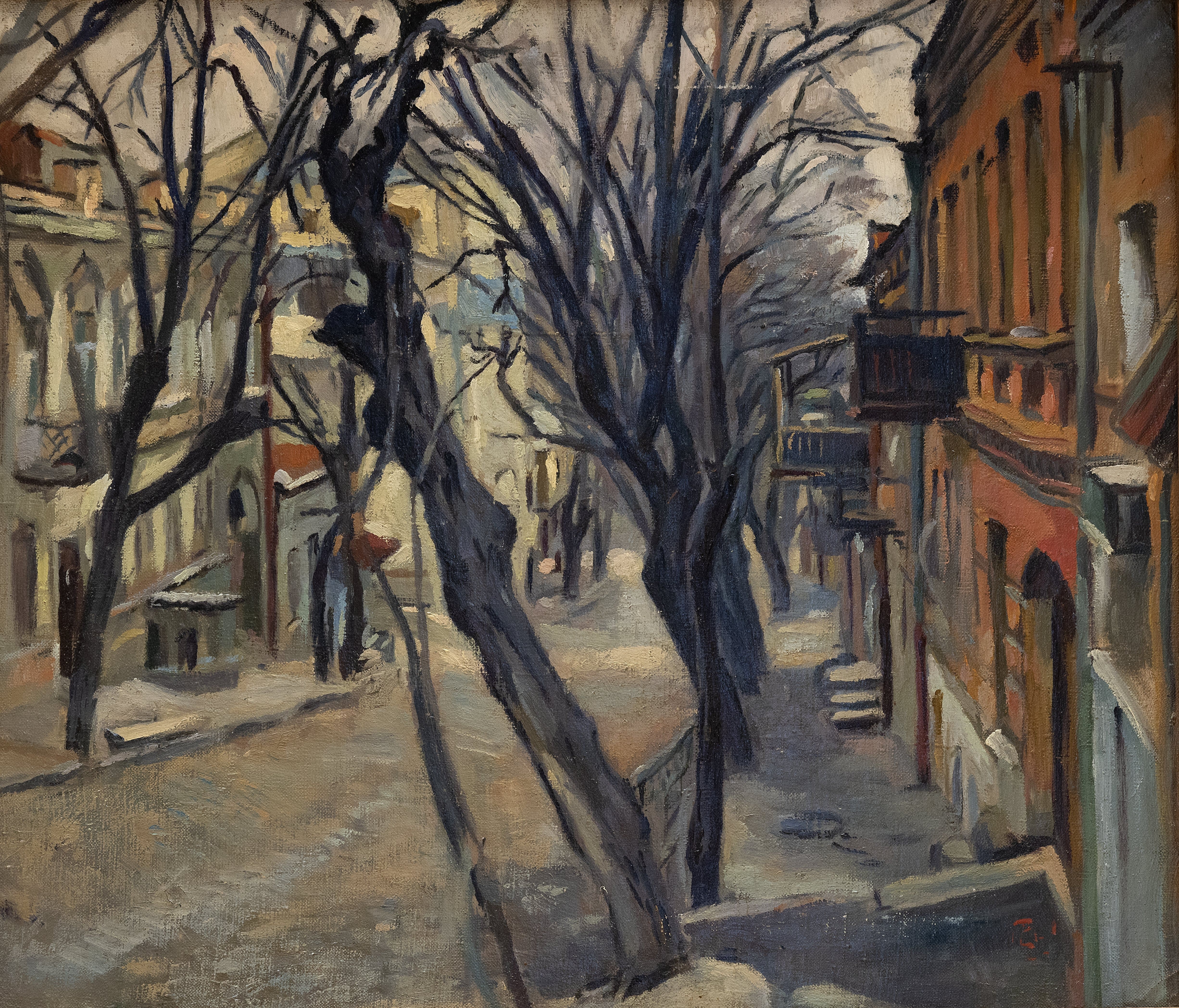
The layer of oil paint is applied to the surface of the painting so delicately that the texture of the canvas shines through, exposing the weathered, scraped walls of the houses. Matchavariani does not recognize newly built high-rises: he paints simple, age-worn houses; he paints the marks that time has left on them; marks left by people's lives and personal histories. A certain solitude permeates these landscapes; the streets tell us more than the people do.
For Temo Matchavariani, the arched gateways and slanted walls of Tbilisi are his self-portrait. This is a projection of an inner state onto the canvas, where the painter and the environment are inseparable, and where color is the primary medium.
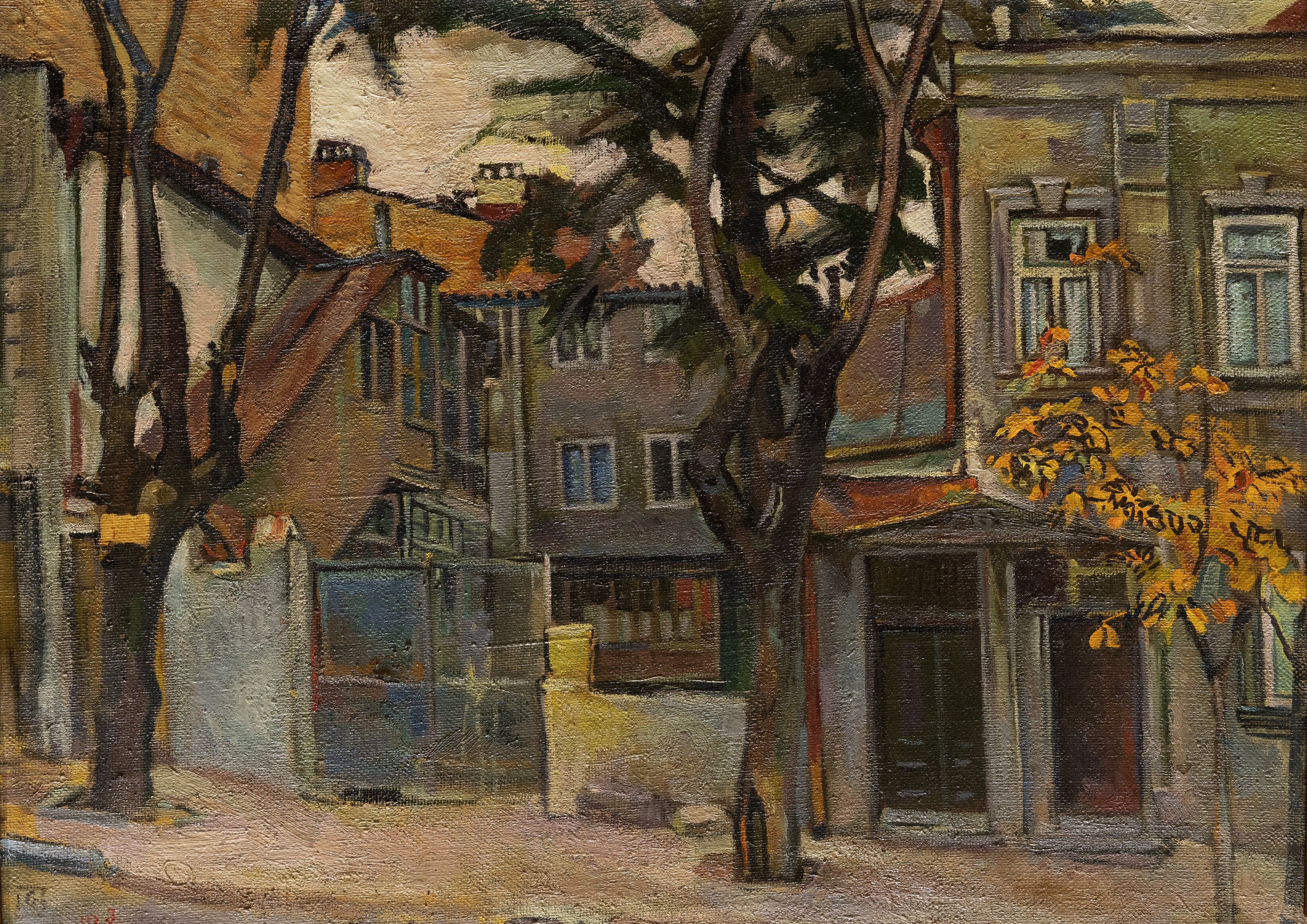
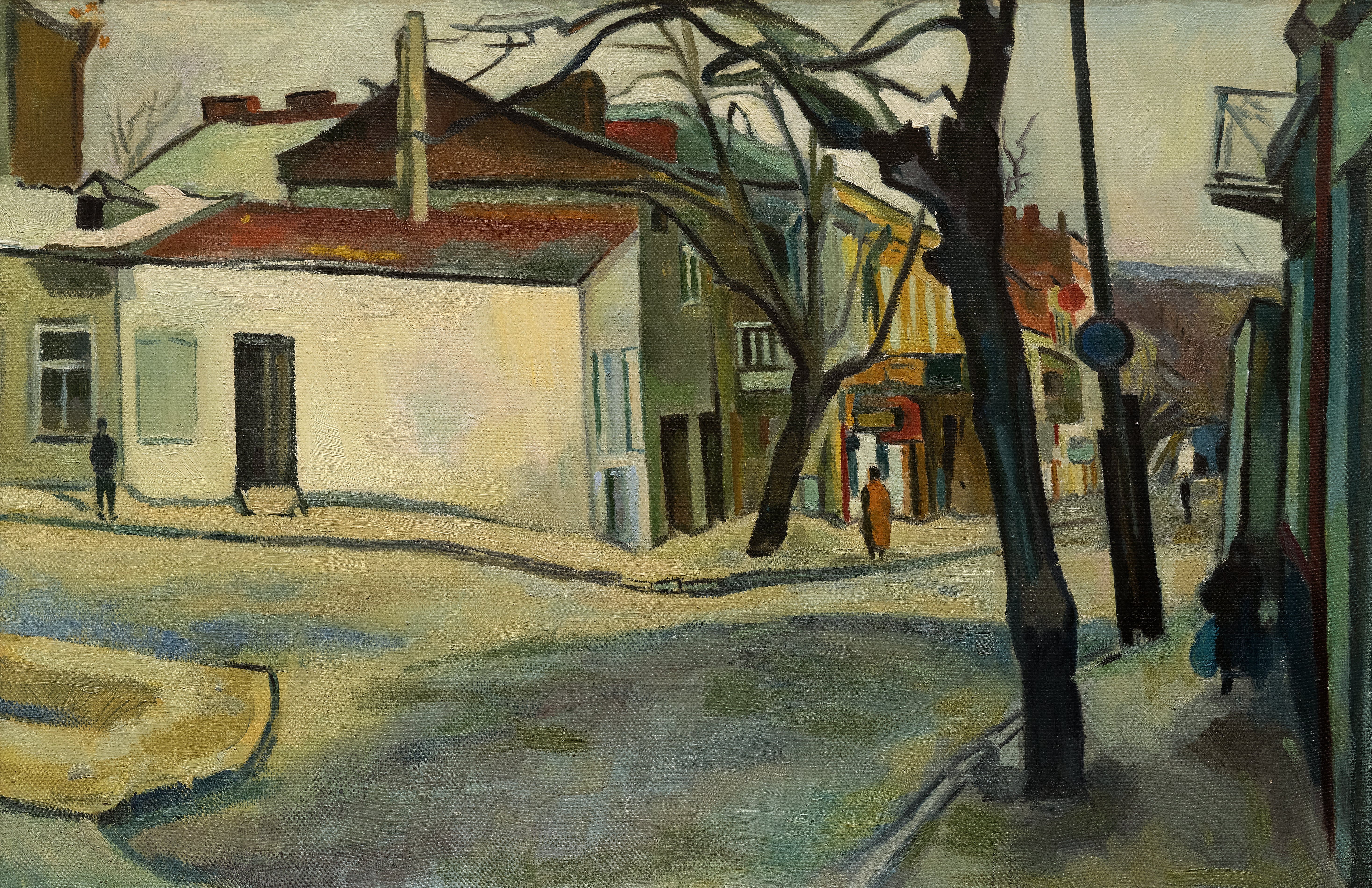
Much like Paul Cézanne, Temo Matchavariani builds form through the interaction of color patches. With Cézanne-like rigor, he maintains the structure of the object, where every brushstroke is precisely calculated to create the pictorial space. Not a single area here is painted in a local color. Each wall, roof, or gate is enriched with nuances of cool and warm undertones. One can feel the density of the pearlescent haze, and even the temperature of the air, so characteristic of Temo’s Tbilisi mornings.
There are no harsh, piercing sunbeams here. On the contrary, the lighting is soft, as if the city were still enveloped in slumber. The contrast between the white walls and the dark silhouettes of the figures creates a sense of tranquility and stillness. The surface of Matchavariani’s walls is not merely white; it consists of countless nuances that convey the shimmering of light and the density of the air.
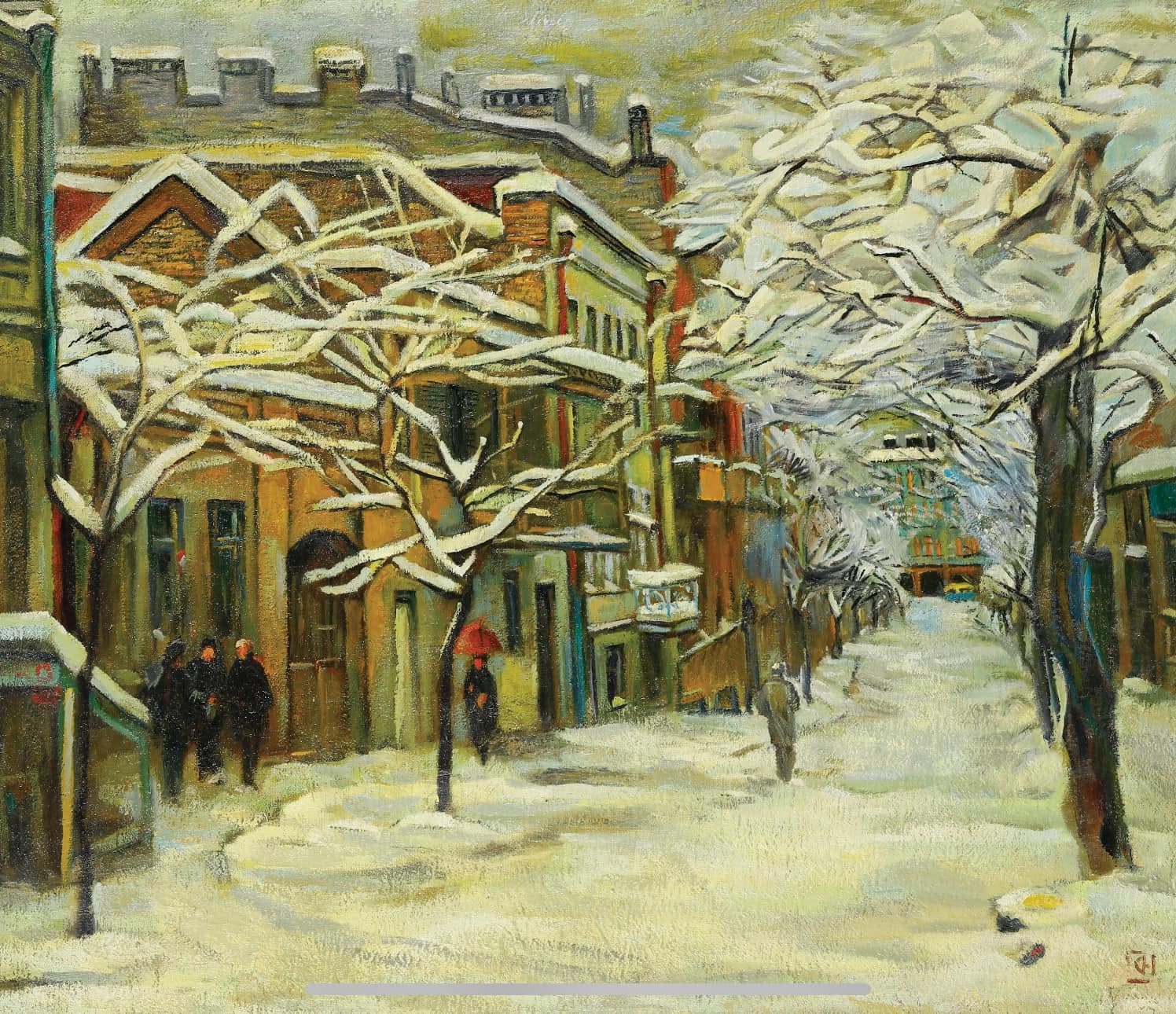
The wall is built through color, where form is born from the depths of texture; created by the combination of color patches. The volume of an object and its position in space are determined by pictorial modulation through changes in color temperature, alternating between warm and cool tones. His canvases are a world created from the very mass of paint, where every brushstroke is the fruit of emotion.
Temo Matchavariani’s painting also possesses a certain graphic quality. The sparse branches of trees rising between the colorful patches of houses create a sinewy rhythm, adding internal dynamics and life to the landscape. In the Vera landscapes, trees are not merely elements of nature; they serve as a framework, the “backbone” of the frame, which holds the composition and stabilizes the architecture of the canvas.
In Matchavariani’s still lifes, cool and warm colors play across the surfaces of the objects, shimmering and responding to one another as though rejoicing in their shared presence. Here, no patch of color exists in isolation, indifferent to its surroundings: each hue reacts to the brushstroke placed beside it, bringing to life these colors and setting this pictorial play in motion. Each subsequent brushstroke depends on the previous one, until a unified, cohesive body is born on the canvas. The bold, thick, and 'material' stroke of the brush lends such materiality to simple everyday objects – fish, a metal platter, fruit, or fabric – that you can almost physically feel their texture. The artist transforms the simplest household objects into a major pictorial event, where the core is the materiality of the object itself and the vitality of color. Here, a piece of fruit or a glass is not merely an image; it is a colored mass that possesses both weight and texture.
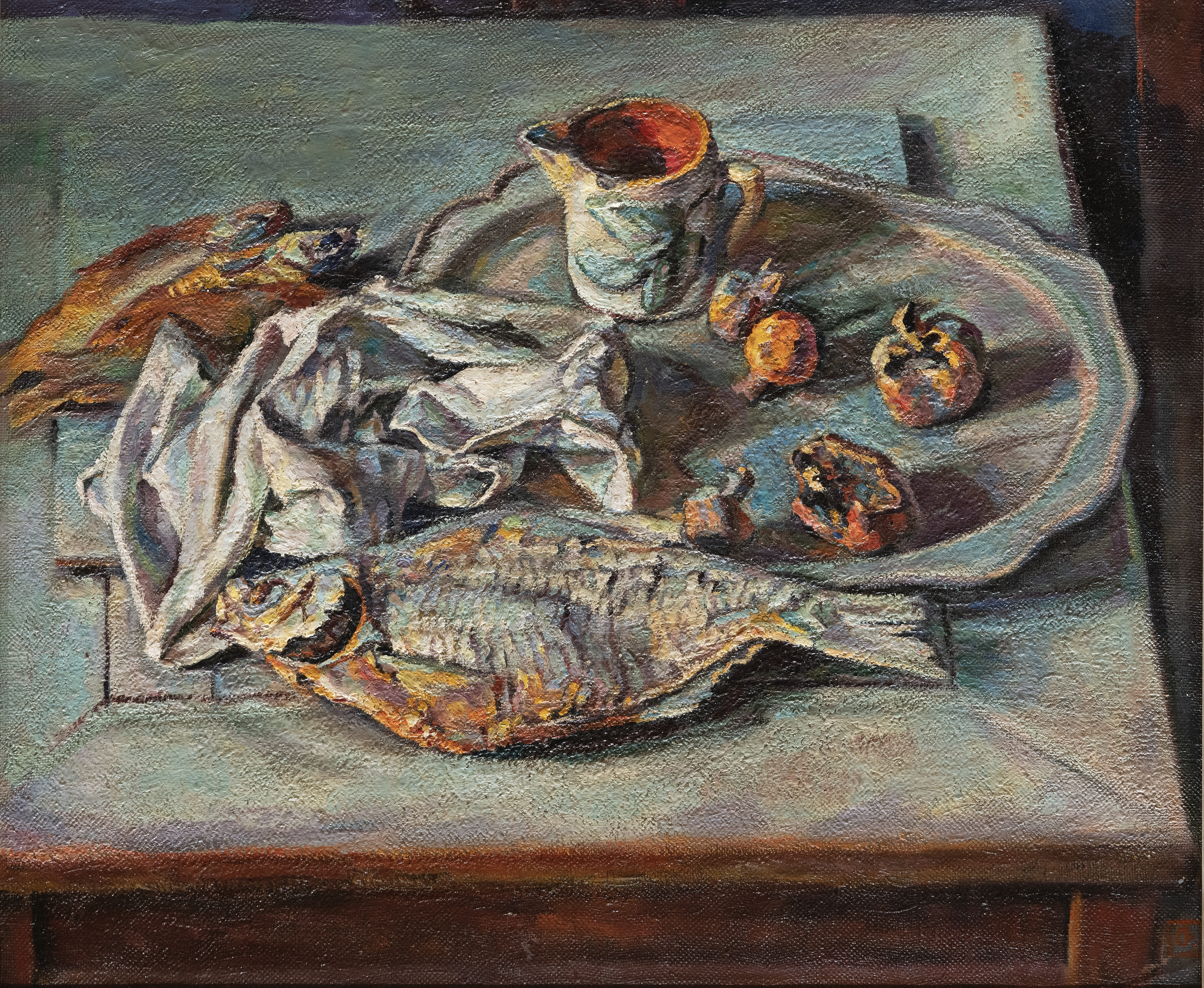
Everything here breathes. The color tells you ‘this fish is not for eating.’ This is painting created to delight the eye, the heart, and the memory. Even the perspective is disrupted, the table tilted; seeking to enchant you with the play of light and shadow colorfully cast upon the objects. This is achieved through Temo Matchavariani’s “absolute vision” – his innate pictorial instinct. The artist sees beyond the objects, capturing their vibrant, colorful energy fields.
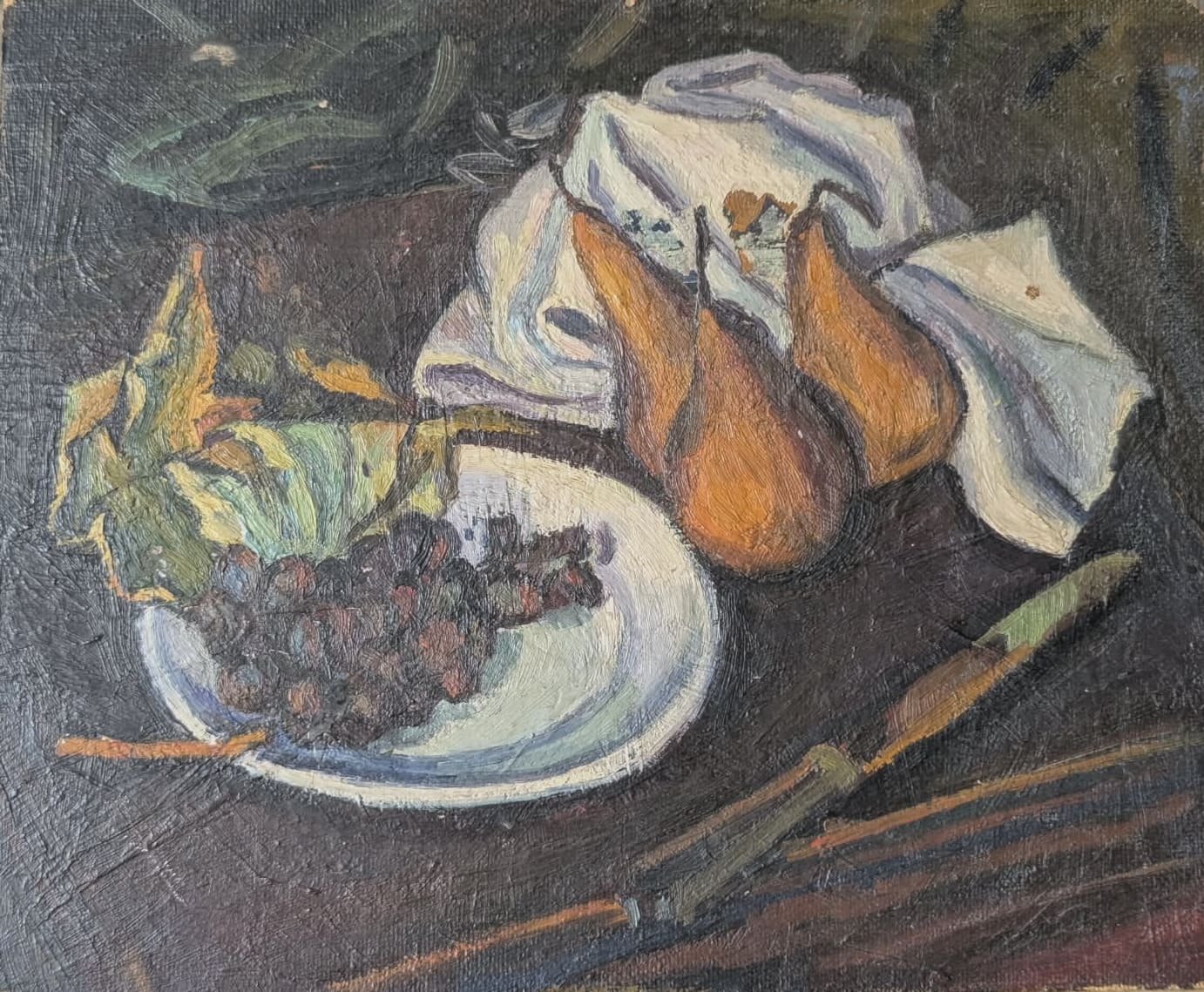
For Matchavariani, honesty is paramount in art. He does not attempt to beautify the city or its objects. Indeed, he paints them exactly as they are: genuine, delicate, and translucent. His work is an example of that unofficial “school” built entirely on truth and a love for painting. Painting, after all, is not the description of an object, but thinking through color.
Temo Matchavariani’s art resembles the artist himself: true, modest, and serene; a reflection of a translucent, delicate, and chivalrous soul.